
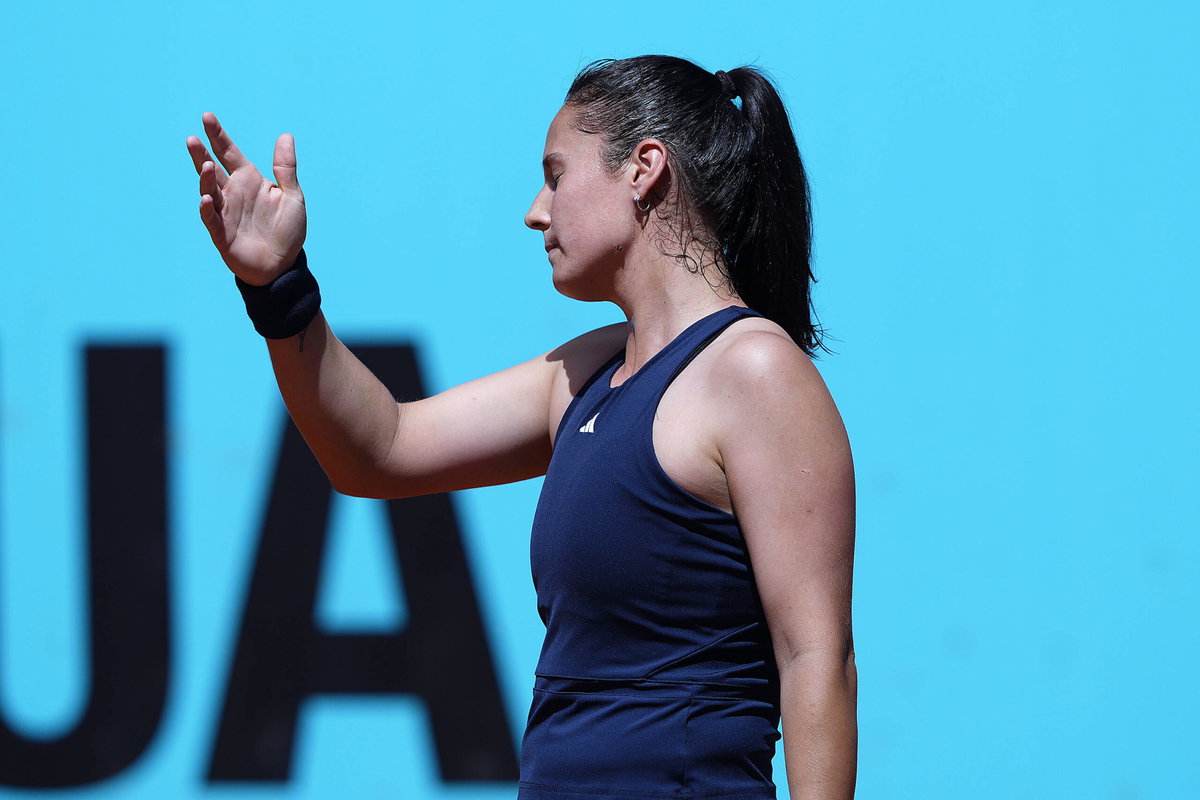
Daria Kasatkina’s rocky transition to Australian colours hit a painful low at the ongoing Madrid Open, where she let four match points slip in a crushing opening-round defeat to lucky loser Daria Snigur. The loss dropped her to world No. 83, her worst ranking in 11 years, leaving the Catalonia Open Challenger as her shot at revival. Even there, she had to grind through a chaotic battle against Emiliana Arango just to stay alive.
Watch What’s Trending Now!
Reflecting on the match, Daria Kasatkina admitted, “You know, it always happens like this to me.” She did not hold back when speaking about her mental struggle, adding, “It’s a little bit tough times for me, every match is a battle, so I have to, as we spoke with my coach, I have to swim in the sh*t a little bit for now.”
Her clash with the Colombian reflected that battle perfectly, as momentum shifted constantly for over two hours. Kasatkina started strong and looked in control, but she let a double break advantage slip away, allowing the match to spiral into a tense fight.
At one stage, she stood on the brink of defeat and had to save two match points under intense pressure. Despite the setbacks, the Aussie showed resilience, clawed her way back, and eventually sealed a hard-fought 6-2, 3-6, 7-6 victory to reach Round 2.

"My coach says: I have to swim in the shit!" Daria Kasatkina talks about doing it the hard way after an epic win against Emiliana Arango in the Catalonia Open She squandered a double break advantage, then saved two match points, en route to victory.
The drama did not end with the score, as the final point itself slipped into confusion. At match point in the tiebreak, Arango served, but the Electronic Line Calling system failed at a crucial moment.
The umpire called the ball out even though Arango returned it, leaving both players uncertain. Kasatkina and Arango stood at the net for nearly a minute, waiting for clarity on whether the ball was in or out.
With no video footage available and officials locked in discussion, the tension only grew. Eventually, the Colombian accepted the ruling, shook hands with Kasatkina, and conceded the match despite the lingering doubt.
Now into the R16, Kasatkina will face Laura Pigossi. Considering her recent struggles, including a pause in her career last year, this hard-earned comeback could serve as a crucial lifeline.
Alexander Zverev slams tech error mid-match at Madrid Open
Even before the match between Kasatkina and Arango was halted due to technical issues, the Madrid Open had already seen similar problems.
One of the most notable incidents came during Alexander Zverev’s match against Terence Atmane. After taking the first set 6-3, Zverev looked firmly in control of the contest.
He was serving at 4-2 and 15-0 in the second set when the momentum suddenly shifted. During that rally, a forehand from Atmane appeared to drift long beyond the baseline. Zverev immediately stopped the point, spreading his arms wide and staring toward the chair umpire in disbelief.
Despite his reaction, the system ruled the ball in, leaving no scope for correction.
A day earlier, Elena Rybakina faced a similar situation during her match against Zheng Qinwen. Already under pressure after losing the opening set, the controversy added another layer to the match.
At 4-3 in the second set, a serve from Zheng was ruled in by the electronic system, sparking immediate disagreement. Rybakina pointed toward the mark on the clay, convinced the call was wrong, and approached chair umpire Julie Kjendlie for clarification.
These repeated incidents underline a worrying pattern, with similar issues now appearing even at Challenger 125 events. The controversy surrounding Electronic Line Calling is no longer isolated and is spreading beyond top-tier tournaments.