
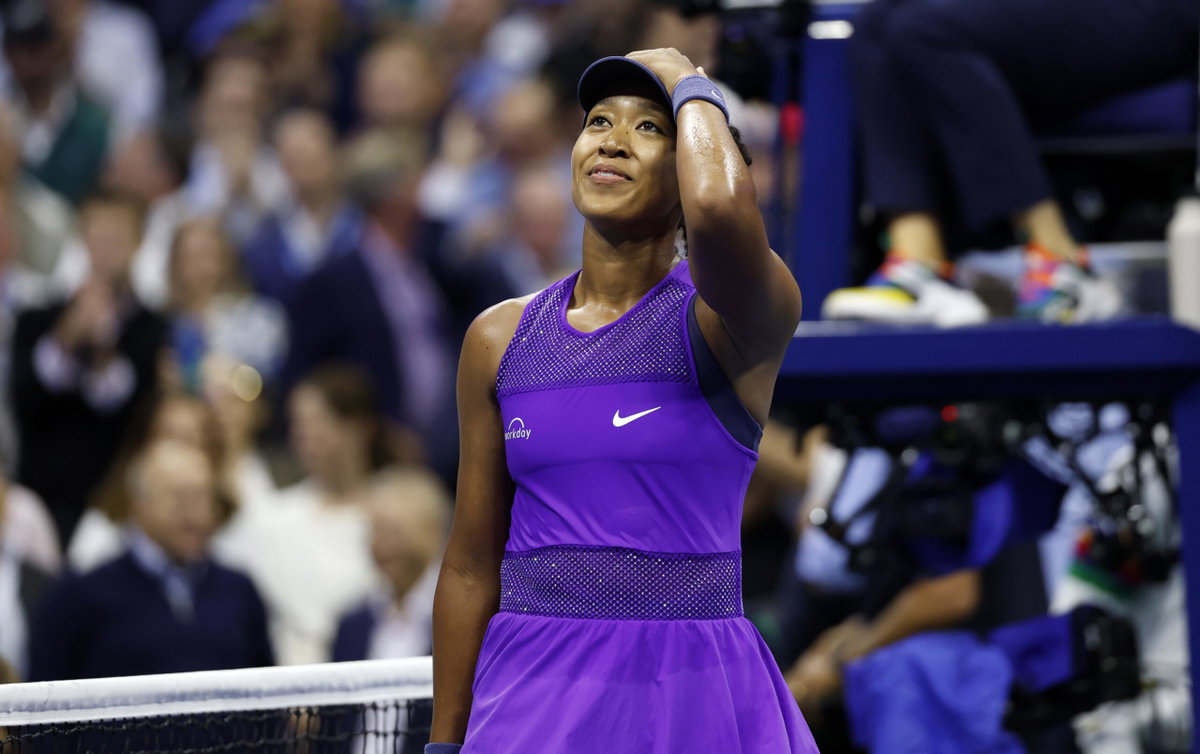
Remember when the WTA ace Naomi Osaka lit the Olympic cauldron at the 2020 Tokyo Games? That moment wasn’t just symbolic, it was seismic. It sent a message far beyond sport: Osaka stands as a face of a new, evolving Japan. Yet, even with all her accolades, some still question her identity, wondering if she’s “really” Japanese. But perhaps we’re asking the wrong question. Instead of questioning her roots, we should be asking: Who is Naomi Osaka, really?
Watch What’s Trending Now!
Where is Naomi Osaka from? What’s her nationality?
Naomi Osaka was born on October 16, 1997, in Osaka, Japan, a city that would lend her more than just a name. With a Japanese mother and Haitian father, the former top seed carries a rich cultural fusion in her veins. Though she moved to the U.S. at the age of three and grew up between Long Island and Florida, the 4-time Grand Slam winner never severed her ties with her birthplace. She honed her tennis craft on American soil but chose to represent Japan on the international stage, even giving up her U.S. citizenship to do so. It was a decision long since made by her parents, as it’s what best reflected Osaka’s largely Japanese upbringing.
Officially, Osaka holds Japanese citizenship, and in 2018, she made history as the 1st Japanese woman to win a Grand Slam title at the US Open. She later climbed to the No. 1 rank on the WTA Tour. But Osaka is more than just a Grand Slam champion; she is a cultural force. A proud “Japanese-Haitian-American”, her layered identity fuels her fire, on and off the court.

Reuters
Tennis – French Open – Roland Garros, Paris, France – May 29, 2024 Japan’s Naomi Osaka reacts during her second round match against Poland’s Iga Swiatek REUTERS/Stephanie Lecocq
What is Naomi Osaka’s ethnicity and family background?
Naomi Osaka’s religious background remains private, yet her story resonates loudly in every other way. Born to a Japanese mother and a Haitian father, Osaka embodies a unique ‘multicultural identity’ that transcends borders and traditional definitions. While she proudly represents Japan on the tennis court, her roots reach far deeper, spanning continents, cultures, and complex conversations about race and representation. Her participation alone is a bold statement, representing diversity in a sport frequently limited by its history and perceptions.
Osaka has become a fearless voice for social justice as well. As one of the most prominent mixed-race athletes in the world, she has used her global platform to confront racial inequality with relentless purpose. During the 2020 US Open, she wore a different face mask for each match, honoring victims of racial injustice. “From wearing different face masks during the US Open 2020, each honoring a victim of racial injustice and police brutality… I think that my generation is very outspoken about demanding change,” she told USA Today.
Often described by the media as “shy,” Osaka proved the depth of her convictions when she traveled quietly to Minneapolis after the murder of George Floyd to join ‘Black Lives Matter’ protests, without alerting her coach or agent. She didn’t need a microphone to make noise.
In an era where athletes are expected to play safe, Osaka chooses to stand tall. Her advocacy, compassion, and quiet strength have reshaped what it means to be a modern tennis star, one who plays not just with power, but with purpose.
What religion does Naomi Osaka follow?
Naomi Osaka has largely kept her religious beliefs private throughout her career. While some online sources and biographies suggest that she is Christian, Osaka herself has never publicly confirmed her faith or spoken in detail about her religious beliefs.
Instead of discussing religion, the four-time Grand Slam champion has generally focused on her tennis career, mental health advocacy, and social causes. She rarely addresses her spiritual life in interviews or on social media, choosing to keep that aspect of her personal life out of the spotlight.
Although her faith remains unconfirmed, Osaka is widely admired for her humility, sportsmanship, and commitment to giving back through charitable initiatives. As she continues competing at the highest level while balancing motherhood and her professional career, she remains one of tennis’s most respected and influential figures, regardless of her religious affiliation.