
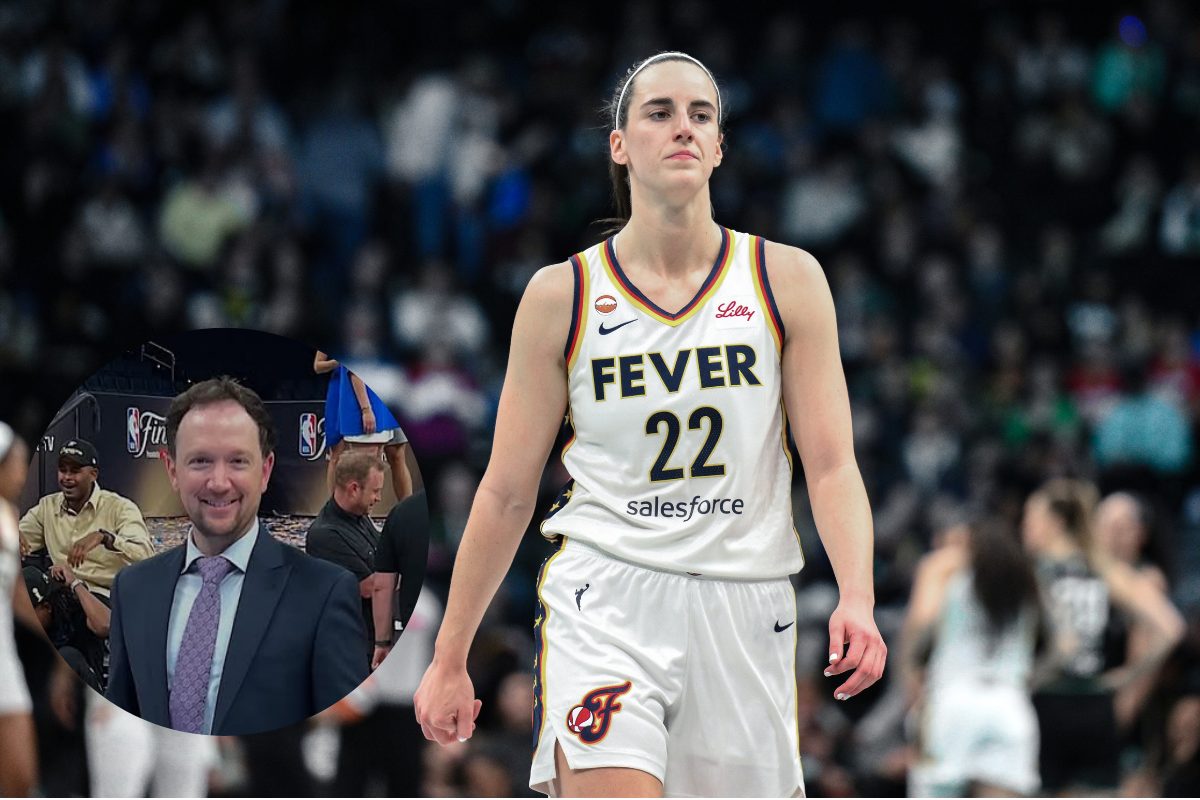
Weeks after the Indiana Fever revoked his credentials, Scott Agness publicly detailed the reporting dispute that led to the decision. But as the veteran beat reporter recounted his side of the story, his focus extended beyond the original disagreement and toward the questions he believes it raises for those covering teams and leagues.
Watch What’s Trending Now!
“The overriding theme here should be a big red flag for other journalists as well who are in my position, who are covering a team or covering a league,” Agnes said in the YouTube video he shared on his channel on Thursday. “Especially those not tied to an institution, because you could be next. That’s the message the Fever certainly are sending me and sending other teams. And if the WNBA allows them to get away with this, that’s another concerning thing here.”
And just as Agness pointed out, the WNBA has yet to publicly address the situation. If the league ultimately decides not to step in, it could be interpreted as tacit approval of the Indiana Fever’s stance. The concern, then, is that such a precedent would empower other franchises. And they can now determine for themselves which reporters they grant access and which they don’t. In that scenario, organizations would not necessarily need a major reason to deny coverage.
All it would take is just to find the smallest fault possible and use it as justification to revoke credentials and restrict access.
Scott Agness‘ report at the center of the controversy stated that Caitlin Clark would miss the Fever’s game against Portland. He described the decision as part of the organization’s “strategic management plan” designed to protect the star guard’s health. According to Agness, it was that characterization of Clark’s absence as strategic management that the Fever ultimately took issue with. The Indiana Fever labeled it “inaccurate and unsubstantiated information.”
In a statement published through Fieldhouse Files, Agness said the report was based on information from a trusted league source and was updated before tipoff to include comments from head coach Stephanie White. He also pushed back against suggestions that he was implying load management, saying the phrase “strategic management plan” was intended to describe a precautionary approach after Clark dealt with multiple injuries last season.
“The reporting in question was not behind a paywall. It was available to anyone who wanted to read it. It was based on information from a trusted league source,” Agness wrote while defending his reporting.
Agness further argued that he was attempting to provide context after Clark went from not appearing on the injury report to being ruled out shortly before the game, a development that prompted widespread speculation among fans and media members.
But from the Fever’s perspective, that single issue was not the sole justification for the ban. Major news outlets such as ESPN pressed the organization for further clarification. And a Fever spokeswoman stated that the decision was ultimately based on “multiple incidents,” suggesting that the dispute extended beyond the report involving Clark’s absence.
The controversy also unfolded against the backdrop of a separate injury-reporting issue. According to multiple reports, the WNBA later issued the Fever a warning regarding their injury-reporting procedures after Clark was unexpectedly ruled out despite not appearing on the team’s initial injury report. Agness has pointed to that sequence of events as part of the broader context surrounding his reporting.
The Indiana Fever, however, have not publicly specified what those other incidents were. And as things currently stand, there has been no detailed explanation from the organization regarding the additional concerns it referenced. It also remains uncertain whether the franchise will eventually provide further clarification on the matter.
Even more uncertain is whether the ban itself will ultimately be revoked, especially being that there has been no official involvement from the WNBA.
Despite losing credentialed access, Agness indicated that he intends to continue covering the Fever and professional basketball in Indiana. “This is my livelihood,” he wrote. “I remain committed to covering the Fever, the Pacers and professional basketball in Indiana with the same standards I always have.”