
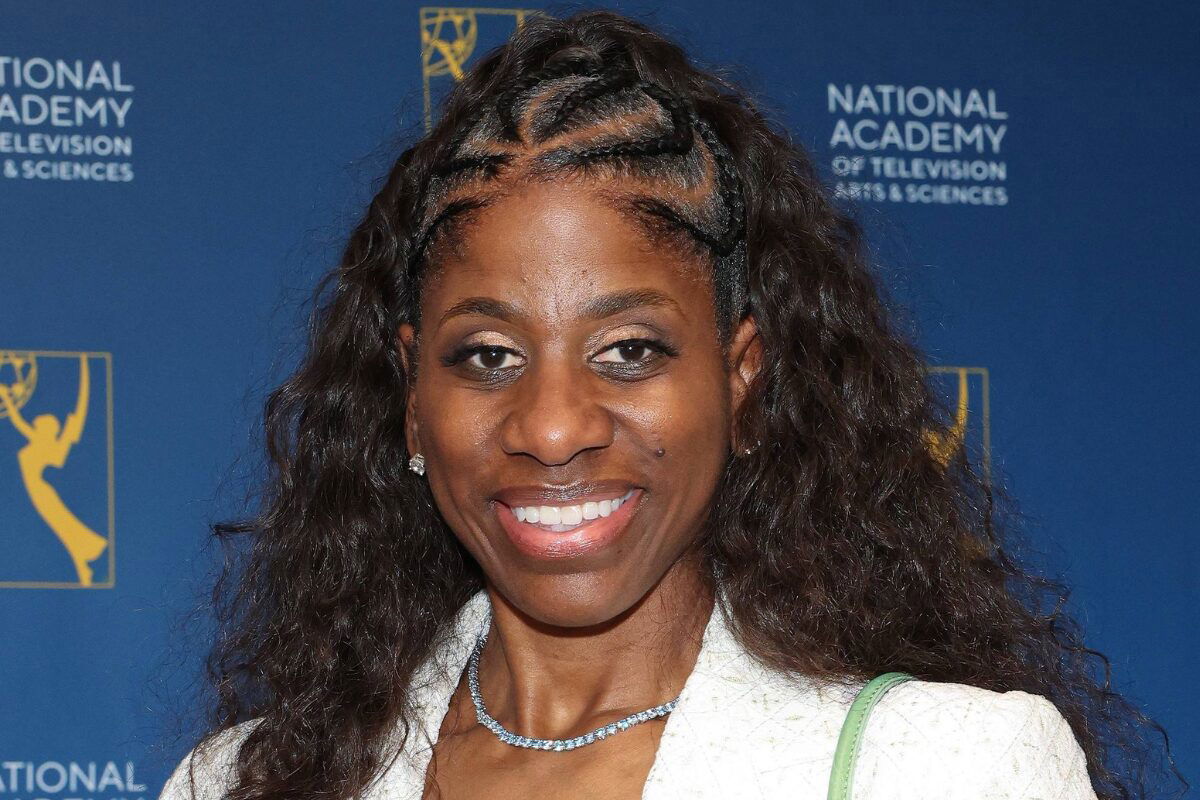
The storm of the WNBA CBA negotiations is in the rearview. The confetti is in full flow with the 30th season of the league. Now, months after the league and the players’ union finally reached a historic agreement, WNBA Executive Director Terri Jackson has doubled down on a hidden aspect of those negotiations.
Watch What’s Trending Now!
“It was interesting to me that the league had triggered the revenue sharing provision under the new CBA, and there was going to be significant dollars flowing to the players,” Jackson said in an interview with NBC. “They had told us that they thought they had triggered it last year, and so, immediately, as is our right under the CBA, we immediately sent them a notice.”
“And do you know they waited till the last possible date to confirm for us? It was like in February. They waited until the last possible date to confirm that they had triggered the revenue share and that significant dollars would be paid out to the players.

Imago
Trevor Ruszkowski-Imagn Images
“I just kept thinking about that and said, ‘Wow, timing is everything.’ You didn’t speak to us in December, hardly in January. And then you had to confirm that under our agreement in the previous CBA, you had indeed triggered the revenue share provision,” Jackson added further.
The CBA negotiations tipped off in the fall of last year, per reports. The previous CBA’s expansion deadline expired on January 9. But even in this fiasco, the league didn’t come clean about triggering the revenue-sharing provision under the previous CBA. It adds more weight to the league’s reluctant approach during these negotiations.
It wasn’t until February that the players’ union was informed. This marked a major shift in the dynamics of the negotiations, becoming a silver lining for the players amid league uncertainty. Around 250 players receive payments of varying amounts across the league.
“I’m just hopeful that this distribution gives them a little bit of comfort and a lot of confidence in what we’re doing,” Terri Jackson said.
In the previous CBA, signed in 2020, the provision provided that players would receive 50% of revenue after a certain threshold, with a 30% deduction for league expenses. According to ESPN, the amount was $16M. The league split this, allocating half to the players and reserving the other half for league marketing agreements.
Furthermore, it gave even more substance to the goals they were negotiating. Revenue sharing was one of the major demands that the players’ union had kept on the table. And the league’s financial growth is understandable given that they triggered the last CBA’s revenue-sharing clause.
WNBPA treasurer Brianna Turner also echoed that sentiment in February after the league triggered it. “This shows our value and how what we’re fighting for makes sense and how we should keep fighting,” she said.
Just a few months after this, the WNBPA secured a historic revenue-sharing provision for players. And executive director Terri Jackson feels this might be one of the WNBA’s most touted achievements.
Terri Jackson Sees WNBA’s New CBA as a Landmark in Women’s Sports
The new CBA agreement for the WNBA doesn’t just increase the salary cap to $7M. Instead, it also distributed around 20% of gross revenue to players. This means the players will be paid under this provision, even after the league’s expenses are paid. As a result, the players position themselves as the central commodity.
“This is the biggest increase from one CBA to the other CBA across all professional sports,” Jackson said during her interview. “The WNBA players did that. They stuck to the game plan, and they stuck with the strategy to the end. They did that, and may they always be seen as leaders in history. May this be that big and tremendous mark and momentum.”
The impact of the new CBA is evident throughout the 2026 WNBA. Finally, the players are getting their rightful amount, with ample stars earning over $1M this season.
The $1M figure would have been unthinkable in the past, when persistent questions had long surrounded the WNBA’s profitability. But the league is blooming. The multibillion-dollar media rights deal is just the perfect testament to it.
Furthermore, the arenas are filling up, and the league’s merchandise is selling out exponentially, boosting the league’s finances. Thus, it’s quite important for the players to be the first to benefit from this, since they built this league brick by brick over the last 30 years.