
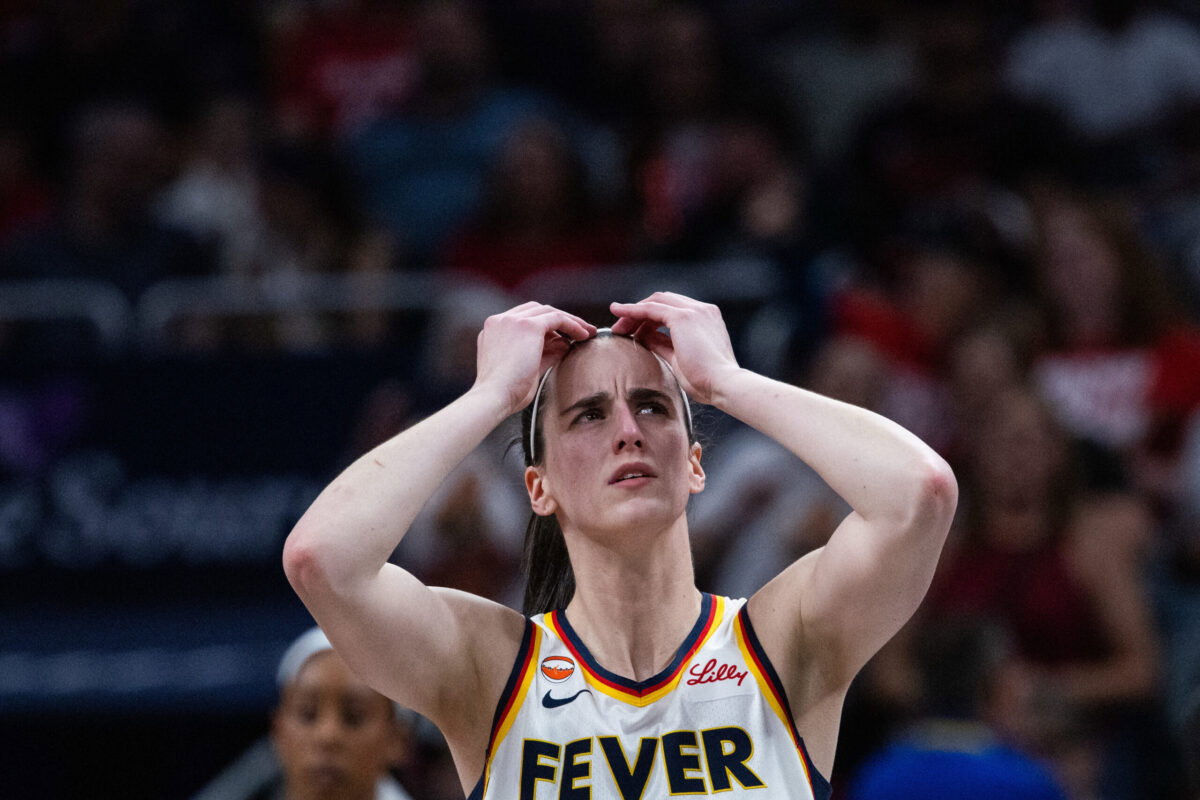
Following her one-game suspension for making contact with Caitlin Clark’s throat, Alyssa Thomas did not stay quiet. On Tuesday after practice, she went public with what she and her teammates had been experiencing in the days since, directing her frustration toward the league’s leadership.
Watch What’s Trending Now!
“We still have yet to hear anything from Cathy (Engelbert). It’s no surprise,” Alyssa Thomas said, as per USA Today. “You can see what’s being said on social media … but as usual, she remains silent, and that’s unfortunate when our lives are being threatened. … The league has to do better.”

Alyssa Thomas is calling on the WNBA to protect all players after she received death threats following suspension for contact with Caitlin Clark. usatoday.com/story/sports/w…
Thomas described the abuse as qualitatively different from ordinary sports criticism. She said players received racist messages, direct death threats, and had personal addresses posted publicly online. She also raised a separate concern about due processes wherein she found out about her suspension only minutes before the league announced it publicly.
On the play itself, Thomas was clear about her read of the situation. She said the contact with Clark was accidental and that no one in the building, including players, coaches, officials, or fans, recognized it as a foul in real time. The WNBA reviewed if after the fact, upgraded it to a Flagrant 2, and issued the suspension.
Thomas had faced similar treatment before. During the 2024 WNBA playoffs, when the Connecticut Sun eliminated Indiana Fever in the first round, she claimed to have received comparable racist abuse and online harassment. That context shaped how she interpreted the scale of what arrived this time.
Engelbert responded later that afternoon, though her statement came after Thomas had gone public, not before it.
“The safety and well-being of everyone in our community is always the league’s top priority,” Engelbert said in her statement. “We are aware of Alyssa Thomas’ comments, and what she and her teammates have experienced is completely unacceptable and not representative of the WNBA community.”
According to an anonymous source cited by the Associated Press, Engelbert and Thomas had also exchanged text messages the previous week to address the security concerns directly. Per that account, Engelbert immediately directed the league’s security team to coordinate with Phoenix Mercury’s security once she became aware of the death threats.
The league had already launched a “No Space For Hate” campaign ahead of the 2025 season. This was designed to address hate directed at players both online and inside arenas. That framework has not shielded Thomas from what she has described since.
“There’s a difference between trolling, and there’s a difference between hatred,” Thomas said. “The hatred that we’re experiencing over a play that, honestly, was a complete accident.”
Thomas isn’t the only person drawn into the broader fallout from the incident. Former NFL linebacker Emmanuel Acho has also faced immense abuse for one of his measured takes on Clark.
Emmanuel Acho’s commentary on Caitlin Clark draws its own wave of abuse
Former NFL linebacker and FS1 personality Emmanuel Acho entered the conversation separately, making comments on the Speakeasy podcast. His comments centered on Clark’s relationship with the league, wherein he argued that the expectations placed on everyone around Clark, including referees, opponents, coaches, the league itself, amounted to a form of special treatment. The WNBA was absorbing more cost from the dynamic than benefit.
“The W at this junction in time would be better without Caitlin Clark, because she is a bigger distraction than she is an additive,” Acho said.
Within 24 hours, Acho said he received a significant volume of racist messages in response.
“I’ve been called the N-word more times in the last 24 hours than I have in the last 24 years in defense of Caitlin Clark,” Acho said. “And this is why I suggested that Caitlin Clark has been more detrimental than she has been additive.
“Not because of Caitlin Clark’s ability, because those who have come to the defense of Caitlin Clark, and I use that word loosely, are spewing hatred, are spewing misogyny, and are spewing racism.”
Former ESPN host Cari Champion had raised a related point earlier in the season on the Flagrant & Funny podcast. Champion pointed out that Clark telling a referee to “open your eyes” drew no punishment. However, Paige Bueckers received a technical foul for clapping at an official. Champion also noted that when Clark missed a home game without prior notice, the Fever received only a warning for the injury report violation.
Taking all of these instances, including the Alyssa Thomas situation together point to one underlying tension. The discourse around Clark has generated a level of hostility that is landing on players and commentators who challenge the dominant narrative. This often comes in the form of abuse and almost certainly has nothing to do with basketball. For the WNBA, the question is whether it’s existing frameworks are equipped to deal with that at the scale it has reached now.