
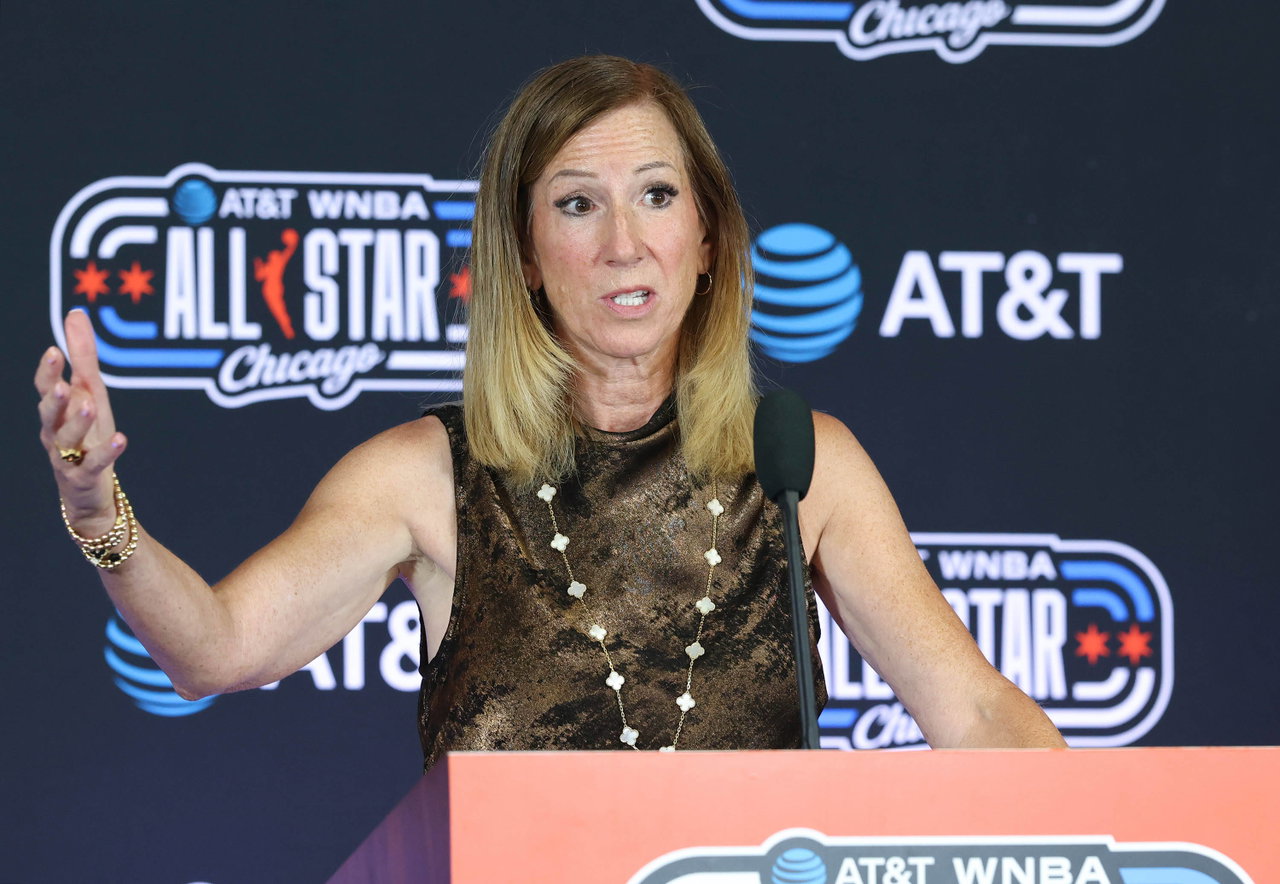
Negotiations between the players and the league are never a smooth ride in the WNBA. This was on display during negotiations over a new Collective Bargaining Agreement (CBA), which came into effect in May 2026. Besides that, Commissioner Cathy Engelbert has already faced intense backlash from players regarding a lack of relationship and her muted stance as stars like Phoenix Mercury forward Alyssa Thomas faced online harassment. In such a heated environment, the players have again raised a key demand with Engelbert that apparently remains unfulfilled: having a longer break after the All-Star weekend and before the regular season resumes.
Watch What’s Trending Now!
“WNBA stars again called for more rest between All-Star Weekend and the season restart,” according to reporter Colin Salao of Front Office Sports. Despite the public outcry and her acknowledgement of lackluster communication, Engelbert has yet to issue a response.
This demand assumes significance as players feel they have more room to negotiate, now that the latest WNBA All-Star Game witnessed more attendance than the NBA for the first time in history. The United Center in Chicago, which hosted the WNBA All-Star Game, had 19,783 in attendance, as compared to the NBA’s 15,973, per BrickCenter.
As for the league, the WNBA surpassed 73 million unique viewers and 2.2 million total fans in attendance by the midway point of the 2026 season. So the increase in numbers is undeniable.
But why would something as small as a break between the All-Star Game and before the resumption of games be an issue?
The answer lies in the fact that the WNBA players have a schedule like no other. For players from other major leagues like the NBA, NFL, MLB, etc., the offseason usually means a break for sporting activities, relaxation, and time with the family.
But for a majority of WNBA players, their timeline follows an unusual script: pack your bags to head overseas to play in Japan, Russia, and Europe to supplement their income.
The CBA and alternatives like ‘Unrivaled’ have surely brought a change, but the players’ schedule remains quite hectic and demanding, prompting demand for a bigger break.
“I’m going home tonight, and I’m flying to Seattle tomorrow,” Caitlin Clark said Saturday. Players in notable positions have echoed this sentiment.
“The schedule, that’s something that we need to just continue to work on,” WNBPA vice president Breanna Stewart said before the All-Star Game. “Speaking for myself specifically, we played Wednesday, then we play Tuesday. Trying to find the right balance of rest, recovery, and joy, have fun, but also being competitive.”
“It’s a break for everyone but who’s playing in the game,” Nneka Ogwumike added.
To what extent this demand can be fulfilled by Cathy Engelbert and the league remains to be seen, as the WNBA has to end the season by November. There has already been an announcement of expansion of the regular season, and next season will feature 50 games as compared to the current 44.
In an earlier post, Salao mentioned a report by Front Office Sports, in which WNBPA executive director Terri Carmichael Jackson said the All-Star Weekend scheduling issue was raised in the 2020 and 2026 CBA negotiation cycles. However, the league was not receptive to any change.
So the players’ demand for an extended break looks tough to fulfill at the outset.
With An Increase In Pay, The Workload Has Also Increased For The WNBA Players
After the new CBA, average player salaries in the WNBA now exceed $583,000, while minimum salaries jumped to a range of $270,000 to $300,000 based on experience, per an official WNBA release.
Players will now receive a 20% share of all the league and team revenue, delivering over $1 billion in total salaries and benefits over the life cycle of the deal.
The maximum “supermax” salary has risen to $1.4 million, a notable increase from $249,244, allowing top stars to sign the first multi-million dollar deals in league history.
However, to capitalise on this growth, the regular-season schedule expands to 50 games in 2027–2028 and to 52 games from 2029 through 2032. But the lack of recovery time has impacted the fitness and fatigue levels, often affecting performance on the court as well.
Another pertinent issue is the prize money. As per the revised WNBA CBA, each participant in the All-Star Game will receive $15,000, while the MVP walks away with $20,000. This is notably less than the payday for NBA players, where winners will receive $100,000 apiece while losers get $25,000. Such disparity only causes more discord.
Stars like Sabrina Ionescu and Nneka Ogwumike have previously blamed dense scheduling for severe fatigue and a visible lack of player effort during showcase events.
So while the players have a legitimate claim demanding a bigger break after the All-Star weekend, only time will tell how and when the league can accommodate it, given the high stakes involved.