
Imago
Credits: Imagn
Imago
Credits: Imagn
In 2020, the WNBA and WNBPA signed a new revolutionary CBA that had increased salary and compensation for players, supposed to last till 2027. However, in just four years, that CBA looked outdated and from a different timeline as the WNBA exploded in popularity. As a result, the players chose to trigger the opt-out clause on October 21, 2024. In months of negotiation behind the scenes, the two sides remained as far away as ever. The situation exploded at the 2025 All-Star Game, and the situation has developed heavily since.


The All-Star Weekend: Where The Drama Started
Watch What’s Trending Now!
On July 17, two days before the All-Star game, the WNBPA and the WNBA met for the first time since December 2024. The meeting lasted two hours and had the largest in-person player turnout in union history. Even the likes of Caitlin Clark and Angel Reese, who are not player representatives or Union leadership, attended. Even then, the meeting yielded very little as the players expressed immense displeasure after the game.
“I was extremely disappointed. There’s a lot of talk about expansion and new teams and things like that, and we can’t have an expansion draft if we don’t have a CBA. And so the players have been working tirelessly. Obviously, Nneka Ogwumike, right here to my right, is the President,” Skylar Diggins said.
Multiple other players expressed the same emotion. However, WNBA Commissioner Cathy Engelbert mentioned that the CBA would be agreed upon on time.
“I want to share that we had a productive meeting on Thursday with the WNBA PA and the players. We’re engaged in constructive conversations,” Engelbert said. “I remain confident we’ll reach a new CBA, one that’s transformational for the teams, players, and owners for the future of our league.”
At the All-Star Game, the All-Stars emerged for pregame warmups to reveal a message on their shirts: “Pay Us What You Owe Us.”
The players also sold that merchandise on their site. Even fans appeared with similar signs at games, showing support.

Imago
Aug 30, 2025; San Francisco, California, USA; Golden State Valkyries fans hold signs to “make the season long and the teams bigger” and “pay them what you owe them” during the fourth quarter against the Washington Mystics at Chase Center. Mandatory Credit: Kelley L Cox-Imagn Images
The First Offer Rejected With Some Harsh Words
We don’t know the exact details from this first proposal in late June or early July, just that it was miles away from what the players want. Satou Sabally, a WNBPA player representative, told the media Tuesday that the WNBA sent a proposal to the union and described it as a “slap in the face.”
Every player, including the likes of Sophie Cunningham, Sydney Colson, and WNBPA president Nneka Ogwumike, reinforced the same idea.
Front Office Sports reports that the WNBA sent the proposal to the union last week and that it’s the first proposal the league has sent.
According to Front Office Sports, “The players felt the initial proposal wasn’t ‘entirely responsive’ to their request.”
As the negotiations raged on, the WNBA finally pitched in higher salaries, but was ignoring the primary demand.
WNBA Hikes Salaries But Fails To Address The Central Issue
In early October, Front Office Sports reported that the league’s then-latest offer included a supermax salary of around $850,000 and the veteran minimum of around $300,000. However, that seemed inadequate since it did not have revenue sharing, which was the players’ priority.
While the league insisted on an “uncapped revenue sharing model that is directly tied to the league’s performance,” the players simply disagreed.
According to the WNBPA at the time, the league “put lipstick on a pig and retread a system that isn’t tied to any part of the business and intentionally undervalues the players.”
As the initial deadline of October 30 approached, the two sides agreed on a 30-day extension to November 30 and kept the negotiations going. As the war waged on at the bargaining table, the league came back with a much better offer.
WNBA Gives In, Adds Revenue Sharing, But Compromises On Team Housing
On November 19, AP reported a monumental offer from the WNBA.
According to the report, “The proposal included revenue sharing with a maximum salary of more than $1.1 million available to more than one player per team, growing each year.”
It also added that “the new league minimum would be more than $220,000 with an average of more than $460,000. Those numbers would start in the first year of the deal for more than 180 players and increase over the length of the CBA.”
However, it still did not satisfy the WNBPA because of the compromises that the offer included. We still don’t know what the exact points were that the WNBPA disagreed with. The players’ preferred model reportedly remained similar to the NBA, where the league’s salary cap is a fixed portion of its basketball-related income (44.74% in 2025).
But the league came back with an incremental increase in the offer.
On December 2, ESPN reported that the league upped the maximum salary to a guaranteed $1 million base, “with projected revenue sharing pushing total earnings for max players to more than $1.2 million.”
The average player’s salary was projected “to exceed $500,000, and the minimum player salary would be projected to exceed $225,000.” The salary cap was increased to a whopping $5 million in 2026 and would be set in each subsequent year based on revenue growth, from $1,507,100.
However, it still wasn’t enough for the WNBPA to agree on a new CBA. At the time, the reason was not known, as the two sides agreed on a 40-day extension. On December 2, Front Office Sports reported that the offer included team housing cuts and an earlier start to the season, as early as mid-March.
“It doesn’t make logistical sense,” the report mentioned.
Players like Natasha Cloud spoke out about how this is a deal breaker.
“This makes no sense for our younger players, for the players that get cut and are stuck in leases … nor for players in bigger markets,” Cloud said in an Instagram comment.
A November 28 (reported) proposal from WNBPA included a projected salary cap of approximately $12.5 million in 2026, a $1 million average player salary, and a maximum player salary of $2.5 million.
Caitlin Clark and Co. Make A Statement At Team USA Camp
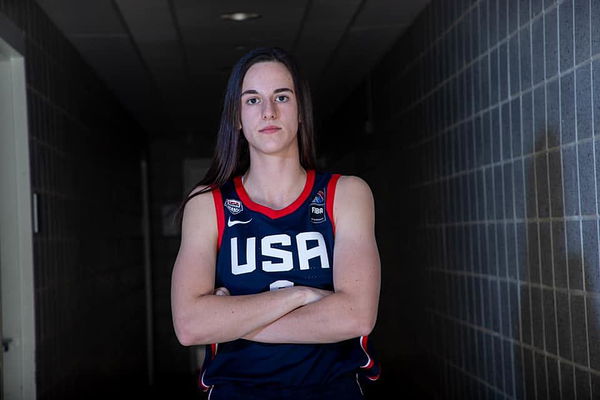
When 18 of the best players in the country (barring A’ja Wilson and Napheesa Collier) gathered at Duke University for a Team USA camp ahead of the World Cup Qualifiers in January, there were bound to be questions regarding the CBA negotiations. Caitlin Clark insisted that this was “the biggest moment the WNBA has ever seen,” while adding that the players are going to “fight for everything we deserve.”
However, at the same time must seek “compromise on both ends” and “need to play basketball” next season.
“That’s what our fans crave — the product on the floor,” Clark noted. “That’s what the fans want to show up for. So, it’s business, and it’s a negotiation, and there has to be a compromise on both sides. And we’re starting to get down to the wire of it.”
Meanwhile, WNBPA Vice President Kelsey Plum mentioned that talks have been “a little bit disheartening, just the frustration in the negotiation and how far away we are.”
Imago
Iowa Women’s Basketball / Facebook
Players Authorize WNBPA To Strike
The negotiations were continually leading to the same thing: a sharp denial by the players. The WNBA and WNBPA weren’t able to find an agreeable middle ground. As a negotiation tactic, the WNBPA and the players voted their leadership the authority to strike on December 18.
“The players have spoken,” the WNBPA said in a statement. “Through a decisive vote with historic participation, our membership has authorized the WNBPA’s Executive Committee to call a strike when necessary. The players’ decision is an unavoidable response to the state of negotiations with the WNBA and its teams.”
“Time and again, the players’ thoughtful and reasonable approach has been met by the WNBA and its teams with a resistance to change and a recommitment to the draconian provisions that have unfairly restricted players for nearly three decades. The players’ vote is neither a call for an immediate strike nor an intention to pursue one. Rather, it is an emphatic affirmation of the players’ confidence in their leadership and their unwavering solidarity against ongoing efforts to divide, conquer, and undervalue them.”
“Let it be known. The players remain united, resolute, and prepared to fight for their value and their future,” the statement continued.
93% of eligible players participated in the vote, and 98% of that group voted in favor of authorizing a strike. The extensions to the CBA have included a provision giving either side the ability to terminate them with 48 hours’ notice. At that point, the WNBPA could initiate a strike, or the league could lock out the players.
Imago
Alika Jenner/AP
Players And WNBA Disagree on Revenue Sharing Percentage as Nneka Ogwumike Clarifies Stand
On December 20, WNBPA President Nneka Ogwumike echoed something similar to Caitlin Clark in an ESPN interview.
“We’re looking for a good deal to get done, but I think we’re also prepared for whatever it takes for that to happen, while also understanding that we want a 2026 season,” Ogwumike told ESPN. “We want to make sure that that season is the way that it can be best for us to put the product on the court and for that product to be valued.”
She insisted that the authorization to strike was adding a weapon to their arsenal, “but it doesn’t mean that we want that to happen.”
As the January 9 deadline approaches, the two sides are currently divided on one main issue: the revenue projections. The latest proposal, as of December 20, had an uncapped revenue-sharing model that would raise maximum salaries above $1.3 million, increasing towards $2 million over the life of the deal.
The average salaries would increase to above $530,000 and up to more than $770,000 over the life of the deal. The minimum salaries are projected to be in excess of $250,000 in the first year alone.
However, Ogwumike noted that the revenue-sharing model proposed by the league was “not adequate, especially with the level of creativity and innovation from our side to try and meet them closer to their side of the table, because that hasn’t been extended to us.”
Reports mention that the WNBPA proposed a 30% revenue share as opposed to 15% proposed by the league, per Athletic. Other inflection points included the Core designation. The Athletic reported that the WNBPA wants that contractual requirement to be gone, but the WNBA wants to keep it. The league also rejected the idea of reducing rookie contracts to 3 years from four and adding a facility standard requirement for each franchise.
WNBA Project $300 Million Losses On WNBPA Offer, Players Deny
From the topsy-turvy journey, we arrive at the latest update.
On January 1, ESPN reported that the WNBA is projected to incur hundreds of millions of losses if the WNBPA offer is accepted.
“The WNBA is projecting that a recent proposal from the WNBPA — which would give players about 30% of gross revenue and is believed to feature approximately a $10.5 million salary cap — would result in $700 million in losses over the course of the agreement. Such losses would jeopardize the league’s financial health,” the report said.
It mentioned that the WNBA believed its model ensured the league’s financial health over the long term. However, the WNBPA called “the league’s projected loss figure ‘absolutely false’, citing a discrepancy in whether expansion fees are factored in.”
The point of difference is in what type of revenue each side considers. The WNBA is giving 50% of the net revenue, which amounts to around 15% of the net revenue.
The league considers the expansion fees as transactions that generate zero net revenue. That means the “new teams pay the expansion fee but earn a fractional share of future league revenue, while preexisting teams get a portion of the fee but lose a fractional share of future league revenue.”
According to ESPN, the WNBPA proposal “accounts for expansion fees in its projections, seeing them as real money that still contributes to owners’ bottom lines.” That is why the projections of both sides diverge.
From the league’s perspective, they argue that rapid salary escalation tied to projected, rather than realized revenue, could place long-term strain on franchises, particularly those operating at a loss or in smaller markets.
That’s where we have reached regarding the negotiations, with less than a week left. There can be multiple options for both sides in the future. As the risk of delaying the expansion draft, rookie draft, and free agency, and eventually, as the 2026 season approaches, either side can agree to the other side’s proposal and finish the discussion. Or else, both sides can continue negotiating in the status quo after the deadline. The players can declare a strike, or the league can declare a lockout.
Written by

Edited by

Ahana Chatterjee