
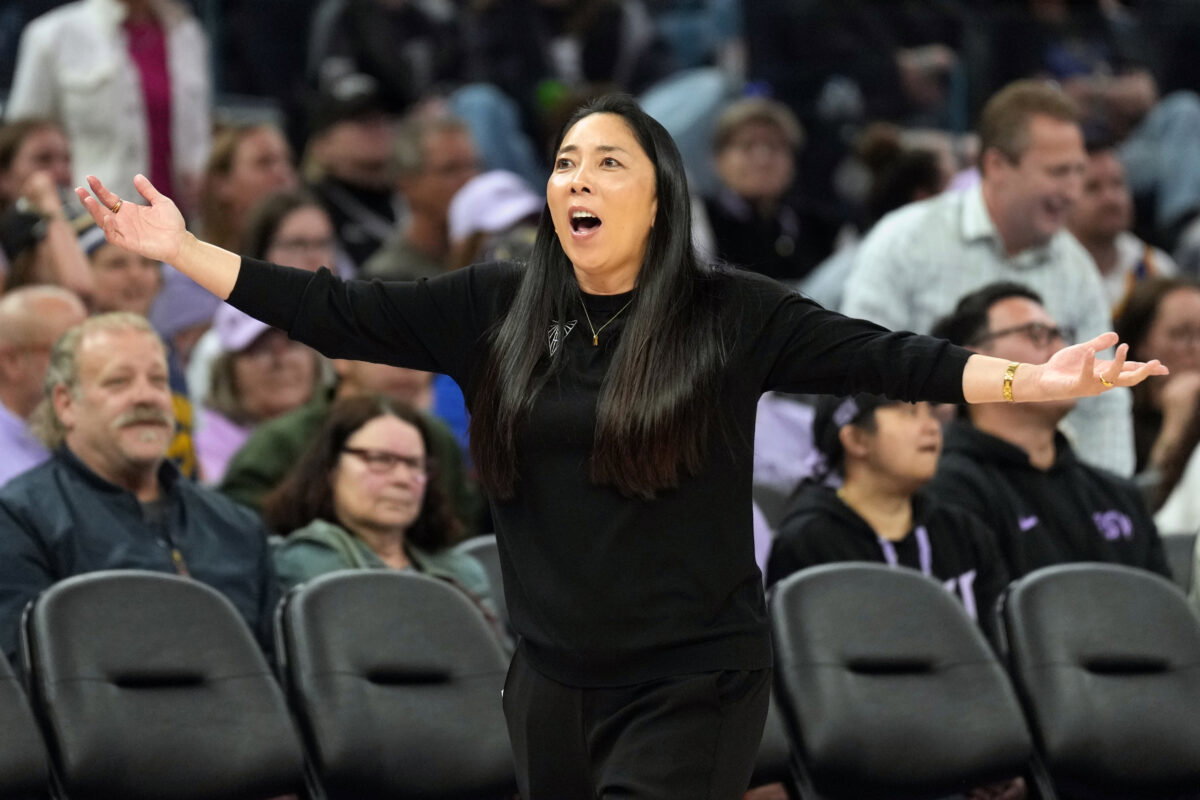
The Golden State Valkyries have quickly become a must-watch team after making their WNBA debut back in 2025. Under head coach Natalie Nakase, they play a fast, chaotic, position-less style built around versatile wings who can switch, handle the ball, and stretch the floor from almost anywhere. And so far, that system has looked incredibly dangerous. But one WNBA analyst believes things could look very different once the playoffs arrive.
Watch What’s Trending Now!
During the latest episode of No Offseason: The Athletic Women’s Basketball Show, Zena Keita sounded the alarm on how the Valkyries’ positionless identity could eventually run into problems as the 2026 season moves forward.
“Wait until the playoffs when the game slows down, and teams are playing in the half-court,” she said. “You need a point guard who can set up the offense, or someone anchoring the paint.”
Imago
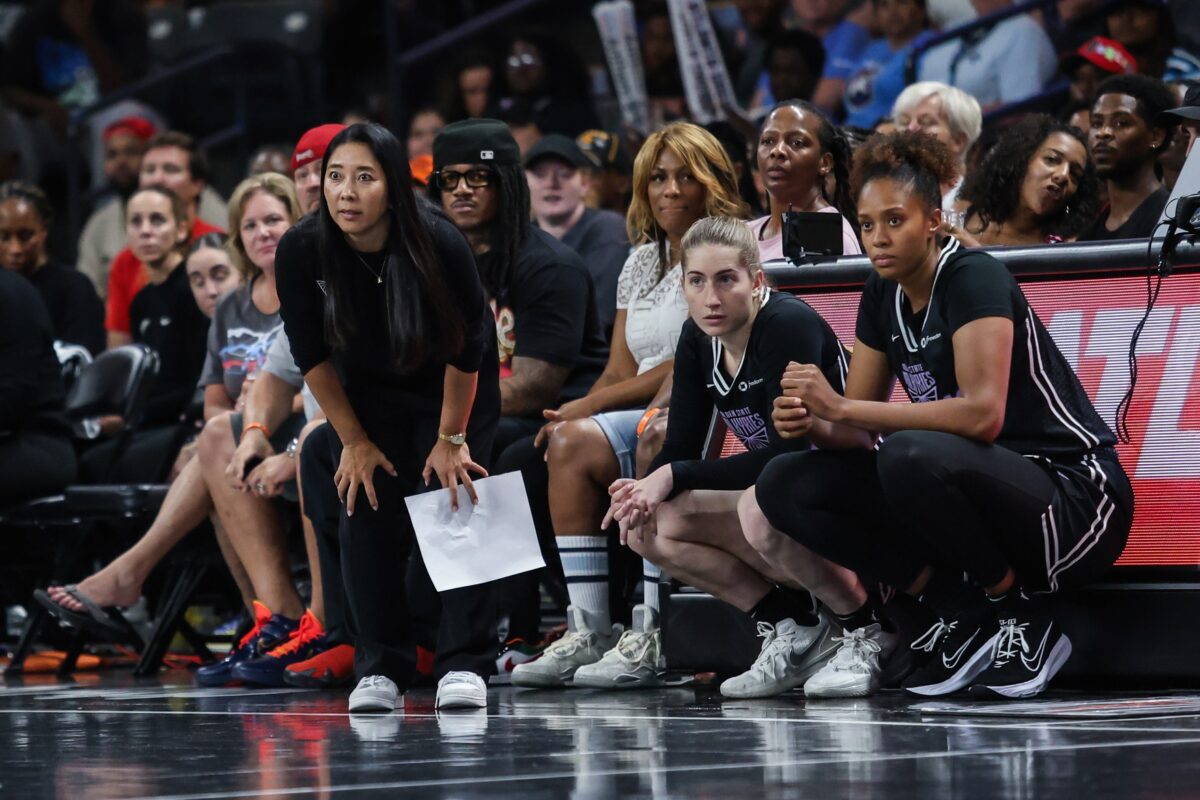
Jul 29, 2025; College Park, Georgia, USA; Golden State Valkyries head coach Natalie Nakase during the game against the Atlanta Dream during the first quarter at Gateway Center Arena at College Park. Mandatory Credit: Jordan Godfree-Imagn Images
“That positionless style can work in the regular season. But when you really have to execute, that’s when you appreciate having a wing, a guard, a point guard who can handle the ball, and a big who can operate down low,” she further added.
The Valkyries thrive when games become chaotic, as versatile players like Gabby Williams, Janelle Salaün, Kaila Charles, and Justė Jocytė allow Natalie Nakase to constantly switch matchups and push the tempo. Take last season as an example, this style helped the Valkyries to become the first expansion franchise in WNBA history to make the playoffs in Year 1.
However, as Keita claimed, the postseason exposed the cracks in that formula. The Minnesota Lynx, led by Napheesa Collier, swept the Valkyries 2-0 in the playoffs.
But instead of pivoting away from that identity in this season, Golden State has only leaned further into it.
After losing their point guard Carla Leite in the expansion draft, the Valkyries doubled down on size and versatility by adding more multi-positional wings like Jocytė. On paper, the system still looks modern, unpredictable, and incredibly fun. But can positionless basketball truly survive once the playoffs turn into a half-court chess match? To find the answer to this question, fans will wait and watch how they perform night after night.
For now, let’s take a look at how they have been performing in the 2026 season so far.
The Valkyries Are Winning With Natalie Nakase’s Risky System
So far, the Valkyries have played six games in the 2026 WNBA season, and they have won four of them. But what’s interesting is that in the two games that they have lost, none of them came by a massive margin. Their first defeat came against the Chicago Sky on May 13 in a tight 69-63 battle before they later fell to the Indiana Fever 90-82 on May 22.
Now, coming to the stat sheet, the Valkyries are still finding their rhythm, yet they still look dangerous. They are currently averaging 85.8 points per game while holding opponents to just 76.3, which perfectly reflects the fast-paced identity Natalie Nakase wants this team to play with.
While basketball is a team game, if we had to give credit to one player on their roster who is the engine behind their performance, it would be Veronica Burton.
Burton currently leads the team in both scoring and assists, averaging 14.3 points and 6.3 assists per game. Her versatility has become one of the biggest reasons why the positionless approach continues creating problems for their opponents.
But as the season continues to move forward, fans and analysts will keep their eyes on this franchise to see how far their system can take them.
For their next game, the Golden State Valkyries are set to face Caitlin Clark and the Indiana Fever once again on May 28, giving Natalie Nakase’s squad an opportunity to prove that this positionless experiment can continue working against elite competition.