
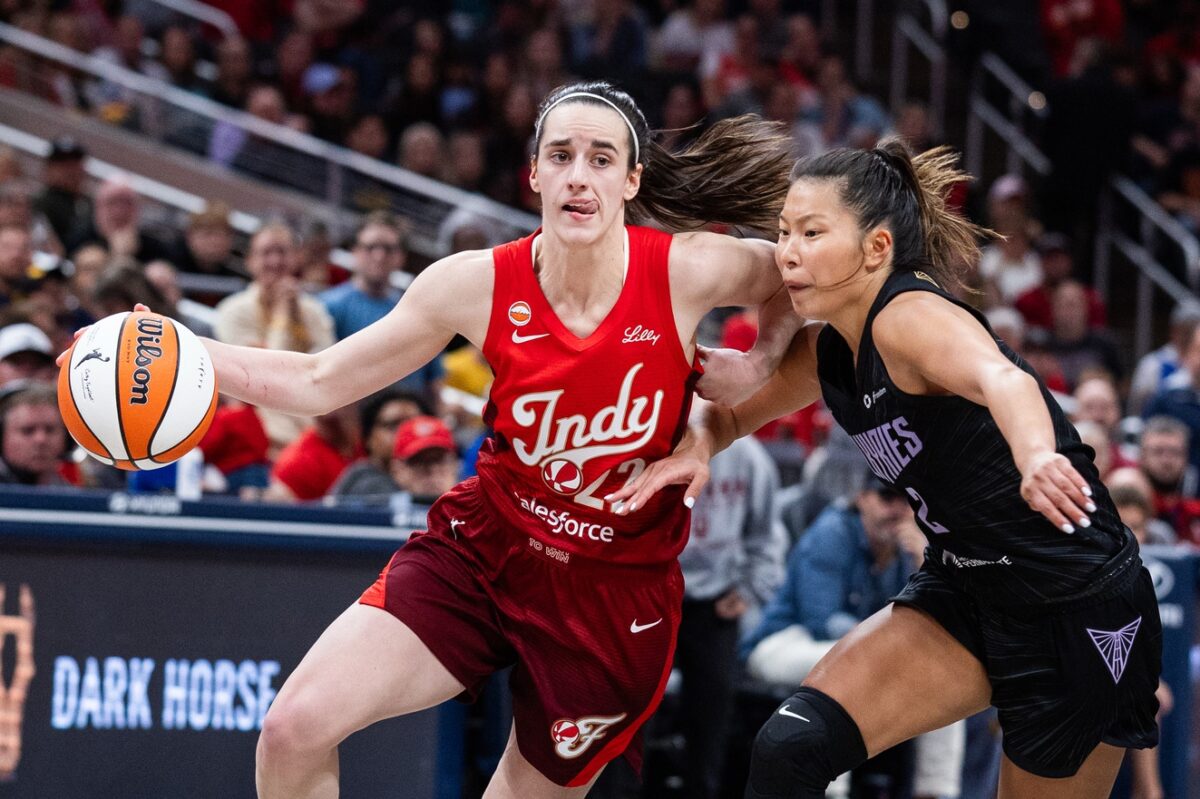
Even when Caitlin Clark was injured with multiple soft tissue injuries last year, she felt obligated to travel. The reason? The crowd of fans that arrived at the stadium just to catch a glimpse of her. So, she went out there and signed autographs for every fan she could. But the Bay Area is different. Though Caitlin Clark reached a major record, the crowd’s response wasn’t something one would expect for the “face of the league.”
Watch What’s Trending Now!
Clark dropped 22 points and nine assists last week when the Fever beat the Valkyries for the first time. The game got heated as Clark talked a lot of trash and picked up a technical foul at the end of the first half. The Tiffany Hayes-Caitlin Clark incident drew eyebrows on social media. That certainly spiced up this rematch, creating a rivalry between the Fever and the Valkyries as the crowd made their feelings known to Clark.
“The Valkyries crowd is booing the hell out of Caitlin Clark every time she touches the ball,” wrote the Valkyries reporter Joseph Dycus. “Every game is a home game for the Fever? Not in the Bay Area.”

The Valkyries crowd is booing the hell out of Caitlin Clark every time she touches the ball. Every game is a home game for the Fever? Not in the Bay Area.
And it came on an auspicious night for Clark. With 4:15 left in the second quarter, Caitlin Clark threaded one in for Sophie Cunningham to complete 500 career assists. The milestone came on a long pass in transition after Clark had already set up Raven Johnson and Myisha Hines-Allen for baskets earlier in the quarter. She also became the fastest player in WNBA history to reach 1000 points and 500 assists, reaching it in just 59 games.
For context, the next fastest was Sue Bird, who reached the mark in 82 games. Clark also became the fastest player in league history to record 500 career assists, reaching the number in her 59th WNBA appearance. But the Valkyries’ crowd doesn’t care about that. And Clark herself was nothing but positive regarding the intense atmosphere at the Valhalla.
“I expect the atmosphere to be incredible. I was available for one of the two games we played here last year, and this crowd is great. They’re into the game, supporting their team, and they’re loud from the opening tip,” She said. “Coming here last year, I didn’t really know what to expect. It’s a new franchise, and while this area loves basketball, sometimes you don’t know if people are just there to be there. But these fans are here to cheer and support the team, and it’s pretty incredible to see.”
Clark finished with 16 points, 6 assists, and 4 rebounds in the close 88-90 loss, where Aliyah Boston missed the buzzer beater. The atmosphere inside Chase Center felt more like a postseason game than a late-May regular-season matchup, with both teams entering the night among the league leaders and neither side able to create much separation down the stretch. The Valkyries set multiple attendance records last year. They led the league in average attendance with 18,064 fans, above the Fever, who averaged 16,560. This season, the situation is the same as Valkyries lead the charts.
Even financially, the franchise is the first to reach a billion valuation, while the Fever is third with a $560 valuation, according to CNBC. And they have managed to get this success without a superstar like Caitlin Clark or Angel Reese. That does not diminish Clark’s impact on the league’s growth. Rather, it highlights how some franchises are beginning to build sustainable fan support of their own, even without a singular marquee attraction. This is a trend across the league, and it’s a good sign for its long-term success.
The WNBA’s 2026 Growth Story Extends Beyond Caitlin Clark
In the last couple of years, the WNBA has exploded. And Caitlin Clark has had a huge contribution. All top 5 of the league’s most-watched games in the last two years feature Clark. She has comfortably sold the most merchandise in the league, comparable to NBA stars like LeBron James.
In addition, the league’s all-star ratings dropped last year without Clark. The league also suffered when Clark was out injured. The 2026 crowd surge suggests the league is expanding beyond the star.
The 2026 expansion teams have impressed early in the season. Both on and off the court. When Fire’s Sarah Ashlee Barker scored the game-winner against the New York Liberty, the crowd popped like it was the playoffs.
The sound was deafening as a passionate crowd arrived to back their team. The Portland Fire ranks fourth in the league in attendance, with 13,752 fans attending per game. Even the Toronto Tempo is filling their 8500 capacity stadium with 8187 fans per game.
The Fever now ranks third in attendance, behind the Valkyries and the New York Liberty, who average 15,995 fans per game. And this development is positive for the long-term league future of the WNBA. The league is at an important time with the new broadcast deal worth around $200 million. Such rivalries and storylines will only elevate the entertainment value of the league.