
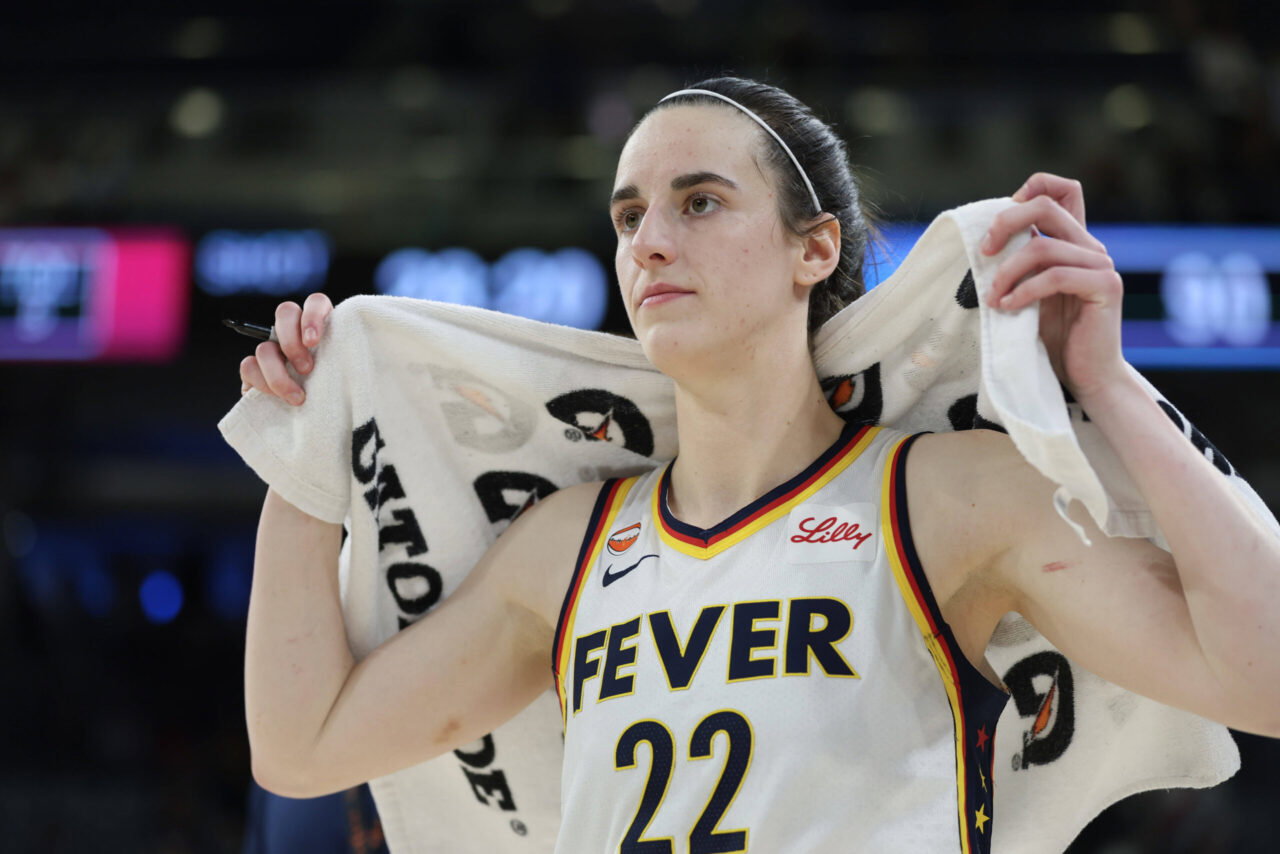
The narrative that Caitlin Clark’s entry into the WNBA attracted a particularly toxic subset of fans has circulated since her very first season in the league. And it has never fully gone away. In fact, it even gained renewed momentum following Elle Duncan’s recent interview with Front Office Sports.
Watch What’s Trending Now!
One clip of the interview shared by Front Office Sports on X, however, presented a notably more sympathetic portrait of Caitlin Clark within that ongoing controversy. The way Duncan frames it, Clark being at the centre of all of this is deeply unfair, because many of the narratives and tensions now associated with her name existed long before she ever set foot on a WNBA court.
“I think that Caitlin Clark has been put in a completely unfair situation,” Duncan said when asked whether Clark is being treated fairly. “At the time when she came into the league, a 21, 22-year-old woman from Iowa, to understand why this was happening to her and why this is happening to all the other women in the league — it is so complicated. It is so nuanced.”
“It is long before Caitlin Clark ever stepped foot on a WNBA court that some of these ideas and narratives have been out there, but they used her as an avatar. And I think it’s not fair.”
“I also think that to whom much is given, much is expected. And I think Caitlin understands that as well. And so she has had to have been put in the unfortunate circumstance that she’s got to speak out, that she has to continue to say, I don’t believe these things. I was not raised this way. You do not speak for me. You do not represent me,” she added.
Other portions of Duncan’s interview, however, have been widely perceived as a broader indictment that many have connected to Clark’s presence in the league, and those comments have sparked their own backlash. In those sections, Duncan described the WNBA as “toxic as h*ll,” attributing the league’s cultural climate to an ongoing culture war that she believes has overtaken the conversation.
“It’s toxic as hell,” Duncan said. “The reason it’s toxic is because you love it so much, because there are so many incredible things about it, because there is this community that really truly doesn’t exist anywhere else. And to have it deduced to a culture war is disgusting.”
“And it sucks. It sucks because it’s not getting any better. It sucks because we thought three years ago, when this started, it will die down. They will see themselves out. Everything will regulate. And we are still here. And that’s why it’s toxic,” she added.
Duncan’s statement, especially with the reference to things starting three years ago was widely read as a direct reference to Clark’s entrance into the league, a framing that some WNBA commentators have pushed back against firmly. Most notably, Linda Cohn, herself a former ESPN colleague of Duncan and a consistent supporter of Clark, offered a pointed rebuttal.
“Here’s something I wish Elle Duncan would talk about more, which I have yet to hear, especially in that interview,” Cohn said. “How about the other side of the story? How about what Caitlin Clark and her enormous fan base have actually done for the WNBA?”
“The increased attention, the television audiences, the sold-out arenas, the merchandise sales, the opportunities that come with all of that, the charter jet that’s for all the players, the new CBA. Why does the conversation always seem to come back to the negative? Elle, you’re better than that, I think,” she added.
And Cohn’s point carries genuine weight. Clark’s arrival did usher in an unprecedented wave of commercial attention and economic benefit for the league and its players. The question that remains uncomfortable is whether that same unprecedented attention also inevitably attracted the bad-faith actors and toxic voices that Duncan and others have consistently described, voices that Clark herself has repeatedly and publicly distanced herself from.
Caitlin Clark Pushed Back Against Those Using Her Name to Justify Hate and Discrimination
Caitlin Clark has had to publicly step forward multiple times to explicitly condemn the racist rhetoric, online harassment, and toxic agendas that have been pushed by bad-faith actors sheltering within her fanbase.
As far back as her rookie year in 2024, following public criticism from Connecticut Sun player DiJonai Carrington over a controversial foul, Clark was direct in addressing the issue.
“It’s disappointing. Everybody in our world deserves the same amount of respect. The women in our league deserve the same amount of respect. So people should not be using my name to push those agendas. It’s not acceptable,” Clark said.
This season, in July, she addressed the situation again following the severe online racial abuse and death threats directed at Phoenix Mercury forward Alyssa Thomas after the foul Thomas committed against Clark.
“I’ve said up here before, the harassment, the hate, none of that is OK. That goes for the opposing team we play, that goes for my teammates, that goes for my coaches. I don’t want anybody to ever experience that,” Clark said.
And most recently, she gave another public statement during the Indiana Fever’s exit interviews on October 8, 2026, after her backcourt teammate Kelsey Mitchell opened up about receiving immense hate and hostility simply for sharing a court with Clark.
“As far as people that have used me to demonstrate racist rhetoric or hate or discrimination, that’s not something I stand for. It’s never been something I stand for. It makes you upset because you care about your teammates so much and you don’t want any of them to go through something like that,” Clark said.
To a large extent, Caitlin Clark is clearly doing what she can within her platform to curtail a problem that seem has followed her throughout her professional career. But it is equally clear that a significant portion of the toxicity is operating beyond any individual’s ability to fully control, regardless of how many times they speak out against it.
The question of who is ultimately responsible for fixing it remains the most uncomfortable one in the conversation.