
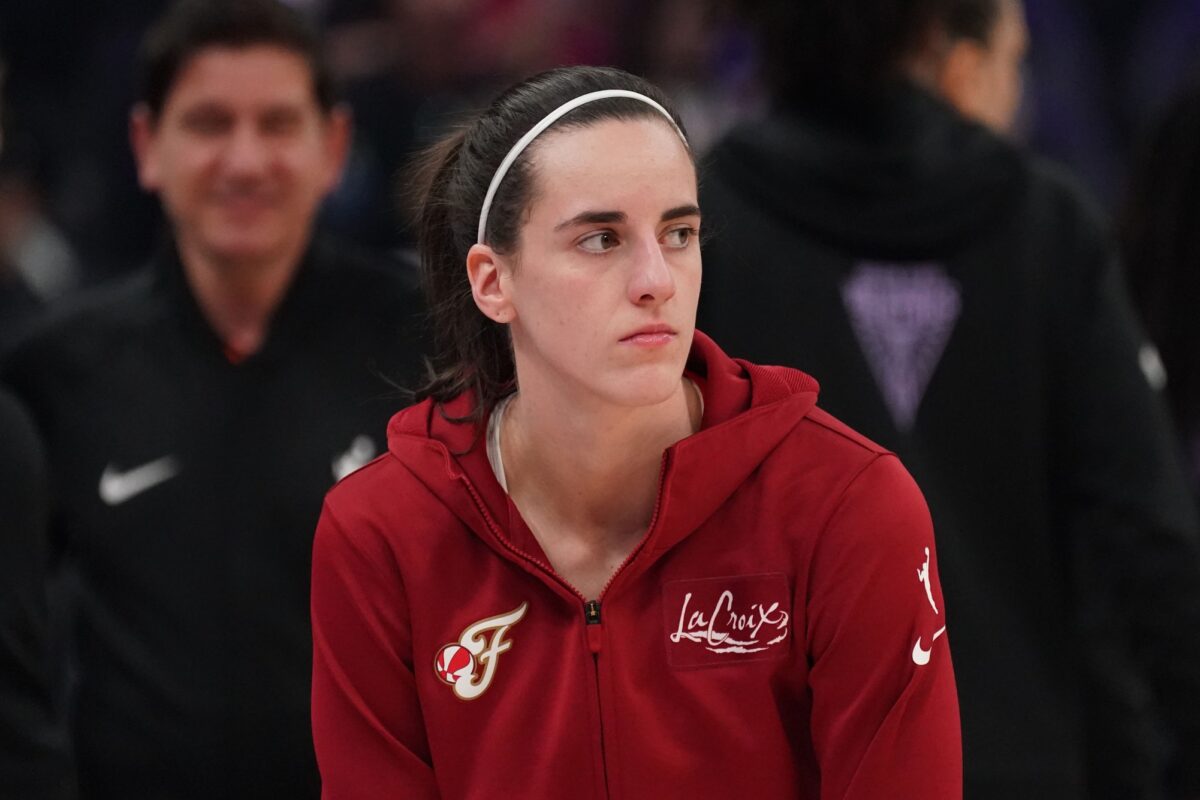
The fallout from Caitlin Clark and Alyssa Thomas’s on-court collision has reopened a much bigger conversation − about racism and hatred directed at women in basketball, Black women in particular. It’s a conversation that keeps circling back to how much responsibility falls on Clark herself.
Watch What’s Trending Now!
On July 7 episode of the Flagrant and Funny podcast, Jemele Hill took on that question directly. Hill argued that Clark hasn’t done enough to push back against the “agenda of racism, hatred” carried out using her name. Although, Clark has repeatedly condemned that behavior herself, both in her rookie year and again recently.
“I did have a couple of issues with what she said, but then I had to step back, and I think this was where we disagreed,” Hill said. “You may sometimes carry the responsibility, but that doesn’t mean you are equipped to carry it.
“I don’t think she is going to get any better at this. Because frankly, you have to embrace wanting that.”
That distinction, between carrying responsibility and actually being equipped for it, is where Hill’s broader argument leads. She went on to rank players like Kelsey Plum and Paige Bueckers above Clark when it comes to being genuine “Voices of Equality.” She pointed to their personal histories as the difference.
“Like the reason Paige Bueckers made that speech at the ESPYS is because she believes it; it means something to her. She was raised by a black stepmother; her sensibilities about race and gender are different, and so she understands the dynamics better.”
“Kelsey Plum has been the same thing. Maybe not the same family background. But she has been, as a basketball player, in the company and close relationship and intimacy with black women in terms of the working space and professional space to the point where she gets it.”
That comparison cuts to the core of Hill’s point: for her understanding comes from lived proximity, not just intention. Clark, for her part, has never denied the platform she holds. She’s simply pushed back on how it gets used against others.
“People should not be using my name to push those agendas. It’s disappointing. It’s not acceptable,” Clark said in 2024. “Treating every single woman in this league with the same amount of respect, I think, it’s just a basic human thing that everybody should do.”
That statement didn’t end the conversation in 2024 and it hasn’t ended it now. Since the Thomas incident, Clark has broken her media silence to address it directly alongside her head coach.
Clark And Coach Stephanie White Have Denounced Threats And Hatred Against Alyssa Thomas
White and Clark have both publicly condemned the death threats, racist abuse, and homophobic remarks directed at Thomas following her flagrant foul on Clark.
“As a league, as a whole, there’s been so much more toxicity, racism, homophobia, straight-out nonsense — hate nonsense — and it is absolutely unacceptable,” White said.
“I believe that this is people who are using our league, using our players, to further their divisive agendas. It’s not acceptable.”
Clark also addressed this controversy directly as well.
“As I’ve stood here and said before, the harassment, the hate, none of that is OK,” Clark said in a statement before Fever practice. “That goes for (the) opposing team we play. That goes for my teammates. That goes for my coaches. There should never be a question of character… That’s how I was raised.”
Whether these latest statements from Clark and White are enough to quiet the controversy remains to be seen. For now, both have put their positions clearly on record. It’s up to the rest of the league and its fans to decide where the conversation goes from here.