Imago
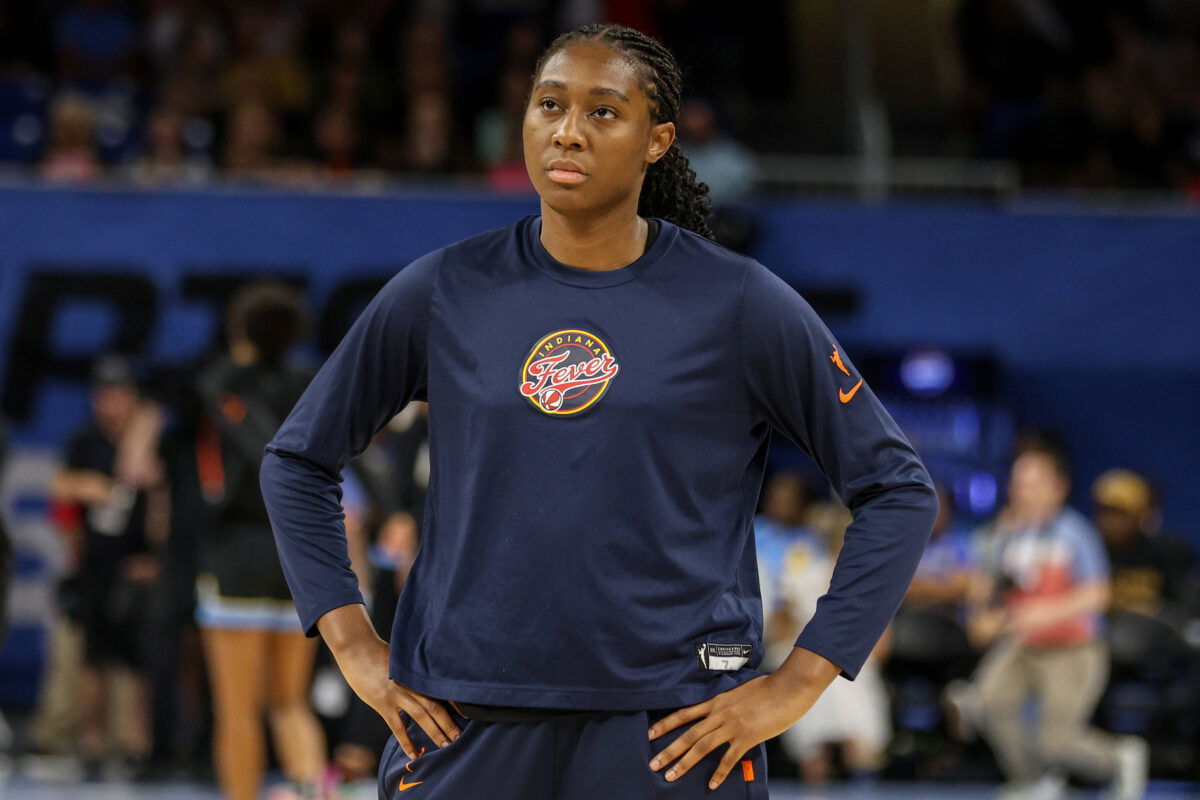
Chicago, USA, June 23, 2024: Aliyah Boston 7 Indiana Fever is seen before the game between the Chicago Sky and Indiana Fever on Sunday June 23, 2024 at Wintrust Arena, Chicago, USA. NO COMMERCIAL USAGE Shaina Benhiyoun/SPP PUBLICATIONxNOTxINxBRAxMEX Copyright: xShainaxBenhiyoun/SPPx spp-en-ShBe-8P6A6635
Imago
Chicago, USA, June 23, 2024: Aliyah Boston 7 Indiana Fever is seen before the game between the Chicago Sky and Indiana Fever on Sunday June 23, 2024 at Wintrust Arena, Chicago, USA. NO COMMERCIAL USAGE Shaina Benhiyoun/SPP PUBLICATIONxNOTxINxBRAxMEX Copyright: xShainaxBenhiyoun/SPPx spp-en-ShBe-8P6A6635
When Stephanie White returned to the Fever, she had a bold vision: to transform the team into a multidimensional offense, not solely reliant on Caitlin Clark, but centered around Aliyah Boston as the offensive hub. “We want her to be a scorer and facilitator from all five positions on the floor,” White emphasized, underscoring a game plan that encouraged Boston to read defences and be more selfish in seizing opportunities. But when a key opportunity arose to put White’s vision to the test in a recent game against the Washington Mystics, Boston failed!
Watch What’s Trending Now!
It all began when the Fever entered CareFirst Arena to lock horns with the Mystics on May 28. All eyes were on Indiana, as this was their chance to prove themselves without Caitlin Clark, who was sidelined with a strained left quad. With a plan to start Sydney Colson at point guard and Sophie Cunningham as a secondary ball-handler, the Fever hit the floor.
But as the game unfolded, it turned into one of their most disappointing showings of the season, exposing glaring vulnerabilities in both effort and execution. Cunningham herself summed it up best: “I think this was a kind of gut punch for us.” And no doubt, she was right. Throughout the game, the Fever struggled to establish any rhythm on either end.
Top Stories






Led by Brittney Sykes and rookie Kiki Iriafen, the Mystics shot an impressive 43.5% from the field and carved up Indiana inside for 48 points in the paint. That stat alone highlights the Fever’s defensive shortcomings. They gave up 12 offensive rebounds, allowing Washington far too many second-chance opportunities and easy putbacks.
Coming from a team that leads the league in second-chance points per game with 15, that’s a massive red flag. And it all added up as Indiana’s offensive hub, Aliyah Boston, failed to execute. But it wasn’t by accident. The Mystics made it clear their defensive agenda was to limit Boston’s effectiveness inside and force someone else to beat them.
And for the first time in several outings, that strategy worked. The 2023 No. 1 overall pick finished with just 10 points on 4-of-5 shooting. While that’s an efficient mark, it’s telling how few opportunities she had. She attempted just five shots in 29 minutes—a stark contrast from her 19-shot explosion against New York just days earlier.
Why? Because the Mystics packed the paint, collapsed quickly on her post-ups, and dared Indiana’s perimeter players to shoot. That defensive wall limited Boston’s touches and forced the Fever to shift their offensive focus away from the block. As a result, Indiana shot just 39.7% from the field and a dismal 23.8% from three.
So as the team visibly struggled, Cunningham didn’t sugarcoat her words: “I also know what we have in the locker room, though. We’re not living up to—individually and as a team—where we’re supposed to be right now. And we’ve got to turn that page. I know we keep talking about that in the locker room, but sometimes enough is enough, right? And she’s a h— of a player, AB, for us. Sometimes we just got to find her. They played really good defense on her.”
And that’s exactly what happened. AB hasn’t always been this quiet. She was dominant, fluid, and clearly the interior anchor of Indiana’s offense. Even against New York, she delivered a monster 27-point, 13-rebound performance while shooting 63.2% from the field.
But against Washington, not only was her usage rate down, but her impact on the boards suffered as well. Despite logging 29 minutes, she pulled down just seven rebounds, well below her usual double-digit average. The Mystics, led by Shakira Austin and their athletic forward rotation, boxed her out early and often, preventing her from cleaning up the glass or generating second-chance points.
That hurt Indiana’s rhythm even more, especially in a game where they were already struggling to create quality looks, shooting just 39.7% from the field and 5-of-21 from beyond the arc. But if you think this was just about AB, it wasn’t.
The Indiana Fever suffers the complete failure of the HC’s plan
Stephanie White already knew the offensive loopholes the Fever would face going up against the Mystics. So, she strategised by inserting Sydney Colson as the starting point guard, hoping her experience could stabilize the floor. But the results told a completely different story.
Colson, who thrives as an energetic presence off the bench, went just 2-of-7 from the field. She failed to hit a three-pointer and dished out only three assists. The most significant rotational adjustment, however, was veteran forward DeWanna Bonner, who became the team’s primary offensive weapon. She was the lone bright spot, scoring 21 points on 5-of-10 shooting, as White opted for a bigger frontcourt in an attempt to dominate the boards and create second-chance opportunities.
But even that gamble didn’t pay off against Washington’s athleticism and size. The Fever were narrowly out-rebounded 34–33 and couldn’t generate enough consistent offense. With no perimeter rhythm and few dynamic creators, Indiana’s offense stalled in the halfcourt. Their 15 assists on 25 made field goals highlighted the lack of ball movement, and their transition game was non-existent — they recorded zero fast break points.
Meanwhile, the Mystics racked up 11 fast-break points, consistently beating Indiana down the floor or capitalizing off turnovers and long rebounds. To make matters worse, the Fever committed 26 fouls — a sign of late defensive rotations and rising frustration. So, what White had in store failed, at least for now. But with Caitlin Clark sidelined for two weeks, there’s still time for the Fever to find answers. The question is: can they?
Written by

Edited by

Deepali Verma