
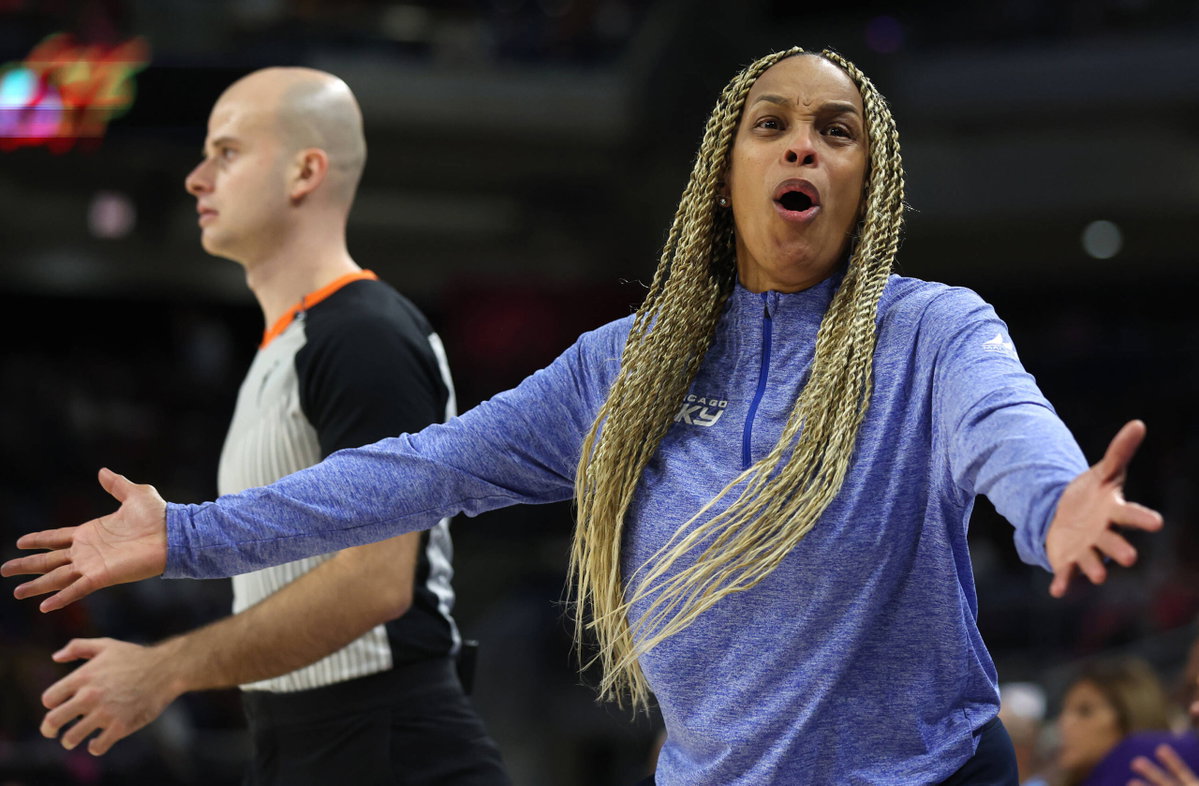
While the WNBA’s efforts to improve officiating have resulted in more fouls being called, many believe far too many are still slipping through the cracks. Some, like Alyssa Thomas’s flagrant foul on Caitlin Clark that went uncalled during the game, stirred a social media storm. Two weeks after the incident, even US Congress urged the WNBA to clean up its act in an official letter. Now, Hall of Famer Teresa Weatherspoon has given her take.
Watch What’s Trending Now!
“It has been spoken about quite often this entire season, and it’s important. It’s important that you take and you hear what the players are saying. It’s very important. I often say, what is the training like for the referees? What is that training like, or even at halftime when you go in and have time?” she said in an interview with USA Sports.
“What is being said to you that might need to change? It might be better, even though players are always gonna make your adjustments. You’re gonna make your adjustment if there’s consistency, and that’s what they’re talking about is a lack of consistency with the play, with the way the games are being refereed.”

"That's what they're talking about, a lack of consistency." "Are we gonna be physical or are we gonna have freedom of movement? Something's wrong when everybody's mad." Teresa Weatherspoon and Renee Montgomery weigh in on the ongoing discussion on officiating in the league ⬇️
The WNBA had changed some of its metrics regarding personal foul calls before this season. It has resulted in more foul calls per game, but there seems to be a lack of consistency as head coaches and players have indicated in recent weeks.
Besides, Fever coach Stephanie White initially being livid at the missed foul call on June 24, which was later upgraded to a Flagrant 2, Atlanta Dream’s Jordin Canada also criticized the officiating.
“the officiating tonight was terrible, horrible. I don’t know how many times Angel has to get beat up in the paint to get a foul called,” Canada said after thier loss against the Washington Mystics on July 3.
Her teammate Rhyne Howard saw it no differently. “Every game has been physical, and nothing has changed. We talk about it, we try to play through it, but it’s hard when only one team is allowed to play that way,” she added during the post-match press conference.
The league-wide crackdown on excessive physical play and a renewed emphasis on “freedom of movement” has resulted in an uptick in fouls called per game. In the first month of this season, 41.8 personal fouls were called per game, as compared to just 32.8 on average for the entire 2025 season, as per USA Today. Yet the coaches and players don’t feel there has been a tangible difference.
One of the teams to have been notably affected by this is the Indiana Fever, as Caitlin Clark ranks fifth in the league in personal fouls drawn per game at 6.4, according to Fox Sports.
Caitlin Clark Herself Has Offered a Suggestion
The officiating issue has cropped up time and again in recent days, against the backdrop of the Caitlin Clark-Alyssa Thomas incident. Clark has since spoken about this directly. She has even offered a suggestion in this regard.
“It’s kind of been a discussion for three years now, and I think we really need to do a better job protecting the people in this league,” Clark said to the press last Friday.
“I’ve been involved in a few of those plays, but there’s been plenty of others across the league that haven’t been called. You go back postgame, or whatever it is, teams submit clips and nothing changes. I think overall the league has to do better.”
“The technology can get better. We can treat the referees a little bit better. Pay them like they’re full-time employees.”
Some coaches also seem to agree with Clark, as per a report by The Athletic.
“Dangle a bigger carrot,” one coach has said. “Pay them more money. Go get better talent to come to the W. I don’t think we have the best talent. We have the best league in the world, but we don’t have the best talent.”
Only time will tell if the league pays any heed to these demands, and officiating calls become more consistent.