
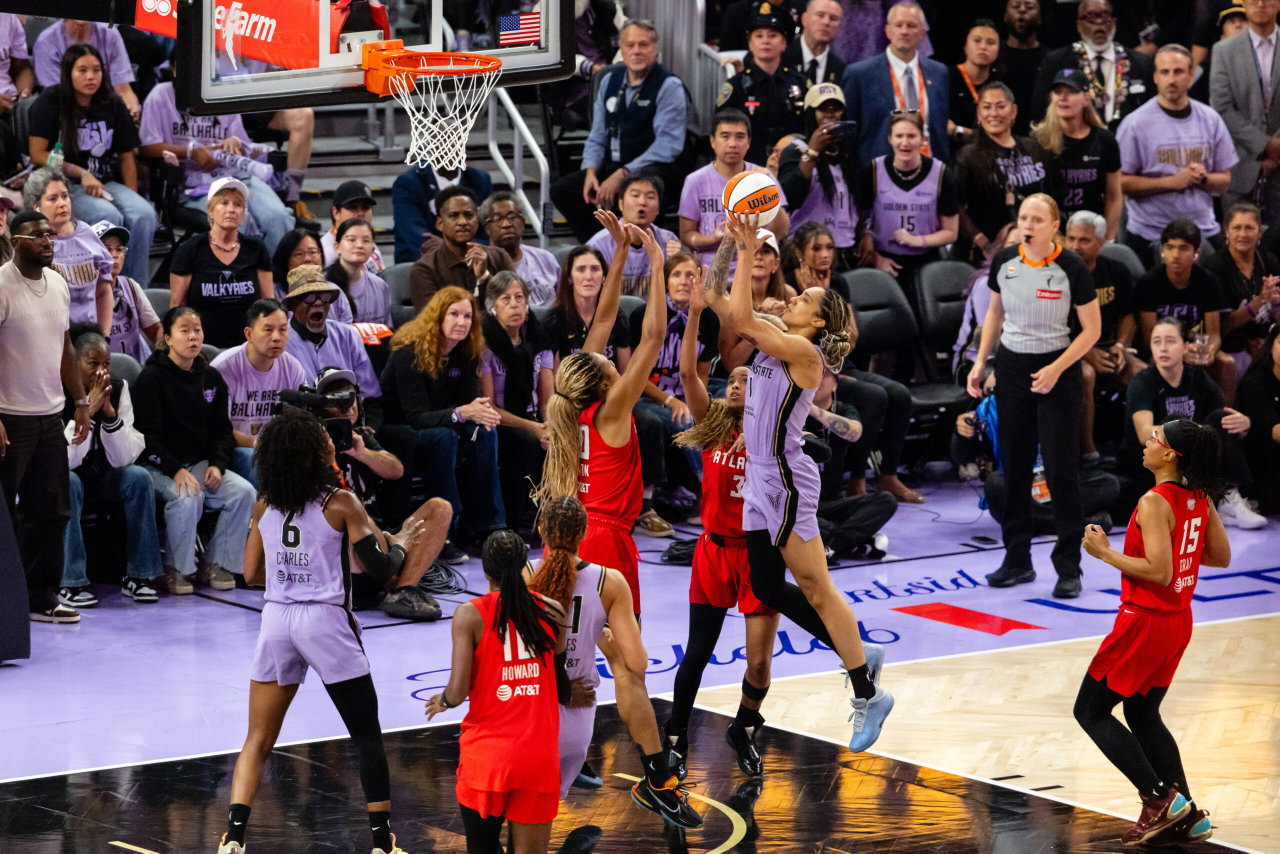
The Golden State Valkyries were chasing a championship in just their second season, while the Atlanta Dream were back in the Finals for the first time since 2013. There was plenty to discuss before Game 2. Getting those conversations started, however, proved harder than reporters expected.
Watch What’s Trending Now!
“It is pretty ridiculous to have no media avail between games 1 and 2 when no travel is involved for teams,” CBS Sports’ women’s sports lead Lindsay Gibbs wrote on X.
“I know that rest is important. I do. I care about it. But with access already so poor, you need to give media SOMETHING if you want them to prioritize in-person reporting. And you miss the chance to have more media cycles!! Give us more things to talk about!!!!”
This came after a report from CBS reporter Jack Maloney, who revealed that both the Valkyries and the Dream had cancelled practice ahead of October 18, during the lead-up to Game 2. Then, in the hours leading up to tipoff, neither team decided to hold a shootaround, which meant that there was no media availability between Games 1 and 2.
Gibbs connected the lack of coverage to the teams taking the time to rest their players, especially considering that there was only one day between the two games. Golden State saw several injury scares that game, with Tiffany Hayes exiting the game early after hitting her face on the floorboards, while Gabby Williams was both hit in the face and the thigh and was visibly limping.
Atlanta needs the rest too. The team’s leading scorer in the regular season and the first round, Allisha Gray, returned in Game 1 after missing nearly the entire semifinals against the New York Liberty because of an injury to her shooting hand.
It seemed to work out because the Valkyries had only Iliana Rupert on the injury report, who has been out for the season, while Gray was upgraded to ‘available’ before the game started.
The lack of media availability is in line with the WNBA’s 2026 Media Access Policy. According to it, teams are not required to have media sessions if there isn’t a game-day shootaround. Similarly, there is no provision that the media can interview players at a session if team practice isn’t held.
Gibbs’ point makes sense when you consider the policy. She is arguing that there is value in players being accessible to the media, and the league’s approach to coverage, according to her, is not taking advantage of that. A short interview could provide lots of insights to fans, and even develop storylines that can carry into their next matchup. Just take an example from this very series.
In the lead-up to Game 1, Valkyries head coach Natalie Nakase called upon the fans attending Chase Center to bring “hostility” toward their on-court opponents, giving fans even more motivation to cheer on the women in violet. After the game, she was pleased and let the fans know she expected more in the upcoming Game 2.
“I did feel a different roar, so great job! But hey, level up,” she told reporters.
“We’ve got Game 2. It has to be better. We’re going to ask more from our players so … let’s get a better Game 2. Rest and recover, Ballhalla. Careful what you drink tonight.”
It was a lighthearted moment, but one that connected the fans even more closely to their team, and it was almost entirely facilitated by pre-and post-game coverage.
This is made all the more important when we look at the significance of this series for both franchises. Golden State is playing in the Finals in only its second season in the league, looking to complete team owner Joe Lacob’s ‘championship in five years’ goal. For the Atlanta Dream, the Finals is a chance to dispel their past demons and finally bring home the first championship in team history.
With so much at stake, the absence of interviews leaves much fewer moments to hear about how players and coaches are approaching the series.
Game 2 added another milestone to Atlanta’s pursuit of that first championship. The Dream beat the Valkyries 79–65 at Chase Center on Monday, October 19, tying the series at 1–1 and securing their first Finals victory after losing their previous 10 games in the championship round.
Angel Reese led the response with 30 points and 16 rebounds after going scoreless in the second half of Game 1. Allisha Gray added 18 points in her second game back from the hand injury, while Jordin Canada contributed 13 points and 10 assists. Atlanta punished Golden State’s mistakes, scoring 24 points off 19 turnovers, and held the Valkyries to nine third-quarter points to take control.
For Reese, the turnaround was personal.
“I let my team down last game, not really contributing as much as I could in the second half,” she said later. “I just wanted to make sure I came out tonight and left my mark.”
The series now moves to Atlanta for Game 3 on Wednesday, October 21. Unlike the break between the opening two games, the next one-day gap includes travel.
That changes the circumstances, but not the question raised by Gibbs: how the league can protect players’ recovery time without leaving reporters dependent on whether teams schedule a practice or shootaround for their between-game access.