
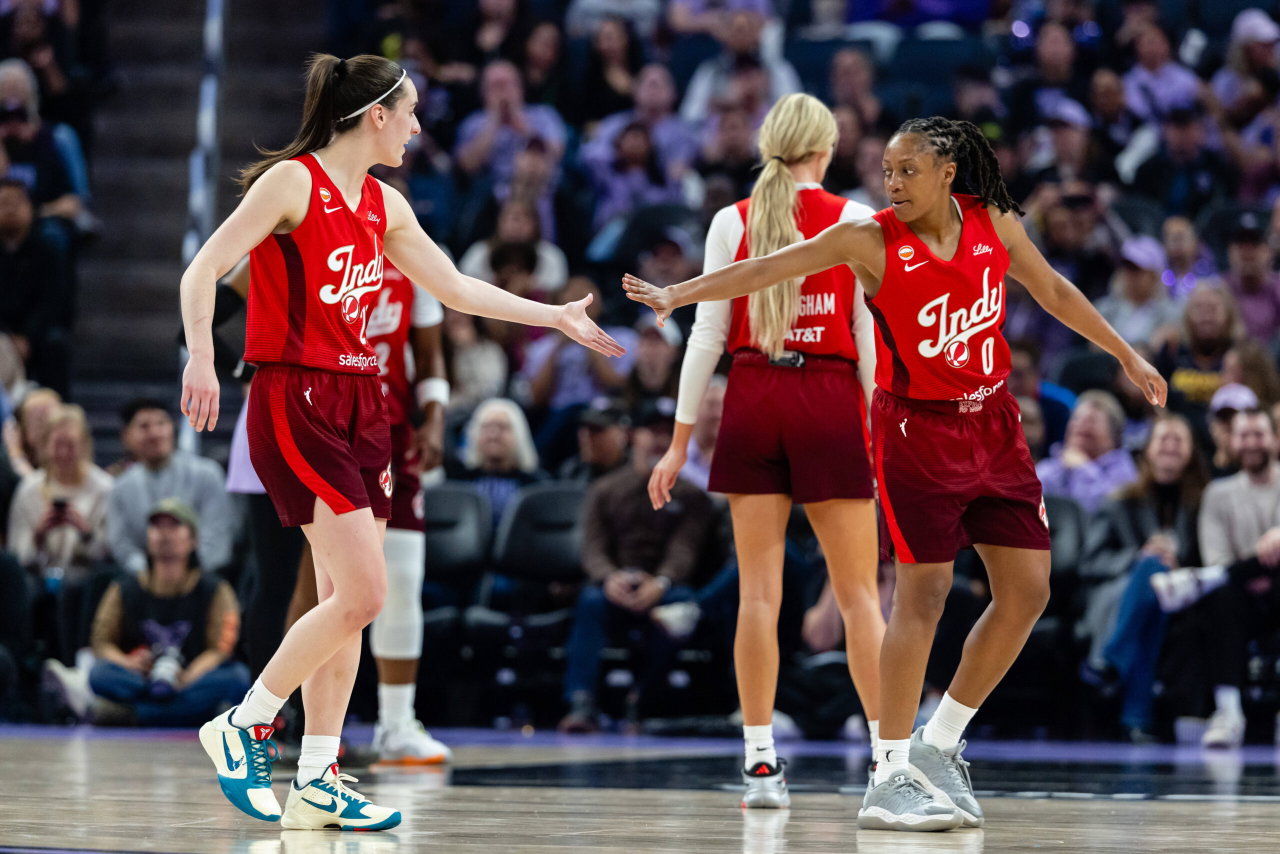
Jemele Hill recently revealed that some media members would rather steer clear of Caitlin Clark than deal with the backlash that comes with discussing the Fever star. Now, days later, she’s turning the spotlight toward a different side of Clark’s fame: the pressure it puts on her own teammates. After Kelsey Mitchell opened up about the “flak” players receive simply for playing alongside Clark, Hill weighed in on the difficult position the Fever guard has to navigate.
Watch What’s Trending Now!
“It’s a really tough position for her to be in,” Hill said on the October 10 episode of Flagrant and Funny. “And though she is not a rookie, she’s not necessarily the most experienced player. She’s still learning on the fly. And I know she didn’t anticipate becoming this avatar of hatred for some people. And so she’s in a rough spot.”
“I’m sure she wants the Indiana fans to know that she appreciates and loves them, and loves that they have created – sans the racism and all that other stuff – an intimidating atmosphere in that arena because it is independent of the shenanigans. It’s a tough place to play, and I’m sure she wants that part of it. She doesn’t want the other stuff, but I don’t know at this point if they could be separated,” she further added.
Mitchell raised the issue during her October 3 exit interview, putting a spotlight on the less comfortable side of playing for a franchise whose popularity has grown significantly since 2024.
“I don’t think people really understand how much we endure, man,” Mitchell said, explaining that the hate she receives in her direct messages. “Playing with (Caitlin Clark) and having the eyes that she’s got (on her), we get a lot of flak just from being on her team. I think that that comes with a lot too. And I just think that people (have) got to give us grace.”
Five days later, Caitlin Clark, speaking during her own exit interview on October 8, made it clear that the treatment of her teammates was something she took personally, especially when the attention surrounding her crossed into abuse and discrimination.
“As her teammate, it makes you upset because you care about your teammates so much, and you don’t want any of them to go through something like that,” Clark said. “As far as people that have used me to demonstrate r**ist rhetoric, or hate, or discrimination, that’s not something I stand for. It’s never been something I’ve stood for. For those of you that know me, you know that’s not what I’m about. It’s not how I was raised. So, that’s really disappointing when people do that.”
However, this reaction is not limited to players only. Hill, just days earlier, revealed that some media members told her they would avoid discussions about the Fever star altogether, given the online backlash that comes.
“I know members of the media, people that I know that have told me flat out that they don’t want to discuss the Fever and Caitlin Clark because they don’t like the brush back and not that they had anything negative to say, but they just don’t like that element that’s there,” Hill said.
There is no doubt that Indiana undoubtedly has one of the most passionate fan bases in the WNBA, and its supporters can make life a living hell for visiting teams at Gainbridge Fieldhouse. That intensity has spilled into confrontations too; take Game 2 of the first-round playoff series between the Fever and Las Vegas Aces as an example.
A’ja Wilson got into an altercation with a Fever fan who reportedly pointed at her and directed comments toward her following a play involving the Aces star and Sophie Cunningham. And although arena security reportedly found no violation of the fan code of conduct, the incident highlighted how the atmosphere surrounding Indiana basketball can become uncomfortable for players on either side.
Then, take head coach Stephanie White as another example. She faced calls for her job throughout the 2026 season, fueled in part by speculation about her relationship with Caitlin Clark and whether she was making enough use of the star guard. Those calls are still in play after Indiana’s first-round playoff exit against the Aces, even though Clark publicly defended her coach.
So the Fever now find themselves in a difficult position. They have a passionate fan base that has helped elevate the franchise, but they also have Clark, their biggest star, speaking out against the racism and discrimination directed at her teammates, including Mitchell, whom Indiana hopes to retain in free agency.
As Hill pointed out, separating the intimidating atmosphere that benefits the Fever on the court from the harmful behavior surrounding it may not be so easy. For Indiana, balancing its growing popularity with the need to protect its players could prove to be one of the more concerning realities of the Caitlin Clark era.