
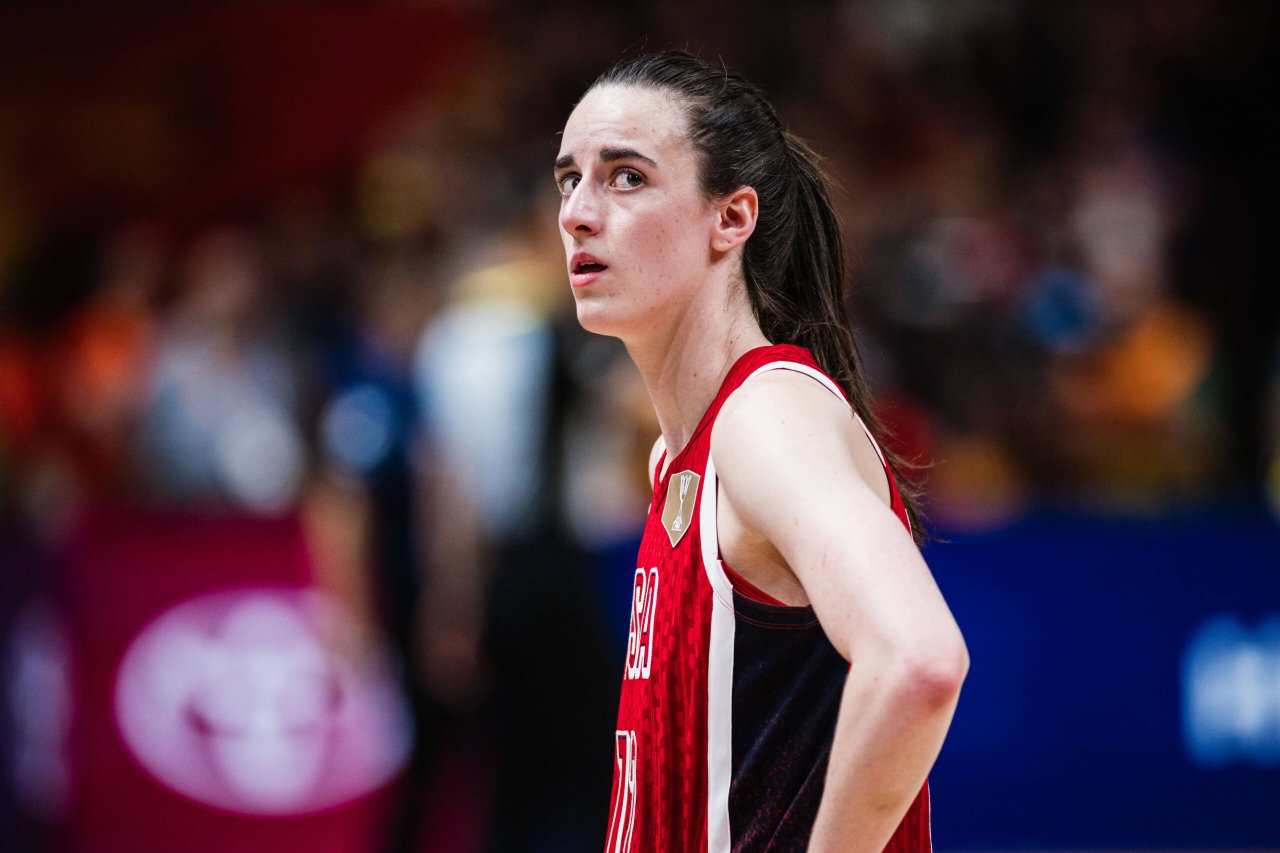
The WNBA has spent years trying to build its audience since its inception in 1996, but in 2024, Caitlin Clark brought a level of attention few could have predicted. Her arrival changed the conversation around the sport, from television audiences to attendance and the broader interest surrounding WNBA games. But from the outside, the league seemed to resist going all out by making Clark the face of the league and reaching wider audiences, as highlighted by former ESPN analyst Linda Cohn.
Watch What’s Trending Now!
Cohn has argued that the WNBA should not overlook Clark in an effort to celebrate the players who helped build the league, because the Indiana Fever Guard’s record-breaking performances have acted as a catalyst to amplify reach.
“I was just talking, rehashing with Dominic about it, when the league went out of their way not to promote Caitlin Clark, and because they were so intent of like, ‘Oh, we can’t forget the people that build this,'” Cohn said on her YouTube channel during a recent conversation with Christine Brennan. “And I always said you can promote the league through Caitlin Clark. Don’t go out of your way to ignore Caitlin Clark. You know, like with Tiger Woods and the PGA Tour many moons ago, she’s making your world better.”
The issue is not about choosing Clark over the veterans who helped establish the WNBA. But the league can honor its past while still leaning into the star power it has today. And that distinction has become increasingly relevant after several promotional decisions involving the 24-year-old sparked backlash from fans.
One of the most recent examples came in August, when WNBA on ION promoted a Fever matchup against the Dallas Wings without featuring Caitlin Clark. Instead, the graphic highlighted Lexie Hull and rookie Raven Johnson for Indiana, while Paige Bueckers and Arike Ogunbowale represented Dallas. They had a chance to promote the game as a showdown between college rivals Bueckers and Clark, but they overlooked it.
Their choice immediately drew criticism online, but the debate is not limited to just the ION graphic.
Earlier in the season, another WNBA promotional graphic featuring a nationally televised doubleheader left Clark out while several other stars were included.
Then the league’s 30th-anniversary poster also reignited the conversation in June after Caitlin Clark was absent despite the inclusion of several current stars, including Angel Reese and Paige Bueckers. However, that particular case came with an important caveat: several reports pointed to possible licensing issues surrounding the commercially sold poster, with several major WNBA legends also absent.
In the last few years, the WNBA has seen enormous growth. They have signed a massive media rights deal, which, according to Just Women’s Sports, is a “11-year, $3.1 billion TV deal with partners like Disney, NBC, and Amazon, skyrocketing its annual revenue to $281 million.”
The growth in viewership is off the charts, and a new CBA is also in place that offers the top players a supermax salary of $1.4 million. And Clark has frequently been cited as one factor behind that growth.
So the broader debate is no longer simply about whether Clark appears in one particular graphic. It is about how the league approaches the enormous attention surrounding her. And Cohn believes the league should recognize that rather than treating her popularity as something that needs to be separated from the league’s identity.
Her comparison to Tiger Woods and the PGA Tour captures the heart of her argument. A superstar can become a gateway into an entire sport without diminishing the athletes who came before them.
For the WNBA, Caitlin Clark can be that gateway without the league having to choose between celebrating its history and embracing the star who is helping define its present.