
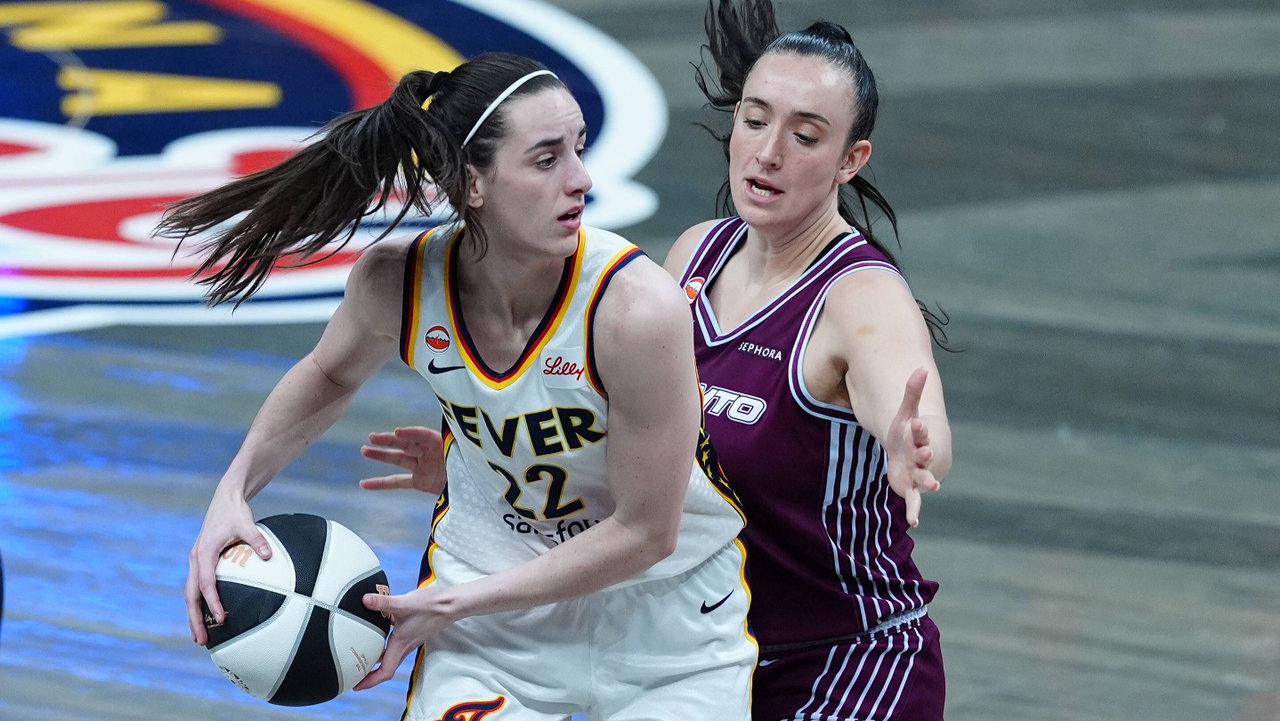
For months, one narrative has followed WNBA players in the lead-up to the FIBA World Cup: international play is more physical. However, for one former college basketball pro, that simply isn’t true, and her explanation brings the WNBA’s own officiating debate back under the spotlight.
Watch What’s Trending Now!
During a recent episode of the Courtside Club podcast, former college player for Old Dominion, Rachel DeMita, argued that anyone who regularly plays in the WNBA should have no trouble with the physicality of the international game. A clip from the segment was shared on Instagram.
“No one’s going to convince me that FIBA is more physical than the WNBA. Are we watching the same thing?” DeMita said. “FIBA calls fouls much quicker than the W does. They call them so much quicker. There are definitely things that are different when it comes to FIBA, but the physicality is not one of them. And I just don’t understand how this kind of like narrative or thing has just been circulating… It’s like, ‘Oh, will the girls be ready for the physicality?’ I’m sorry. Any player who plays in the WNBA will be ready for the physicality of FIBA.”
Before the season began, the league refocused with a new officiating task force, which was tasked with making the officiating process more consistent following several high-profile injuries and complaints in 2025.
The changes also addressed freedom of movement. This is meant to cut down on physicality, helping to improve flow and increase the quality of the experience for both players and fans.
The league has seen a noticeable uptick in foul calls. In the 2025 season, teams were fouled 17.5 times on average, which has risen to 19.8 fouls this year.
To DeMita’s point, in the FIBA World Cup so far, the average number of fouls a team commits is actually much more in line with the 2025 WNBA season. Through Day 2, teams on average commit 17.7 fouls per game, which means, purely using this statistic, it would indicate that the 2026 World Cup is actually more physical than the 2025 WNBA season.
However, it is important to note that this does not paint a full picture, especially considering that most teams have not played more than one game so far.
Regardless, DeMita is not budging. During her video, she pointed out that despite the WNBA taking steps to improve its officiating this past offseason, FIBA defenses still seem less hard-nosed, and that it might not be a bad thing.
“There’s not a more physical league than the WNBA. And yes, the referees – like, they’ve cleaned up the referees in the WNBA,” she said. “It’s definitely gotten better, but they call fouls so much quicker in FIBA. And I’m happy about that because I don’t want to see any injuries.”
Notably, not everyone in the WNBA was happy with the changes to refs. New York Liberty superstar Breanna Stewart thought the changes were implemented poorly.
“It disrupts everyone’s flow,” she said. “This game was 2 hours and 41 minutes long. That’s insane… There’s calls that are being called that are unnecessary on both sides, and then there’s no flow.”
Minnesota Lynx head coach Cheryl Reeve was also not pleased and made it a point after the team’s opener in May to tell reporters that she was confused about how they had implemented changes.
“What I’m confused about, being on the task force, we talked about unnecessary physicality. We didn’t say we want to call marginal fouls. We never brought that up,” Reeve said. “Obviously, we’ll continue to work with the league on getting it right because we’re not the only team sitting here wondering why everything is a foul.”
We now enter the third day of the 2026 FIBA World Cup, with Team USA having won their one and only opponent so far, China, in a dominant 94-61 victory. As the World Cup continues, it will definitely be worth monitoring teams to see how physical the defense is, and only time will tell if DeMita is proven right.