
Imago
Credits: IMAGO
Imago
Credits: IMAGO
Remember Cameron Smotherman, the UFC bantamweight, who collapsed and faceplanted on stage during UFC 324 weigh-ins? Despite making weight, he was forced to pull out of his fight on the card after the incident. Well, that’s the perfect example of the major crisis currently plaguing the world’s biggest MMA promotion. And color commentator Joe Rogan appears to have a solution for the problem. But UFC CEO Dana White isn’t willing to entertain.


“I think for MMA, they really need to recognize that one of the things that’s going to stop weight cuts is give people more weight classes, give people more options,” Rogan had said last month on his JRE podcast. “If they had more options, more weight classes, I think we’d have more competitive fights, we’d have less extreme weight cuts, we’d have healthier fighters.”
Watch What’s Trending Now!
Dana White was asked about Joe Rogan’s take during last Saturday’s UFC London press conference. When asked whether he would pay heed to Rogan’s solution, the 56-year-old firmly dismissed the proposition.
“No,” the UFC CEO said. “They’re going to stay exactly the same.”
Increasing the number of weight classes could end up diluting the divisions—assuming fighters actually move into the categories they naturally belong in. In reality, many fighters deliberately choose to compete in lower weight classes that require extreme cuts. The reason is simple.
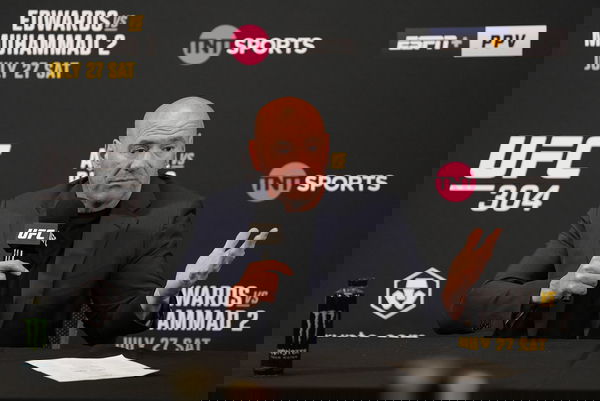
Imago
UFC CEO DANA WHITE with post event media during the UFC 304 event at Co-op Etihad Campus, SportCity, Manchester, England on the 27 July 2024. Copyright: xAndyxRowlandx PMI-6350-0002
If they can successfully endure a grueling weight cut, they’re able to rehydrate after weigh-ins and enter the cage significantly bigger than their opponent on fight night, gaining a competitive edge. However, what’s more concerning is the toll these cuts take on their health. Setting aside the concerns of extreme dehydration, the cut also makes them significantly more susceptible to knockouts and concussions.
In most cases, fighters severely restrict—or completely stop—food and water intake during camp. They spend hours in saunas, often wearing heavy sweat suits, trying to shed as much water weight as possible. So, if the UFC truly wants to address the dangers of weight cutting, simply adding more divisions won’t be enough. They also need to rethink and reform the weigh-in system itself.
Regardless, the weight-cutting problem is so bad that one fighter developed an eating disorder because of it.
Paul Craig urges UFC fighters to seek help and support
Former UFC star Paul Craig, who competed in the promotion from 2016 to 2025, revealed in an interview last year how weight cutting had affected him. Craig was in the light heavyweight division till 2023, but then he decided to move to middleweight, and admitted the process took a serious toll on his health.
“I set myself a goal of being middleweight champion and focused and did it,” Craig said. “But mentally, I ended up with an eating disorder.”
He restricted calories for 10 weeks, leading to issues like low testosterone, low white blood cells, and frequent infections.
“The best thing I did was talk to people about it because for a long time I was embarrassed by it,” he added. “I do believe there are other fighters out there going through this, so put it out there, get the help and support.”
Craig believes many fighters may be suffering in silence due to the extreme demands of weight cutting. After Craig moved to middleweight after beating Andre Muniz in July 2023, the Scotsman never won a fight again. He exited the promotion last year on a four-fight losing streak.
While Dana White remains resistant to change, the health of fighters is caught in the crossfire between a system that rewards dangerous weight cuts and a promotion unwilling to intervene. Until the UFC either adds more weight classes or overhauls its weigh-in procedures, fighters will continue to be incentivized to risk their health for a competitive advantage.
Written by

Edited by

Gokul Pillai