
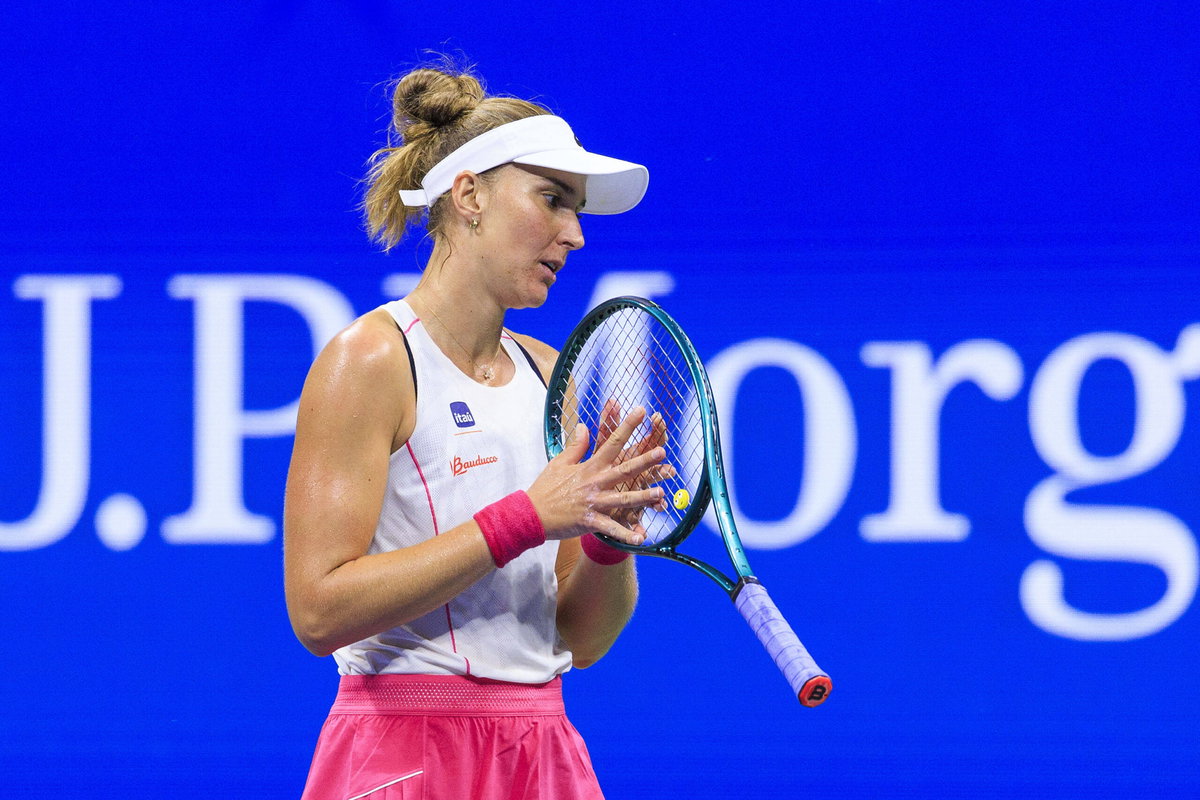
There is a version of Beatriz Haddad Maia‘s career that looks, from the outside, like sustained excellence. A top-10 ranking. A Roland Garros semifinal. Success on the WTA Tour. The most successful Brazilian tennis player of her generation, widely regarded as the player who lifted the sport’s profile in her country more than anyone since Gustavo Kuerten. On the surface, the story is of a player who found her best. On the inside, it’s always been more complicated.
Watch What’s Trending Now!
Speaking to Punto de Break at the Mutua Madrid Open after a first-round loss to Jessica Bouzas, which she described as playing “far below the level I’ve been training at”, Haddad Maia was honest in a way that recast that “best of times” in her career.
“Even back then, winning a lot of matches and taking several third sets, I was never the most confident player. I always had my nerves, my doubts, like everyone else,” she said.
The admission is striking because it’s coming from someone talking about the pinnacle of her career. The anxiety and insecurity she is talking about didn’t come about as a result of her current form slump – it was there during her peak. The circumstances have changed, though. “Now I feel a little less confident. It’s the consequence of not winning many matches, especially compared to my record in previous years,” she acknowledged.
The slump she is currently experiencing has been one of the biggest declines in form on the WTA Tour in recent years. After ranking as high as world No. 10 and reaching the semifinals of Roland Garros in 2023, she has dropped out of the top 50 – a plunge that prompted a major shake-up of her support team and a period of intense introspection, which she spoke about with more openness than most.

Imago
Tennis: French Open Jun 5 2023 Paris,France Beatriz Haddad Maia BRA reacts during a match against Sara Sorribes Tormo ESP on day nine at Stade Roland-Garros. Paris Stade Roland-Garros France, EDITORIAL USE ONLY PUBLICATIONxINxGERxSUIxAUTxONLY Copyright: xSusanxMullanex 20230605_gma_au2_0207
“Tennis isn’t something you forget, but many things happen in life. Right now, I’m going through a very personal process – I need to get to know myself more deeply. The things I want, the things I’ve been through, and the traumas I carry. I’m a very passionate person in my daily life; my energy is always above 100%, and sometimes I even have to slow down a bit to avoid falling into anxiety. Now I’m in a moment of self-discovery,” she said.
What has kept her grounded through it is a refusal to catastrophize. Asked point-blank whether she had ever doubted her ability – whether she had ever wondered “what if I’m not that good?” – she had an instant reply.
“No, never. When you lose and leave the tournament, you’re sad. When you get to the hotel, certain thoughts are inevitable, but I always tried to be positive. In my mind, I kept all the good things I achieved for myself and my country, all the doors I opened, creating new tournaments, bringing more junior players out, increasing support throughout the entire structure. I think I took tennis to another level in my country, so I’m very proud of everything I did.”
She nailed the line that sums up the situation with the elegance that is possible only when one has given it genuine consideration. “That’s tennis, it’s incredibly tough. If it were easy, everyone would be in the top 10.”
The biggest dream, she made clear, has not diminished. “I still hold onto the biggest dream possible: winning a Grand Slam. That drives me and motivates me.”
Madrid ended quickly and painfully. But Haddad Maia left the Caja Mágica still smiling. “I’m happy with everything I do. Those close to me know I’m someone who gives 120% every day. That helps me go to sleep peacefully.”
The Brazilian moved to another town in Spain to play a WTA 125 event after an early exit in Madrid. She is currently in the third round of the tournament, having defeated Andrea Lazaro Gracia and Ashlyn Krueger in the previous rounds. The world No. 69 would be facing Marina Bassols Ribera in the quarterfinals today.
A new Coach, no Social Media, and a process that is only just beginning
The rebuild has been carefully crafted. Carlos Martínez, the Spanish coach who has worked with Loïs Boisson and is renowned for his ability to nurture talent, is at its core. The invitation came from Haddad Maia.
“Several coaches contacted me after I stopped working with my former coach, but the first person I reached out to was Carlos. At the time, he was working with Loïs Boisson, so I traveled alone for a couple of weeks, waiting to see what would happen. I always hoped Carlos would be able to give me an answer. I really liked his attitude; he was very respectful of his players,” she said.
They have just started to work together, three or four weeks ago, but Haddad Maia was immediately struck by the intensity Martinez brings to the job. “What impresses me most is his passion for tennis. I arrived at his academy at 8:00 in the morning and he was already on the court, but he didn’t leave until 7:00 PM. Another day he trained for eight hours straight, without eating or drinking; he’s even capable of forgetting to drink water. When he’s on the court, he forgets about the clock.”
The shared cultural connection has made communication easier than it might otherwise have been. “Speaking the same language is essential for communicating and expressing everything that’s on our minds. Brazilian culture is very similar to ours; we share that Latin heart,” she laughed.
In addition to the coaching, Haddad Maia has made another commitment that is becoming more common for players who are going through a difficult period, but will stand out for how fully Haddad Maia has embraced it. She has taken a break from social media.
“Right now I’m off all social media. I only use WhatsApp to talk to my family. I’m someone who cares a lot about people, I always want to respond to everyone, but there came a point where I was only paying attention to the outside world and not listening to my inner self. I need to be more present. I haven’t opened Instagram in over a month,” she said.
It’s part of a broader shift: away from distraction, towards introspection, towards the process she and Martínez are working on. The Madrid results didn’t show it. But the 29-year-old has been around too long not to know that the fruits don’t always come fast.
“I know it’s a process that will take time, so now it’s time to be patient and work hard to turn these results around. You have to keep thinking day by day that, at any moment, everything can turn in your favour. Staying positive is key,” she concluded.
The top 10, which she had once called home, is far away. But the player who was there once, while not always feeling like she “deserved” to be there, is working again. This time around, perhaps even better than before.