
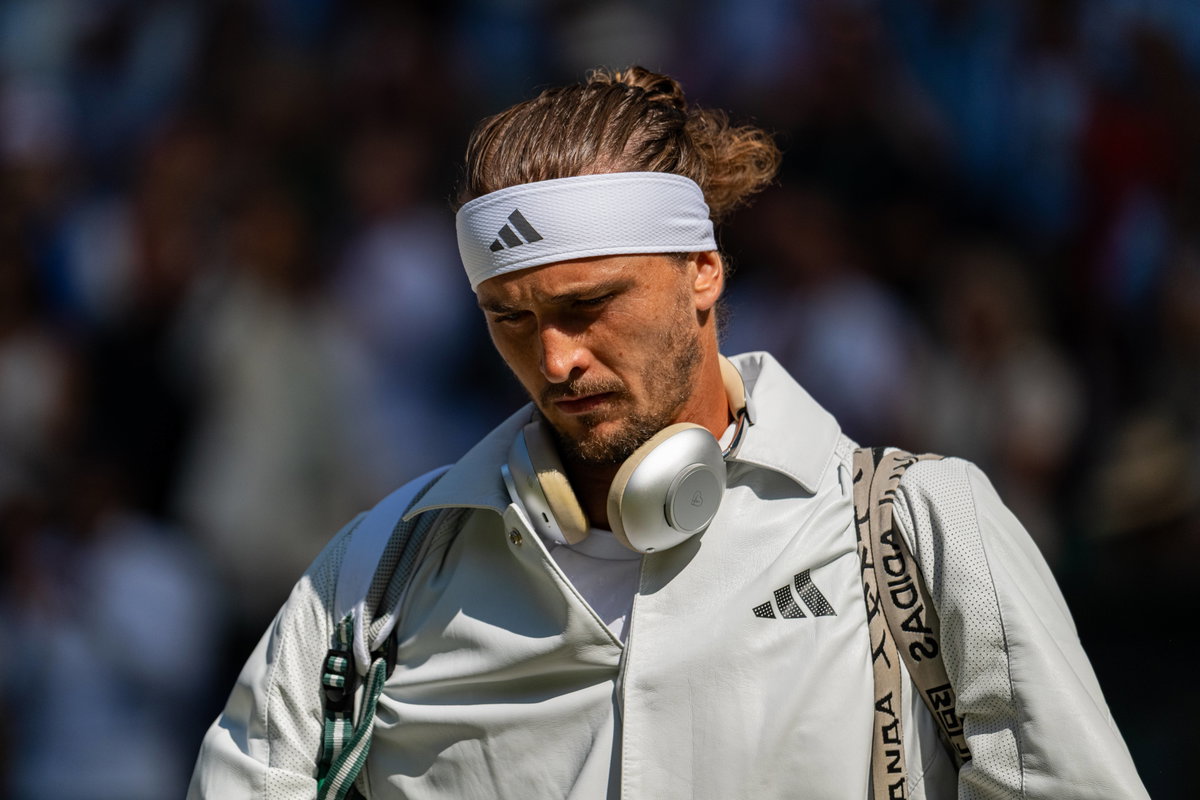
Alexander Zverev was spotted checking his phone and taking an insulin shot after winning the opening set of the Wimbledon final against Jannik Sinner, and while phones are banned for players during matches, the German has a very good reason for the exception.
Watch What’s Trending Now!
Why Does Alexander Zverev Use His Phone During Wimbledon Matches?
Zverev was diagnosed with type 1 diabetes at four and has dealt with it all his career. He wears a continuous glucose monitor that sends readings directly to a mobile phone screen, so he can check his levels at halftime and take insulin if necessary, as he did after the first set on Sunday. His glucose monitor sends data directly to the phone, meaning he can simply read the levels off the screen at changeovers rather than carrying out constant finger-prick checks throughout a match that can last several hours.
Why Doesn’t Zverev Break Wimbledon Rules by Using a Phone?
Under Wimbledon and LTA rules, phones and smart devices must be switched off and stored away during play, with breaches potentially leading to immediate disqualification and formal investigation, since a device could enable coaching or outside communication. However, there are medical exemptions. The All England Club maintains a list of players who have diabetes and are allowed to use a device to monitor their glucose. Zverev is on that list. Most importantly, the phone he uses in court doesn’t have a SIM card and is solely used for data uploads from his monitor.
“That’s why the umpires allow me to check my phone, so I don’t have to poke my finger every changeover,” he explained.

Reuters
Tennis – Wimbledon – All England Lawn Tennis and Croquet Club, London, Britain – July 2, 2024 Germany’s Alexander Zverev celebrates winning his first round match against Spain’s Roberto Carballes Baena REUTERS/Hannah Mckay
The All England Club confirmed to BBC Sport that Grand Slam tournaments keep a list of diabetic players, who are permitted to use their phones during matches specifically to monitor their glucose and inject insulin if needed, allowing Zverev to manage his condition safely without undermining the integrity of the competition.
Has Alexander Zverev Spoken About His Diabetes?
Zverev has been open about his condition and the technology that helps him compete. “I have two phones with me, actually. One is just a phone which doesn’t even have a SIM card or anything like that,” he said. “Sometimes it doesn’t find the signal quick enough, and then I do have to poke my finger, but fortunately for me, I think diabetes has become easier over the past few years with technology.”
The risks remain real, though. A monitor malfunction at the Halle Open in June saw him inject far too much insulin, leaving him feeling “absolutely terrible” and forcing him to consume around 350g of sugar to recover during his semi-final loss to Taylor Fritz, a stark illustration of how dangerous a single dosing error can be even at the elite level.
Sascha became the first person to win a Grand Slam with type 1 diabetes in the history of the sport. He has founded a charity to support children with diabetes, and now Zverev carries that journey from a childhood diagnosis at the age of four all the way to a second consecutive Grand Slam final.