
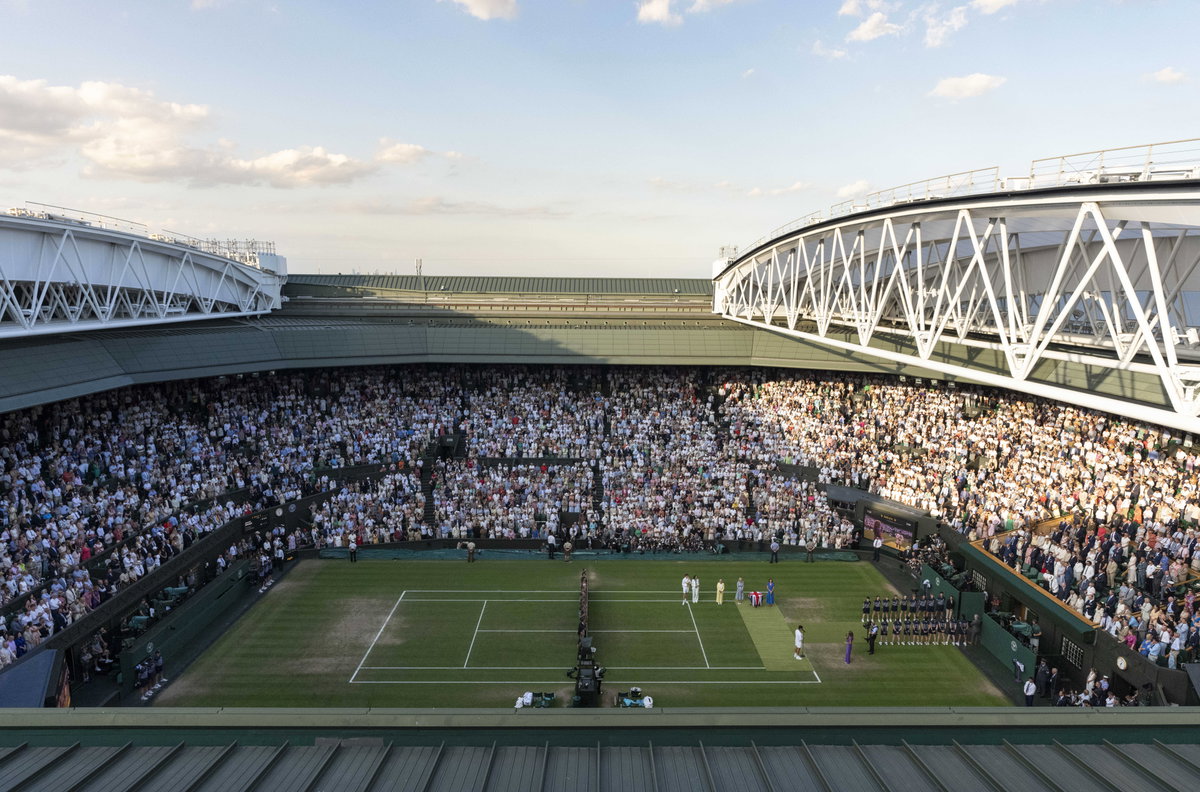
Court No. 2 delivered its own answer to the ATP’s doubles debate this week, and it had nothing to do with prize money spreadsheets. A packed house watching a doubles match at Wimbledon has become the latest talking point in the row over the Tour’s proposed cuts.
Watch What’s Trending Now!
A Journalist pointed out the obvious contradiction on display. “A packed Court No. 2 clearly shows that the crowd enjoys watching doubles,” he wrote on X. Another user added that halving draw sizes would leave outside courts nearly empty by the second week of majors and at Masters 1000 events within days, with fans “left with nothing to watch.”
The picture comes exactly in the middle of a battle that has been simmering since the ATP’s recommendations started to trickle out of a meeting held at the All England Club. The plan includes a restructuring of the ATP’s doubles category, with Masters 1000 doubles reducing from 32 pairs to 16, while 500-level and 250-level events reducing from 16 to 8, part of a broader restructuring the ATP internally calls Product 28.
The prize money split is also up for discussion. Doubles reportedly can have a possible drop from 20 percent of tournament revenues to 10 percent at regular events. The ATP is planning to allocate those extra funds to the lower-ranked singles players.
At this year’s Indian Wells, Jannik Sinner earned $1.151 million for winning the singles title, while Guido Andreozzi and Manuel Guinard took home just $234,000 between them for winning the doubles crown. But doubles players argue the answer to that imbalance is not fewer opportunities.

A packed Court No. 2 clearly shows that the crowd enjoys watching doubles.


Secondly, if you reduce draw sizes in doubles, the second week of slams or after a few days at Masters 1000s will be almost empty on the outside courts. The fans will be left with nothing to watch
“Doubles isn’t a carnival sideshow. It is one of the most successful parts of tennis, integral to the amateur game, with the potential to do so much more,” read a joint statement from ATP doubles players, who called the proposals a plan to end doubles as a viable profession dressed up as a cost-saving measure.
Calvin Betton, who coaches world No. 1 doubles player Henry Patten, did not hold back when asked for his take. “I think it’s quite disgusting, to be honest, for numerous reasons. We’ve had no real indication as to what the motivation behind it is, who exactly benefits from it, other than a few singles players who are already the richest in the world,” he said.
Pierre-Hugues Herbert, freshly out of the tournament after a first-round exit, made a similar point on social media. “A stronger sport isn’t built by creating fewer opportunities. Professional doubles has always been part of tennis’s identity, and its future deserves the same commitment, respect and vision as every other part of the game,” he wrote.
The ATP is currently presenting two wildly different numbers, and the opinion from Court No. 2 is a true indicator of where the format falls rather than the spreadsheet.