
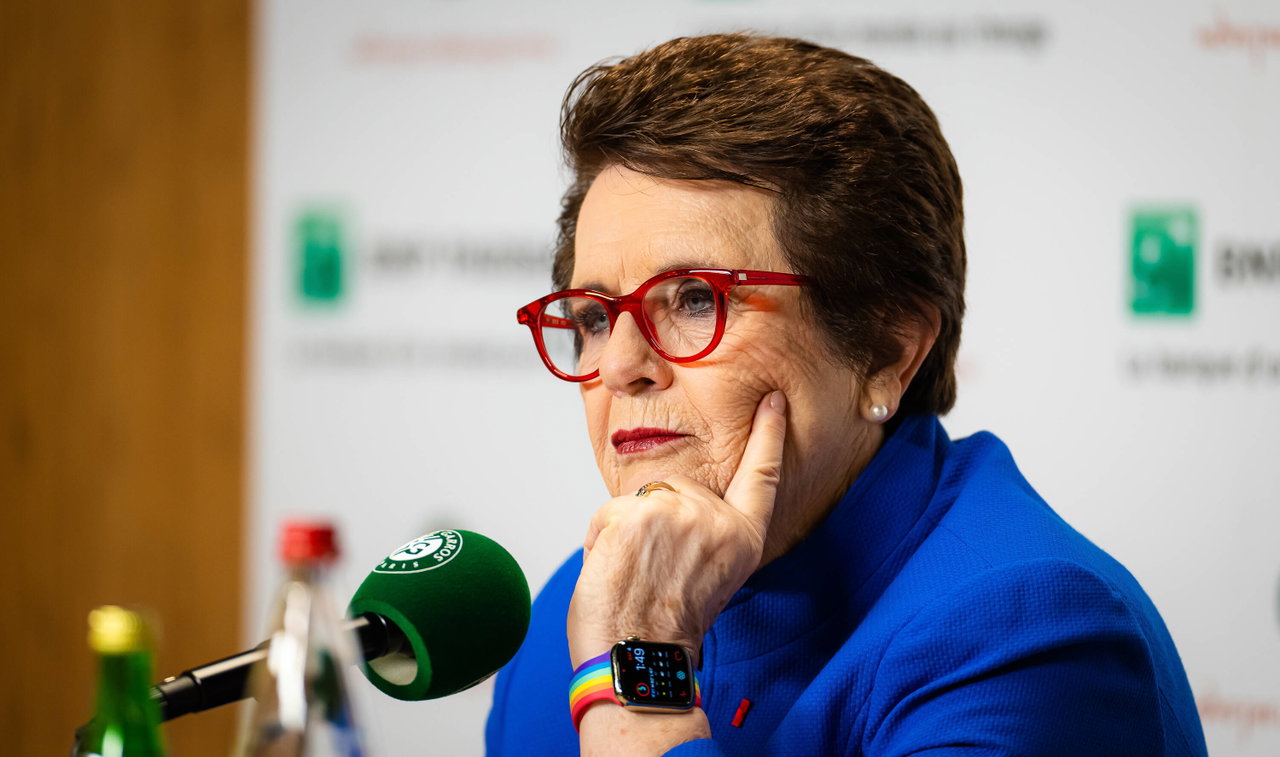
Behind one of the most decorated careers in tennis history lay a private world of struggle, and a new documentary lays it bare. “Give Me the Ball!”, the ESPN 30 for 30 film charting the life of Billie Jean King, celebrates her fierce love of competition while revealing just how much she sacrificed in its pursuit. Released on November 22, the day King turned 83, it is an unflinching portrait of a champion who was fighting battles far beyond the baseline.
Watch What’s Trending Now!
A winner of 39 Grand Slam titles and a record 20 Wimbledon crowns, she used her perch as world No. 1 to blaze a trail for equal prize money and to reshape women’s sport forever. But the film makes clear that 1973, the year she had her biggest cultural success by defeating Bobby Riggs in the famous “Battle of the Sexes,” was also one of the most difficult years in her life.
“It wasn’t good,” she says. “It was very difficult.” That weight runs through her reflections.
“How did I survive?” King asks in the film, before listing the extraordinary load she was carrying at the time. She describes “trying to be No. 1, trying to help women’s sports, trying to get the players together, trying to make a living, trying to get equal prize money,” and, amid all of it, “trying to get a divorce” and “trying to figure out who I am, the sexuality part.” Only then, almost as an afterthought, does she add, “Oh yeah, I gotta play tennis, too.”
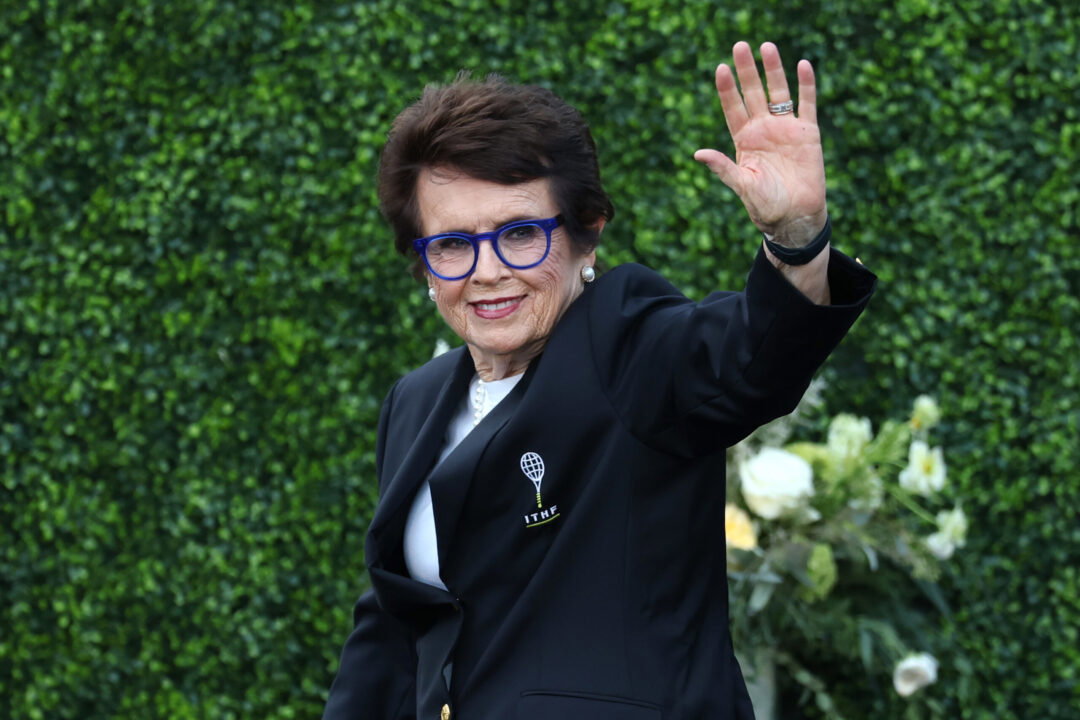
Getty
NEWPORT, RHODE ISLAND – AUGUST 29: Billie Jean King acknowledges the audience during the International Tennis Hall of Fame 2026 Induction Ceremony on August 29, 2026 in Newport, Rhode Island. (Photo by Clive Brunskill/ITHF/Getty Images)
Much of that turmoil centered on her marriage to Larry King, whom she met and fell in love with in college. The documentary traces how the couple drifted apart as her career soared and his wish to start a family grew, before they moved to an open relationship.
“It wasn’t right for Larry and I to stay married because I didn’t know what I was doing. Hadn’t figured out who I was. And he shouldn’t be suffering through that either,” King recalls, adding that she repeatedly asked for a divorce. It is a candid account of two people pulled in different directions, and only one thread of a much larger personal story the film goes on to tell.
A private battle behind the public triumph
One of the most sensitive chapters is King’s abortion of 1971, which broke into the open against her will and was revived during a television interview where she had requested it not be brought up.
The repercussions got to her mom, who was also never told. The procedure was not widely available at the time in most parts of the United States, and in King’s case, required her husband’s approval. Two years later, the Supreme Court’s 1973 Roe v. Wade decision granted a nationwide right to abortion, until 2022’s Dobbs v. Jackson Women’s Health Organization reversed that stance and put the decision back in the hands of individual states, where access now varies widely.
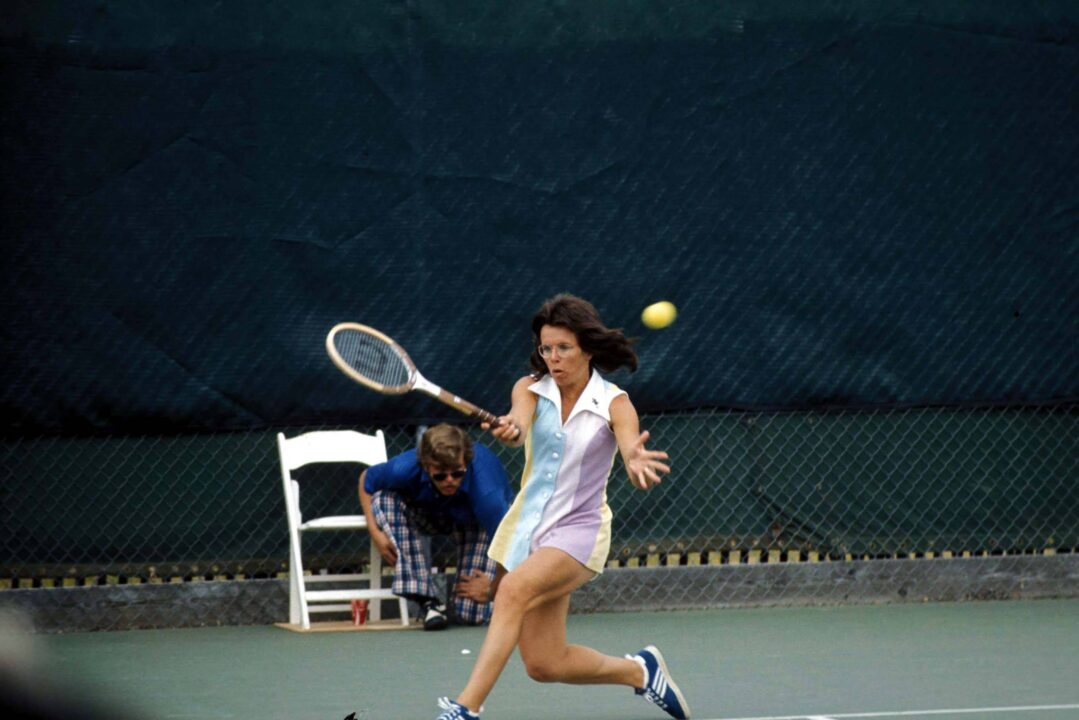
Imago
Jan. 1, 2011 – M1923.BILLIE JEAN KING AFTER WINNING THE 1973 VIRGINIA SLIMS 08/1973. SAL CRISANTI/ PHOTOS BILLIE JEAN KING RALPH – ZUMAg49_
The film is also honest about the pressure she felt to keep her sexuality a secret when it was very risky to be openly gay. King has revealed the impact those years had on her health, including the development of an eating disorder during the turmoil, which she managed with therapy later in the years.
In 1981, she was publicly outed when a former partner, Marilyn Barnett, filed a lawsuit, a case a newspaper headline of the day labeled a claim for “galimony.” Instead of being forced to remain silent, King decided publicly to accept her relationship and, in doing so, she says she lost “every endorsement overnight.”
Her now-wife, Ilana Kloss, captures the fear of that era in the film, recalling how “scary” it was “to be in love with the most visible woman in the world and yet have to hide.”
In the end, it’s a tale of resilience, not regret. King finalized her divorce in 1987, found a measure of peace through therapy, and built a lasting life with Kloss, the two marrying in 2018 in a celebration that featured her close friend Elton John.
“Tennis saved me in a lot of ways. I learned to be resilient,” she concludes in the film, while acknowledging that the sport also made her “wait quite a few years” before she could be her authentic self.
For a trailblazer who spent a career breaking barriers, the documentary is a reminder that some of her toughest fights were the ones no one ever saw. The documentary can be streamed on ESPN Network and Disney+.