Imago
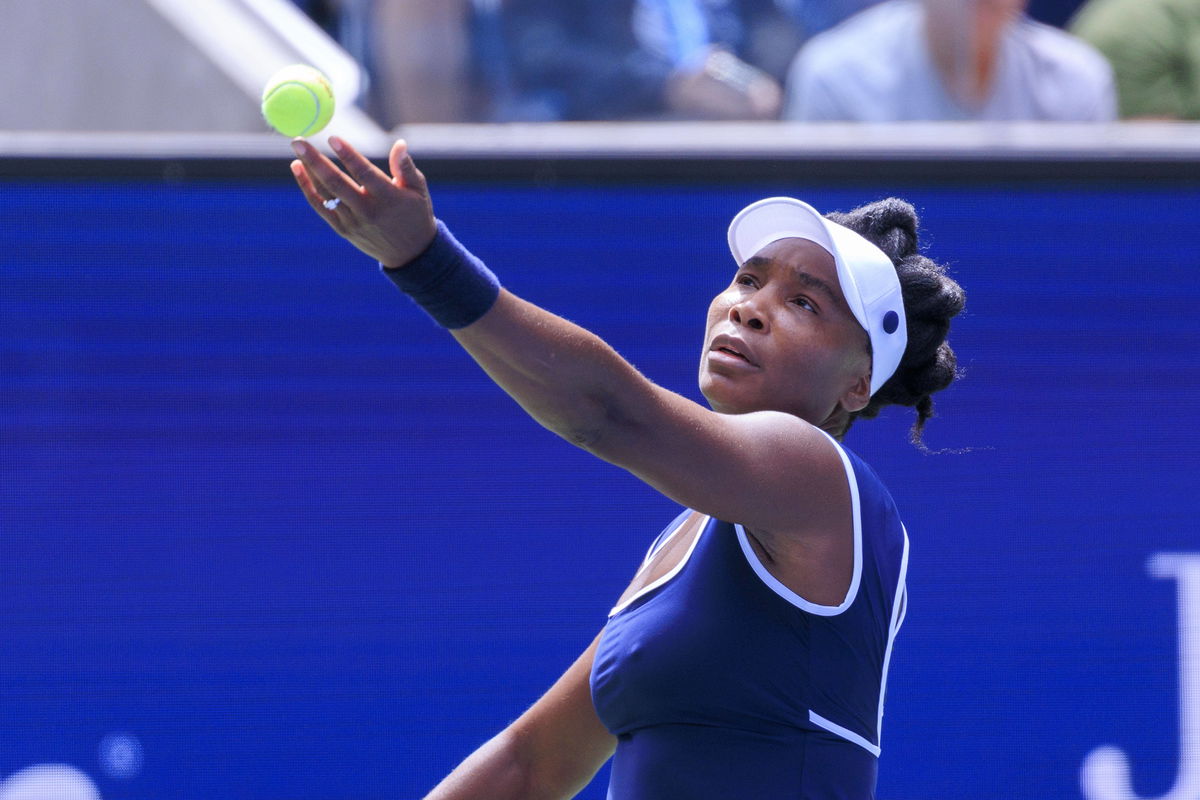
August 19, 2025, Flushing Meadows, New York, USA: Venus Williams in photo and Reilly Opelka during a mix doubles match against Karolina Muchova and Andrey Rublev at the 2025 US Open at USTA Billie Jean King National Tennis Center on Tuesday August 19, 2025 in the Flushing neighborhood of the Queens borough of New York City. JAVIER ROJAS/PI Flushing Meadows USA – ZUMAp124 20250819_zaa_p124_022 Copyright: xJavierxRojasx
Imago
August 19, 2025, Flushing Meadows, New York, USA: Venus Williams in photo and Reilly Opelka during a mix doubles match against Karolina Muchova and Andrey Rublev at the 2025 US Open at USTA Billie Jean King National Tennis Center on Tuesday August 19, 2025 in the Flushing neighborhood of the Queens borough of New York City. JAVIER ROJAS/PI Flushing Meadows USA – ZUMAp124 20250819_zaa_p124_022 Copyright: xJavierxRojasx
Beating your childhood idol is one thing, and then sharing a fangirl moment with her? That’s a whole different story. Francesca Jones lived both moments in Miami, and the result was as emotional as it was unforgettable. The 25-year-old Brit stunned seven-time Grand Slam champion Venus Williams with a gritty 7-5, 7-5 win in the opening round of the Miami Open – her first-ever WTA 1000 victory.
Watch What’s Trending Now!
But it was what happened after the match that truly stole the spotlight. At the net, both the players were spotted sharing a heartwarming moment. Williams praised the youngster, saying, “Well played. Good luck, huh? Good luck.” In reply, Jones revealed, “I still have you [poster] in my room.” Hearing that, the American superstar added, “Aww, that’s so cute. Thanks, good luck.”
A wholesome exchange that instantly captured hearts, turning a competitive battle into a full-circle moment. Interestingly, just weeks ago, Jones was sharing a practice court with Venus Williams in Austin – an experience that already felt surreal. Facing her in a match and winning was beyond imagination.
ADVERTISEMENT
The contest itself was anything but easy. Jones had to dig deep, rallying from 4-5 down in both sets and winning the final three games each time to close out the match. It was a display of resilience against one of the sport’s most iconic figures.
For Jones, this victory wasn’t just about rankings. After a difficult start to the season, including a tearful retirement at the Australian Open due to injury, simply being able to compete and win – felt like a breakthrough.
“It’s great for me to get a win. I’m struggling at the moment with my fitness, and it has been a really, really tough year, so I just feel a little bit relieved,” she admitted. The relief was evident, but so was the emotion.
ADVERTISEMENT
Born with Ectrodactyly-ectodermal dysplasia-cleft syndrome (EEC), a rare condition that left her with three fingers and a thumb on each hand and just seven toes, Francesca Jones was told early on that a professional tennis career might be out of reach.
Despite the odds, she moved to Barcelona before turning 10 to chase the sport. At one point, though, tennis didn’t seem like a realistic path, until a visit to Wimbledon changed everything. Watching Venus Williams and Serena Williams on Centre Court sparked something in her.
ADVERTISEMENT
From that moment on, the dream took shape. She set her sights on becoming a tennis player, and even had a poster of the Williams sisters up on her wall as daily inspiration.
Francesca Jones didn’t hide what Venus Williams and her sister Serena mean to her journey.
“If it weren’t for those two women, I’m not sure I would have made the step [to play tennis]. They’re the reason that I’m here today.” She later revealed just how deep that admiration runs.
ADVERTISEMENT
Reflecting more about their conversation at the net, she added, “I told her I said goodnight to you and Serena every night because they’re on the wall of my childhood bedroom.”
Francesca: "I still have you in my room [a poster/photo]”
Venus: "Awwwww that's so cute. Thanks, good luck." https://t.co/0uy63abRXN
— José Morgado (@josemorgado) March 19, 2026
From watching the Williams sisters at Wimbledon as a five-year-old to sharing a hug with one of them after a match – it was a story straight out of a dream.
ADVERTISEMENT
Jones now faces an even tougher test against fifth seed Jessica Pegula in the second round, carrying both confidence and momentum. For Williams, the loss marks another setback in a challenging run, with questions continuing to surround her form and future appearances.
Should Venus Williams receive wildcards any further?
Venus Williams‘ consecutive defeats have once again raised this question mark. At 45, Venus Williams remains one of tennis’ most iconic names. But as results continue to slip, a difficult question is gaining traction – should legacy still guarantee opportunity on the biggest stages?
ADVERTISEMENT
Few players in the Open Era can match Venus Williams’ impact. A former world No. 1 and seven-time Grand Slam singles champion, she helped redefine power, athleticism, and visibility in women’s tennis. Her influence goes far beyond trophies. For many, she remains a symbol of excellence and inspiration – one of the true pioneers of the modern game.
After a 14-month break, Williams made a surprise comeback at the Washington Open in July 2025, entering via a wildcard. She marked her return with a win over Peyton Stearns, but since then, results have been hard to come by. The American has now lost nine consecutive matches, including early exits in multiple tournaments. Despite this, wildcard entries have continued to come her way – keeping her presence alive on the WTA Tour.
Top Stories
Iga Swiatek’s Loss Sparks “Worst Nightmare” Confession Amid Coaching Chaos in Miami

Laura Siegemund Left Stunned Over Chair Umpire’s Sarcastic Response on Fan Disruption

Tennis Prodigy Moise Kouame Reacts to Novak Djokovic Message After Matching Rafael Nadal’s Rare Feat

Elena Rybakina Admits Toll of WTA Schedule As She Sets Miami Open Goal Clear

That continued access hasn’t gone unnoticed. Critics argue that wildcards are typically intended to support emerging players or those returning from injury – not veterans struggling for form.
ADVERTISEMENT
The debate intensified after her early exit at Indian Wells, when former world No. 1 Yevgeny Kafelnikov weighed in. “Have you read Dmitry Tursunov’s telegram? After another Venus Williams defeat, he said, ‘I have incredible respect for Venus Williams’ achievements. Multiple Grand Slam singles champion, world number one, but it’s time.'”
Kafelnikov didn’t stop there. “The wildcard into the main draw would be useful for many girls. The same way Maria Sharapova received one in her time. This wildcard could have been used more productively, and I, in principle, completely agree with him.”
It’s a strong stance – one that reflects a growing sentiment within parts of the tennis community. At the heart of the debate lies a tricky balance.
ADVERTISEMENT
On one hand, Venus Williams’ presence brings visibility, fan engagement, and historical significance to any tournament she enters. On the other, every wildcard spot given to a veteran is one less opportunity for a rising player trying to break through. With the WTA Tour becoming increasingly competitive, those chances carry real weight. For critics, the question isn’t about respect – it’s about fairness.
As the losses pile up, the conversation is shifting from celebration to evaluation. Should wildcards reward legacy or prioritize future potential? For now, the answer remains unclear. But one thing is certain: the debate isn’t going away anytime soon.
ADVERTISEMENT
ADVERTISEMENT
ADVERTISEMENT
Related Newsletters