Imago
Bildnummer: 00628905 Datum: 26.08.2002 Copyright: imago/Claus Bergmann Das Emblem der US Open an einer Außenwand des Arthur-Ashe-Stadium; Vdia, quer, Freisteller, Embleme, Turnierlogo, Turnieremblem US Open 2002, Grand Slam, Logo New York Flushing Meadow Tennis Herren Einzel USA Einzelbild Randmotiv Objekte Logo
Imago
Bildnummer: 00628905 Datum: 26.08.2002 Copyright: imago/Claus Bergmann Das Emblem der US Open an einer Außenwand des Arthur-Ashe-Stadium; Vdia, quer, Freisteller, Embleme, Turnierlogo, Turnieremblem US Open 2002, Grand Slam, Logo New York Flushing Meadow Tennis Herren Einzel USA Einzelbild Randmotiv Objekte Logo
Last December, Stacey Allaster, then CEO of Professional Tennis at the United States Tennis Association and Tournament Director of the US Open, announced she would step away from both roles after the 2025 US Open. Since then, speculation ran high about who would succeed her. And now, on November 17, 2025, her successor has finally been named – a former professional player.


Eric Butorac, 44, is officially stepping into big shoes as the U.S. Open’s next tournament director. Recently, the USTA made an announcement confirming that Butorac, who has been the senior director of player relations and business development, will lead the tournament starting in 2026. As he says, “I am beyond excited and grateful to serve as US Open Tournament Director. This is in many ways a dream come true and the culmination of my life and career in tennis.”
Watch What’s Trending Now!
He further added, “I’m humbled not only by the opportunity but to follow in the footsteps of one of my greatest mentors, Stacey Allaster… Now, I cannot wait to help drive the continued growth and success of the US Open well into the future.” But for Butorac, he already got a taste of the role this year just before the main draw.
Imago
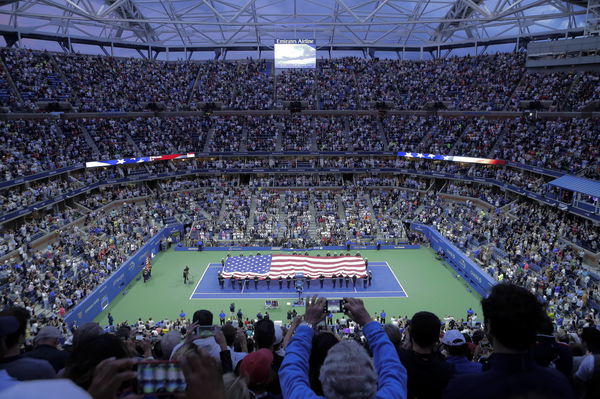
The United States flay is unfurled at center court in ceremonies before Roger Federer of Switzerland faced Novak Djokovic of Serbia in the Men s Final in Arthur Ashe Stadium at the US Open Tennis Championships at the USTA Billie Jean King National Tennis Center in New York City on September 13, 2015. PUBLICATIONxINxGERxSUIxAUTxHUNxONLY NYP20150913810 RAYxSTUBBLEBINE The United States Flay is unfurled AT Center Court in Ceremonies Before Roger Federer of Switzerland faced Novak Djokovic of Serbia in The Men s Final in Arthur Ashe Stage AT The U.S. Open Tennis Championships AT The USTA Billie Jean King National Tennis Center in New York City ON September 13 2015 PUBLICATIONxINxGERxSUIxAUTxHUNxONLY
It was Butorac who, alongside Allaster, conceived of the new and revamped mixed doubles event, giving fans a taste of his organizational skills. “It’s an incredible honor. [The U.S. Open is], in my opinion, the greatest sporting event in the world,” Butorac said. “I became so immersed in this event the last decade — working on all aspects of it, trying to help it become better, be a cog in the wheel. That’s the approach I’ve always taken.”
Though controversial, the event was an undeniable success with increased viewership, attendance, and praise from the singles stars who joined in. His deep understanding of the tournament comes not just from managing it, but from playing the game.
Indeed, Butorac isn’t just a behind-the-scenes expert. He’s been a professional player himself for 14 years. He climbed to the top 20 in ATP doubles rankings and was a doubles finalist at the 2014 Australian Open. He also served as ATP Player Council President. Hence, giving him firsthand insight into what players need and how tournaments should run.
Since joining the USTA in 2016, Butorac has made his mark. He started as Director of Professional Tennis Operations and Player Relations, then became senior director in 2024. In 2022, he even served as tournament director of the Cincinnati Open. With his mix of on-court experience and administrative know-how, Butorac is ready to lead one of the world’s greatest sporting events. But this raises a question: why did Stacey Allaster decide to leave?
Why is Stacey Allaster stepping down from the USTA and US Open?
In 2020, Stacey Allaster, 62, made history by becoming the first woman to serve as chief executive of professional tennis and U.S. Open tournament director at the U.S. Tennis Association since 1881. Now, after five years, she has announced she will step away from both roles following the 2025 US Open. But what led Allaster to make this decision?
Talking about her decision, she said, “You get to this age and wonder, ‘What’s it all about?’ I have my health, so the big question is, ‘when is enough enough?’ After 38 years of working in professional tennis, my cup is overflowing with gratitude and accomplishments and having had an opportunity to give back to the sport that has given me everything.”
Allaster has been involved in professional tennis for many years. She joined the USTA in 2016 after serving as chairman and CEO of the WTA and started her career at Tennis Canada.
Although she is stepping down from her top roles, Allaster will stay connected to the USTA. She will continue as chief executive of professional tennis until May, after which she will move into an advisory role. Her impact will be felt even in this new role, but USTA still has a significant obstacle to overcome: addressing the leadership void.
With Allaster’s exit, the USTA has another significant task ahead of it. After Lew Sherr left this summer to take a position as President of Business Operations for the New York Mets, the search for a new CEO is still ongoing, with a decision expected at the end of the year. All of these changes together represent a turning point in the USTA’s history and a new era for its leadership.