
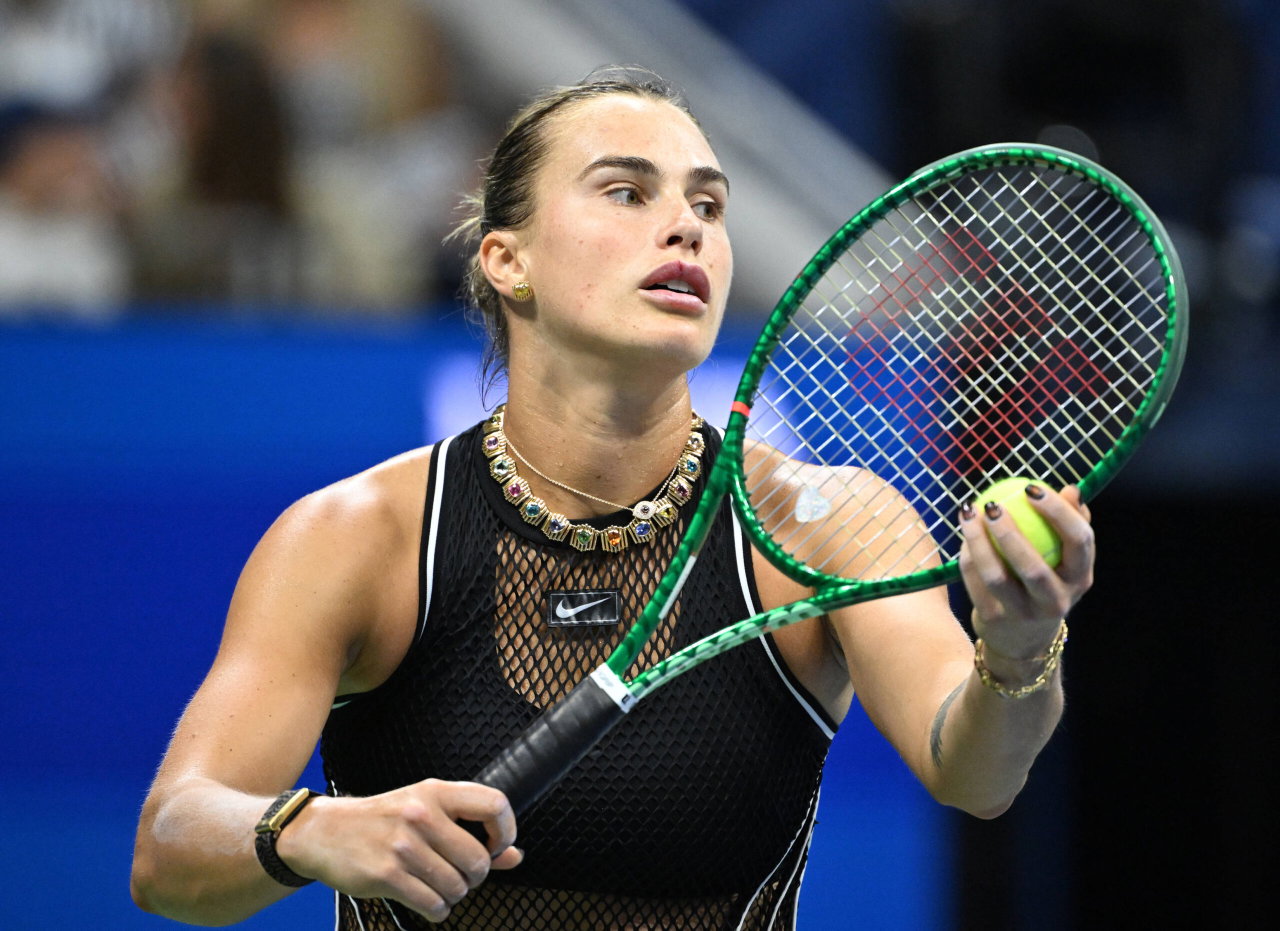
Elena Rybakina earned more than $5.2 million at last year’s WTA Finals. Meanwhile, the women’s champion at the ongoing US Open is set to receive a $5.5 million paycheck. Yet, despite these massive player earnings, the WTA’s own financial picture may not be quite as rosy.
Watch What’s Trending Now!
Recent reports have suggested that while the organization can point to record player earnings from the outside, its internal finances tell a different story. Despite the star power of players such as Aryna Sabalenka and Coco Gauff, the WTA is reportedly on course for a substantial loss in 2026.
According to a report by The Telegraph, the WTA is set to incur a $23 million loss in 2026, and if things do not improve by 2027, the organization might be on the verge of bankruptcy. The major flaw, however, lies in the WTA’s model of contributing from its own funds to fill prize money pools, including at combined events such as the Miami Open and Madrid Open.
The WTA’s own projections paint a rather worrying picture, with the Tour estimating that it could be left with just $15 million in cash by the end of the year.
That puts new WTA Chairman Valerie Camillo in a tricky spot. She took over from longtime chairman Steve Simon at the end of last year and has made a positive impression in her early months on the job. But winning people over may be the easy part. Fixing the books could be a much bigger challenge.
If the projections hold up, the WTA may need more than a few minor adjustments. Insiders expect the organization to make significant cuts to its spending over the next 12 months, suggesting that a much bigger financial reset could be on the way.
While Grand Slams offer equal pay to both men and women, with the respective Major tournament footing the bill, the situation at the 1000 level is quite different. At the Miami Open this year, both Aryna Sabalenka and Jannik Sinner took home a cheque of $1.15 million for winning the title. Still, in the Belarusian’s case, a portion of her prize money was paid by the WTA itself, which had to draw on partnership funds from sponsors such as PIF and CVC.
However, the partnership with CVC is set to end in 2027. If the deal is not extended, the organization will lose $30 million in income. Even the WTA’s decision to move the WTA Finals from Riyadh to Indian Wells will make a dent in the body’s expenses.
The deal with Riyadh back in 2024 was met with criticism for political reasons, but it did provide a lucrative prize pot for the WTA Finals. Now, as the WTA Finals moving to Indian Wells, the WTA will have to bear the financial burden itself while slashing prize money by a third from last year.
The WTA also saw negotiations over the ATP merger stall, with the split at 80-20 in favor of men’s tennis in revenue. The merger talks were why a fund like CVC made its initial deal, but the highly uneven split makes it difficult for new sponsors to invest in the women’s game. Therefore, despite having stars like Gauff and Sabalenka, the WTA has failed to leverage either the popularity or the personal wealth of its biggest stars.
Aryna Sabalenka and Coco Gauff’s Substantial Net Worth Cannot Help WTA
Even though Sabalenka and Gauff have net worths of $22 million and $35 million, respectively, this does not benefit the WTA, as the players’ net worths are based on their on-court earnings and sponsorship deals.
While Sabalenka’s on-court earnings are over $50.4 million, Gauff has netted over $35 million in prize money so far. However, after accounting for all tax deductions and expenses, sponsorship deals put Gauff’s net worth above Sabalenka’s, as the American earns nearly $30 million from her sponsorships, whereas the Belarusian earns between $15-$20 million from her endorsements.
Sabalenka’s sponsorship portfolio includes brands such as Nike, Oakberry, Audemars Piguet, and Wilson. Gauff, on the other hand, has partnerships with brands such as New Balance, Rolex, Barilla, and Bose. The individual partnerships of both players might surpass the WTA’s sponsors.
As of now, the WTA has six listed partners, including Mercedes, PIF, Rolex, Morgan Stanley, Accenture, and Corpay, but is still far away from the ATP, which has eighteen official partners, including Emirates, Lexus, and Lacoste, among others. Even after the decades-long movement started by Billie Jean King in the 1970s, the WTA is yet to receive equal valuations compared to the ATP, even though both men’s and women’s players earn the same prize money at the biggest events.