
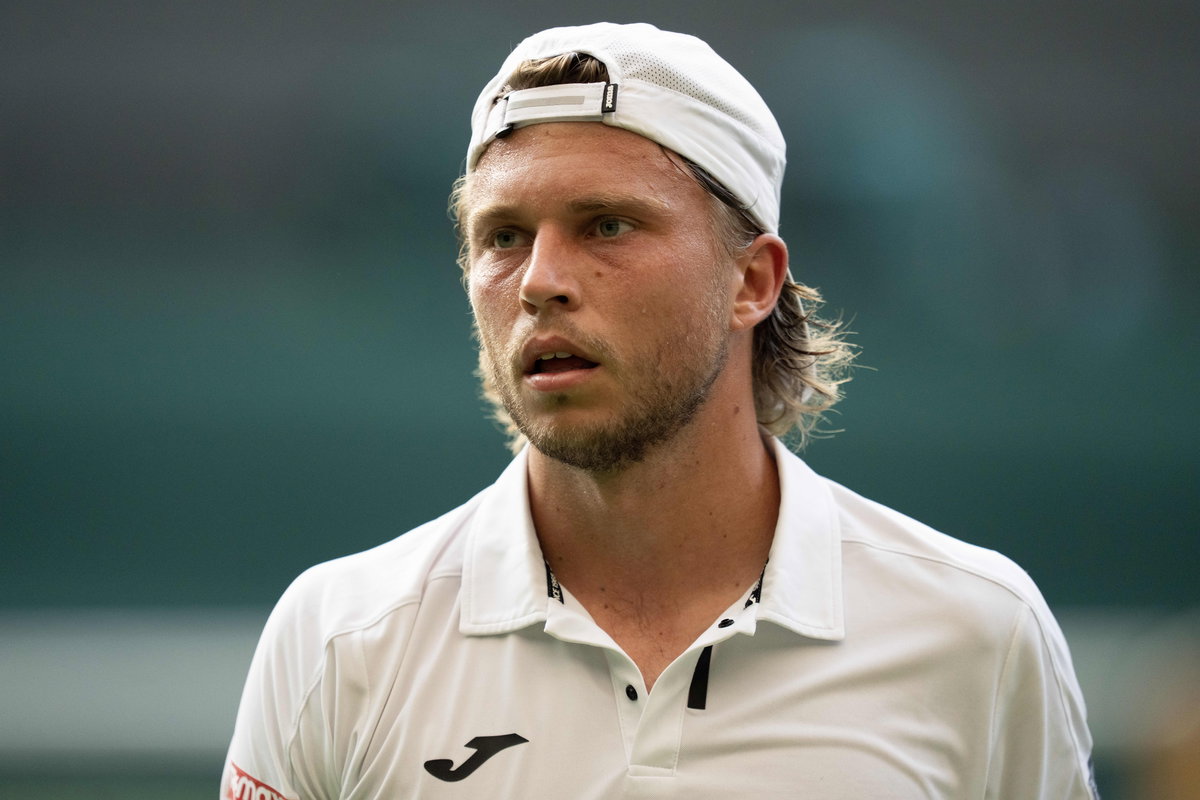
Alexandre Muller stepped on Philippe Chatrier on Tuesday with the intent of turning a difficult season around in front of his home crowd. Instead, it turned out to be one of the most painful afternoons of his career, as the 29-year-old walked off the court in tears after his body gave up in the second set against Stefanos Tsitsipas.
Watch What’s Trending Now!
Muller had made an honest start to the match and was holding serve before breaking early to take the lead. However, his form started dipping gradually as he lost the next nine games in a row, conceding the first set 6-2 before falling 3-0 in the second. He called for a medical timeout after dropping his eighth straight game, and from the looks, it seemed like he suffered a calf injury. He returned to the court but lasted just one more game before making his way to the net, shaking Tsitsipas’ hand and ending his afternoon as he appeared to walk away in tears.
The image of Muller crying as he left the court captures a season that has simply refused to go his way. He arrived at Roland Garros with a 2026 win-loss record of 4-9, having gone into the tournament on a six-match losing streak in main draw matches. After being eliminated in the first round of the Geneva Open, he was eliminated early in Madrid and Rome and missed the main draw in the Barcelona Open. Clay ought to be the surface where Muller plays his best tennis. It has been a year of frustration for him, and Tuesday was certainly the hard finish to an awful run of form.
In February, Muller was spotted at practice in Rio with a bandage on his left calf before announcing his withdrawal from the ATP 500 on Instagram.
“I won’t be able to play in the Rio tournament. Very disappointed not to compete in this event and over the next few weeks… Hoping to get back on court as soon as possible,” he wrote.
The injury then forced him to skip Indian Wells as well, leaving him without a match on tour since his second-round loss at the 2026 Australian Open against Alexander Zverev. The left calf ended up costing him two months of competition, and a critical blow for a player who had arrived at the beginning of 2026 on the heels of reaching the Rio Open final in 2025. His withdrawal and missed points dropped him from No. 52 to No.74 on the rankings.
His return was at the Challenger level, starting his clay season at the Naples Challenger in late March as he dropped to world No. 90, seeking to regain rhythm and confidence after a few months’ layoff. The 4-9 record that came with him to Paris was the answer in Marrakech, where he reached the quarterfinals to earn his main draw spot at Roland Garros, but faced the toll of a disrupted season both physically and mentally.
While the gravity of the recent injury is yet to be revealed by Muller, it will surely affect his mindset as well as his rankings. However, the first round of the French Open was witness to many such emotions.
French Open R1 came with shocking heartbreaks
Alexandre Muller was not the only one who was brought to tears in the first round of Roland Garros. It was a day of unprecedented emotional significance on both draws, with three others shedding tears on court, in their press conferences, or in the aftermath of results that hit harder than the scoreline alone could express.
Qualifier Maja Chwalinska eliminated Olympic gold medallist Qinwen Zheng in the first round of the women’s draw. Several times throughout the emotional press conference, the Chinese star had to pull herself together, but the momentous exit is particularly significant for a player who arrived in Paris with title aspirations.
Emma Raducanu battled back tears following her straight-sets defeat to Argentina’s Solana Sierra. The 23-year-old, who is still recovering from a post-viral condition that took a lot of clay out of her season, appeared to be in pain when asked how she was faring in coping with the ability to continue coming back from injury after injury at her age.
“It’s very difficult,” she said, her eyes filling. “I think you need a lot of resilience. I’m trying my best each day and that’s all I can ask of myself.” The first set was 24 minutes long, but Raducanu bounced back from 1-4 down in the second to force a tiebreaker, but was ultimately defeated 6-0, 7-6.
The tears at the other end of the emotional spectrum belonged to Francesca Jones. The British wildcard beat Beatriz Haddad Maia in what was her first main draw Grand Slam victory at the seventh time of asking, and the scenes that followed were as joyful as anything else Roland Garros produced on Sunday. Jones celebrated with her parents in the stands, and the tears were purely those of relief and joy after years of perseverance.
Four players and four very different reasons to cry. The tournament that knows how to stir up emotions like no other, Roland Garros did not disappoint in the first round of 2026.