
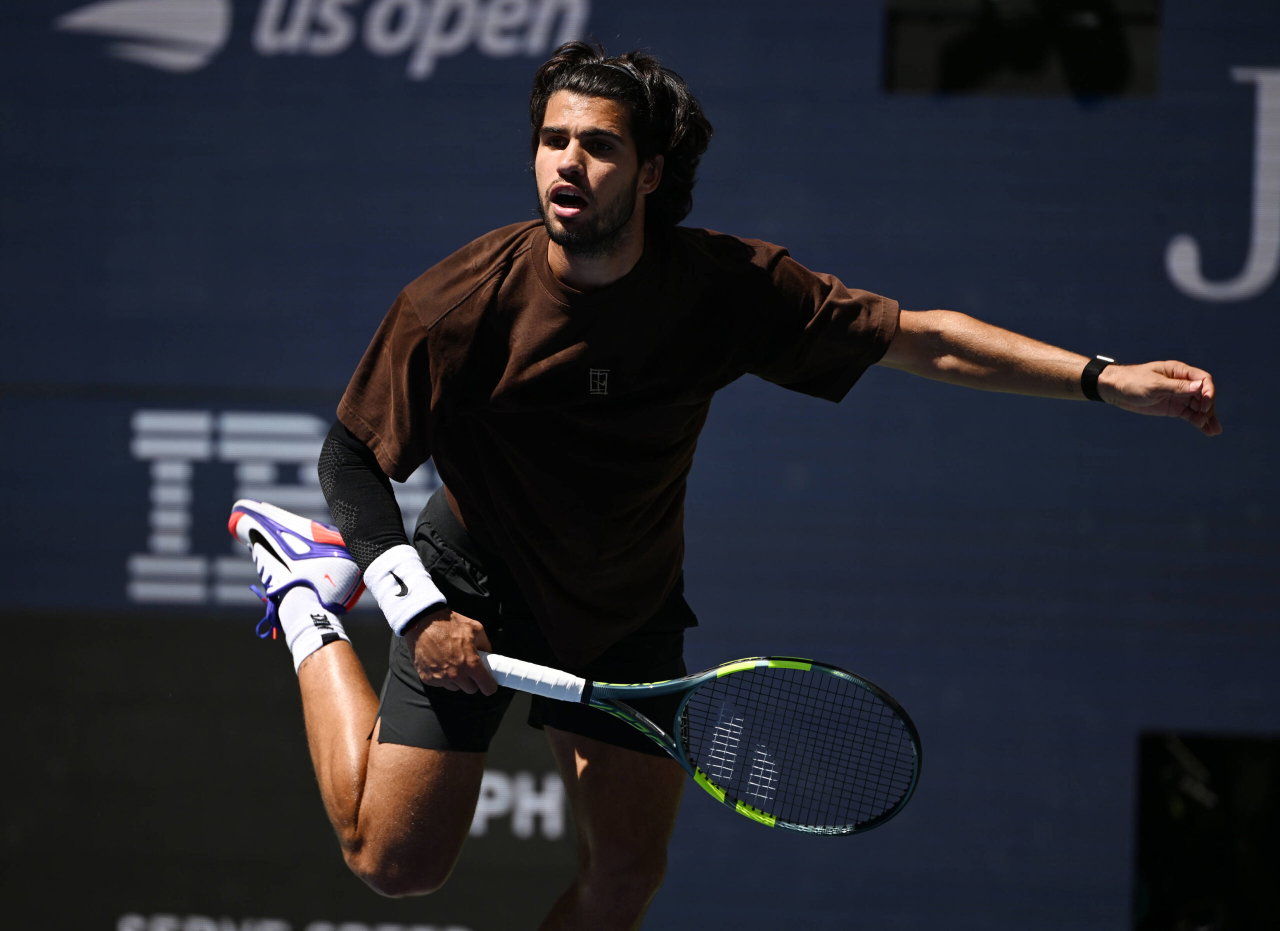
Carlos Alcaraz had already put a number on it. After his opening loss at the 2023 ATP Finals in Turin, he said that, if he wasn’t mistaken, players had used 20 or 21 different balls that season, and that a lot of players had been injured because of it. He also questioned how anyone could be asked to play three or four consecutive events with balls that can differ so widely, arguing that each stretch of the calendar, Australia and South America among them, should stick to one. Three years later, after winning both matches he played in the Laver Cup, Alcaraz is raising a similar point.
Watch What’s Trending Now!
At the winning team’s press conference, Alcaraz was told the conditions looked slow. He replied that he had been talking with Europe captain Yannick Noah and the team about how courts that were once fast have slowed, adding that he doesn’t mind slow courts, particularly with a serve that isn’t the biggest. The bigger concern for him is what’s happening to the balls.
“It is about the balls, I would say. We can see in a lot of tournaments, you know, the ball’s reaction from the court is totally different.”
“The ball becomes super big, and it’s a totally different game when it’s new balls, and we played two or three games without balls. You have to adapt yourself the best you can. I don’t know if they’re going to change or not. But what I request is that they have to see the best ball possible for the courts are made.”
Mensik, meanwhile, went straight at the court. He called it one of the slowest hard courts he had played this year and said he struggled to find his rhythm, because his game leans on the serve and heavy groundstrokes. But he also did not think the balls were that good, and said the two together made things very slow.
“So, the trend of this, I don’t really know where it’s going, but with the combination of the balls, which I consider them that they were not that good as well, it was super slow.”
The ATP has been working on it from two directions. The first is consistency from one week to the next. In 2025, it began choosing ball suppliers centrally instead of leaving the call to each tournament. It said full alignment within swings was expected by 2027, with specifications and certification standards under review. Chief sporting officer Ross Hutchins said the first year had brought greater consistency and fewer changes for players.
The First Serve reported in August that seven consecutive hard-court events that used different balls in 2024, from Dallas through Miami, would use the Dunlop ATP ball in 2026-27. The same report said the WTA is working under interim guidelines through 2026 after starting a tour-wide review in 2024.
The second direction is wear inside a match. At the Lexington Challenger in Kentucky, August 3 to 9, main-draw singles balls were changed after five games and then every seven, in place of the usual seven and nine. The Player Advisory Council backed the trial, and the ATP said ball-tracking data would be reviewed at the council’s meeting during the US Open.
The trial followed player concerns about how quickly balls wear on hard courts, amid a wider debate over the physical effects of worn balls. As of the 2026 ATP rulebook, though, the standard ball-change schedule remains seven games for the first change and every nine games thereafter, making the Lexington trial an exception.
Injuries have significantly increased in 2026. Patrick Mouratoglou, who has coached Serena Williams and, more recently, Holger Rune, cited figures from the Professional Tennis Players Association (PTPA) to point to the worrying trend. The French coach shared a graphic on social media showing that upper-body injuries had risen 42% in the first quarter of 2026. Arm injuries were up 112%, while match-ending injuries had increased by 53% and re-injuries by 55%.
The issue has also drawn complaints from other players, including Jessica Pegula, who raised concerns about how differently balls can feel from tournament to tournament.
“Like, there’s different manufacturers. So, obviously, different countries, so different tournaments get the same ball, but it’s from a different place that makes them so it feels different,” said Pegula in Washington, during the Citi Open. “I think the surface of the court, and does it fit with the ball? Like, sometimes the balls are okay, but you put it on a gritty court, and they get really chewed up.”
Getting every tournament in a swing onto the same ball is a complicated process. Still, the ATP appears to have plans to listen to players’ grievances. It remains to be seen when those plans begin attracting praise.