
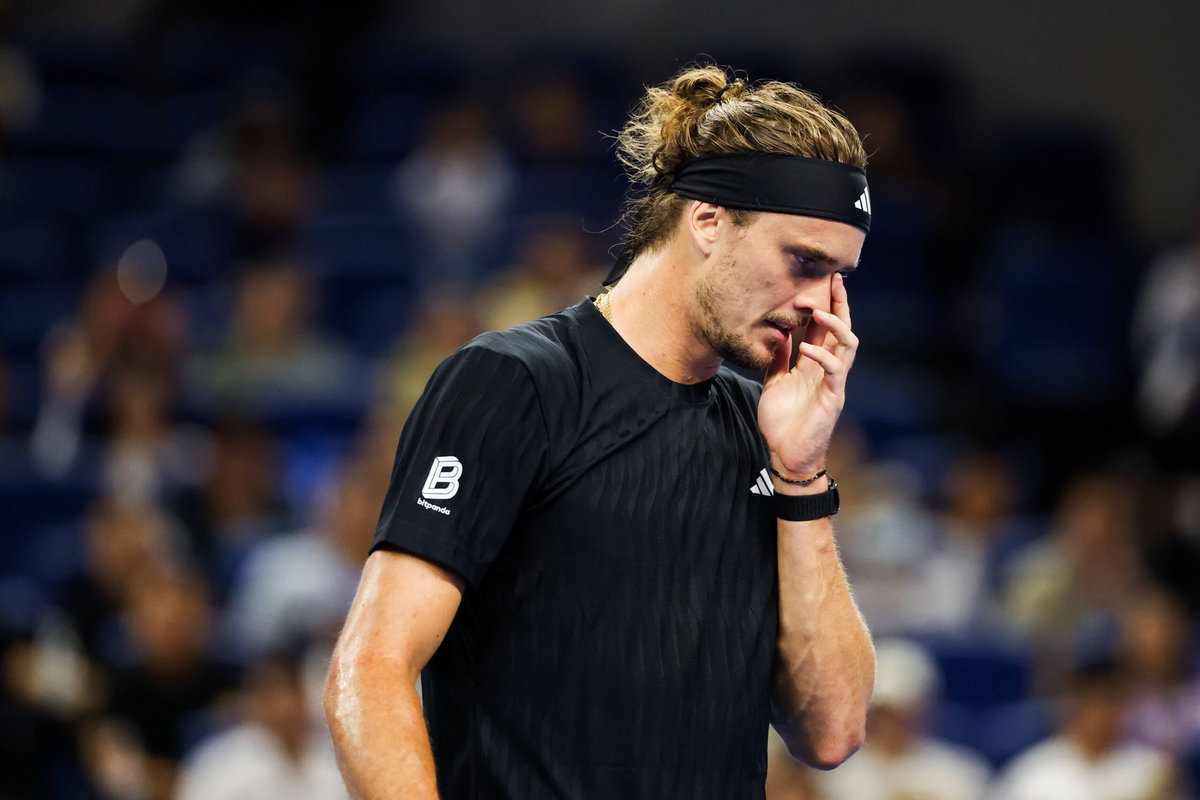
Alexander Zverev booked his place in the French Open final with a 7-5, 6-2, 3-6, 6-3 victory over 20-year-old Jakub Mensik. The World No. 3 needed three hours to secure his fourth Grand Slam final appearance. Having not faced a top-10 opponent during the tournament, Mensik was the highest-ranked player Zverev had encountered so far. Fresh off an impressive win over 28th seed Joao Fonseca, the Czech arrived full of confidence and managed to test the German at several stages of the match.
Watch What’s Trending Now!
But when the on-court interviewer tried to turn the moment into a celebration, Zverev quickly made it clear that his focus was already on what comes next.
“Not much at the moment. We still have a match to play on Sunday and that’s what we’re here for, that’s what we’re focusing on. I want to play the best possible match and just focus on that,” Zverev said, deflecting the emotion with characteristic directness.
The German was asked what he was most proud of across his two weeks in Paris, having dropped just two sets en route to the final.
“I’ve always found a way even when things got difficult. I feel like today Jakub starting playing amazing tennis in the third set and I found a way straight away in the fourth set. Today definitely was the toughest challenge. He played some amazing tennis throughout the entire two weeks. I’m happy with the win for sure,” he added.

Zverev after beating Mensik to reach the Roland Garros final: "Congratulations. That was a terrific performance. You're back into the final. You have your mom, your dad, your brother and your grandmother here. What does this moment mean to you?" Sascha: "Not much at the moment. Show more

The match was a true reflection of that. Zverev’s serve prowess was the most potent weapon he had throughout, as he recorded 75% first serves compared to Mensik’s 61%, while also posting 42 winners to just 37 unforced errors. The first set was the only close one, with Zverev taking it 7-5 after breaking at 5-5. He then rushed through the second 6-2. Mensik had two break points at 4-3 in the first set and could not convert, and those missed opportunities set the tone.
The Czech received treatment on his neck at 2-1 in the third set, and when he returned, he produced the best tennis of his afternoon, taking the set 6-3 to give the crowd something to cheer. His net game was clinical, winning 38 net points but a handful of missed shots on big points, and the absence of the extraordinary moments that had carried him past Joao Fonseca earlier in the draw, meant the momentum never truly shifted.
In the fourth set, Zverev was not to be stopped after taking a break in the second game. The afternoon was summarized by Mensik’s backhand hitting the net, and it was done. A first Grand Slam semifinal is still a proud moment for the 20-year-old. The occasion, the number of hours spent on court by those legs in the Paris heat, which were significantly more than his opponent’s and Zverev’s experience, simply caught up with him at the end.
On Sunday, Zverev will face Flavio Cobolli in the final. The Italian progressed after Matteo Arnaldi withdrew from his semifinal due to a viral illness. For Sascha, who has lost three previous Grand Slam finals, Paris in 2026 represents the clearest path to the first major title he has ever had. It’s Alexander Zverev’s Grand Slam to lose.
Flavio Cobolli will not make it easy for Alexander Zverev on Sunday
On paper, Zverev is the overwhelming favorite. But in reality, Sunday’s final might be much more complicated than it seems.
Both players arrive at the final unusually fresh. Zverev has clocked in about 15 hours over his six games, while Cobolli is just behind him at about 14 hours. Neither man has been dragged into the kind of grinding 5-set battles that have been the deciding factor in who has enough left in the tank for a Grand Slam final in the past. For this time, fatigue will not be the final criterion.
The true danger Cobolli poses is not only his fitness but his shape against Zverev this season. The head-to-head sits at 3-1 in the German’s favor, but their 2026 clay encounters have split one apiece. At the Munich Open, Cobolli won in straight sets. In Madrid, the pair faced each other once again, and Zverev had his redemption in the same clinical manner, in straight sets.
Last year on the same Philippe Chatrier court, the two players had met in the round of 32. Sascha won the match in straight sets, 6-2, 7-6, 6-1. However, the gap between the Cobolli of 2025 and the player who has just reached his first Grand Slam final is quite significant. The Italian has already demonstrated he can beat Zverev on clay this season and has done so once in 2026 before coming to Paris.
Zverev also has a huge blind area to navigate on Sunday. The highest-ranked player he has faced across the entire tournament is Mensik, who will be ranked world No. 16 when the rankings update on Monday. Zverev has never faced a top-10 player this tournament, and that is something Cobolli will know all too well.
Cobolli himself will enter the final ranked 10th in the world, with a win on Sunday pushing him to world No. 5, the biggest result of his career within touching distance. The Italian has nothing to lose and every reason to think that the clay of Roland Garros is his for the fortnight, just as much as anyone else’s.
On the other hand, Zverev has been here three times before and left without the trophy; that pressure might also come into play this time. Alexander Zverev has been in the top 5 of the ATP rankings for about a decade, and his most prestigious achievement during that time has been the Olympic gold medal. He has won Masters 1000s, ATP 500s, and every other tournament in the sport, but has always fallen short of winning a major. This is his opportunity, and Sascha knows that. But Cobolli will do everything in his power to make sure Sunday is no different.