

Modern tennis is a game in perpetual search of the next generation of saviors. As the era of the greats (Federer, Nadal, and Williams) drew to a close, the sport was in a state of flux and desperately needed the next crop of heroes. Someone who could stand alongside the last hero on the court – Novak Djokovic. The ongoing decade then saw the rise of Carlos Alcaraz, Jannik Sinner and Coco Gauff. They are all young, all have the requisite charisma and all possess the raw talent to be utterly captivating. They are not just the next generation of winners, they are the new face of the game and the new guardians of tennis.
Watch What’s Trending Now!
However, there’s an invisible cost to being the ‘favorite’ in a high profile individual sport. The moment an athlete becomes ‘everyone’s favorite’ the social contract between the player and the public changes subtly. Admiration becomes expectation and appreciation becomes an entitlement to be perfect. Underneath all the flash, multi-million dollar sponsorship deals is a very real and very heavy psychological burden.
The Crushing Weight of Inherited Legacies
The pressure on young stars in modern tennis is uniquely isolating. There’s no team to take the burden off you. No ability to substitute when your legs are starting to give out and no dugout to hide in when you’re feeling doubtful. From the moment 15-year-old Coco Gauff beat Venus Williams at Wimbledon in 2019 she was under the weight of the ‘next Serena’ tag. Every forehand she hit, every tactical decision she made, every press conference she gave was viewed through that prism which she never asked for.
For Alcaraz, he’d become the youngest men’s World No. 1 and had already won multiple Grand Slams on all three surfaces before he turned 23. This meant he was instantly and inevitably being compared to the “Big Three”. Every match is an audition for immortality. Sinner on the other hand has been the ultimate Italian sporting icon. But it means every unforced error is met with a full Italian national postmortem.
These young stars are in the position of having to juggle the realities of early adulthood with the rigors of global commercial enterprise. They’re expected to have the technical rigor of a veteran, the media geniuses of a seasoned diplomat and an idol on court appearance. Sinner has often been in that position himself and has generally been quite comfortable with the pressure. However, eventually it wears down even the most robust of competitors.
The Volatility of Public Opinion: From Genius to Crisis in 48 Hours
The most horrific thing about modern sports fandom is the utter absence of any institutional memory. If you have a player that’s your favourite and they win, the public immediately goes into a state of adoration and they’re regarded as a genius. But the second they have one bad game though, the public opinion flips completely.
A perfect example of this is Carlos Alcaraz’s stunning second round exit at the 2024 US Open to Botic van de Zandschulp. Just weeks previously he’d completed the Channel Slam (won both Roland Garros and Wimbledon in succession) and then picked up an Olympic silver. All of which made the two utterly flat hours in New York all the more shocking. The reaction in the sports world was immediate and almost entirely negative.
Alcaraz gave an unusually raw assessment in his post-match press conference. “Right now, I feel like I’ve taken steps backwards mentally and I don’t understand why,” he stated. The tennis star further added, “I’ve had a spectacular summer at Roland Garros and Wimbledon. I left those tournaments saying that I’d taken a step forward mentally. I’d realized that to win big things, to win Grand Slam titles, you have to be mentally strong. Now I’ve reached this swing and I’ve taken steps backwards, like I’m not doing well mentally, I’m not strong. I don’t know how to control myself when faced with problems and I don’t know how to handle it. I have to see exactly what happened, or what’s going on with me. It’s been a very emotional summer, very demanding… I’ve had my moments of disconnection, but I think I’m still learning about myself.”
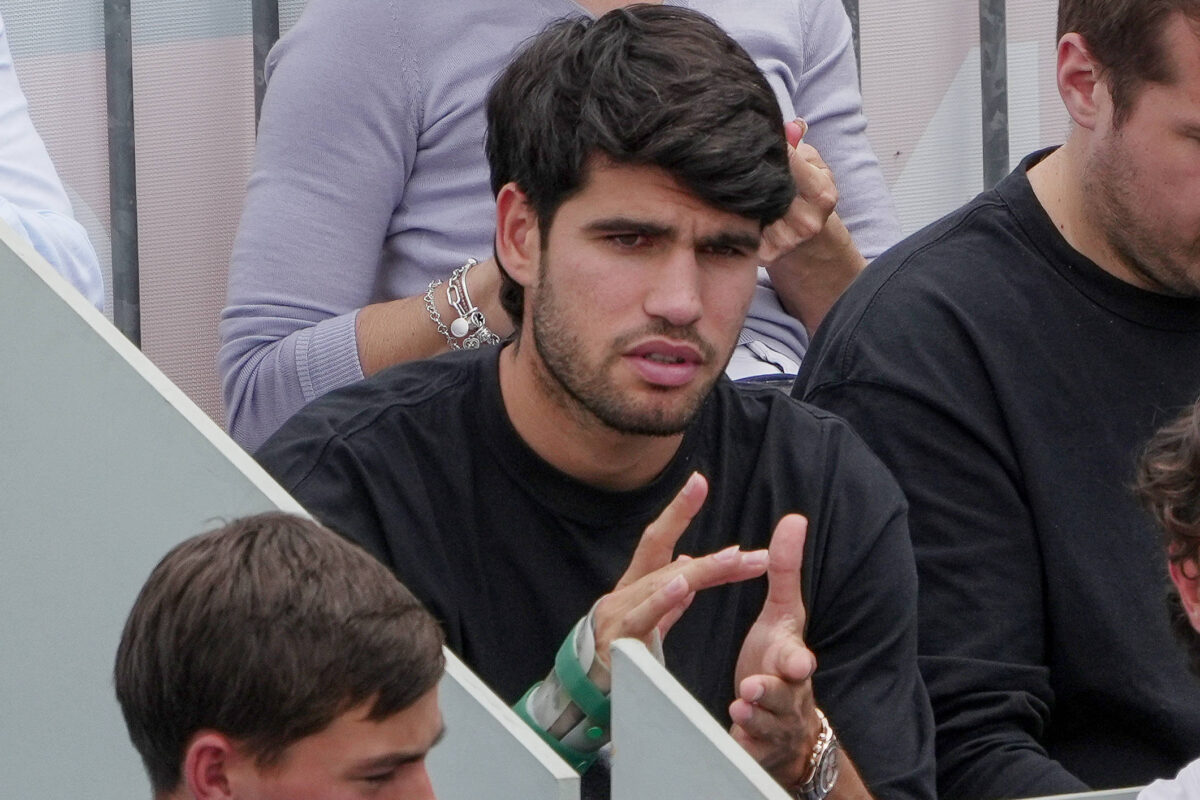
Imago
TENNIS : Madrid 2026 – ATP, Tennis Herren – WTA, Tennis Damen – 02/05/2026 Tennis – Madrid 2026 – ATP – WTA – 02/05/2026 – Carlos Alcaraz MadridSpain PUBLICATIONxNOTxINxFRAxBEL Copyright: xCCx
This is the very essence of the modern sports cycle. The social media algorithms feed on the panic and the outrage. Any single bad afternoon is instantly dissected as a career crisis. When Gauff was having a bit of a serve issue during the summer hard court swing of 2024 the online commentary went from adoring her to the most vicious mockery of her play in the space of a few hours. The crowd loves when a prodigy wins but absolutely turn brutal even if a single match goes against their expectations.
Admiration vs Supporting Amidst Struggle
The gap between being liked and being allowed to struggle is an important support for young athletes. The development graph is not a straight line. It fluctuates, it’s messy and errors. You don’t just go from good to great. Djokovic and Federer both spent several years between 18 and 23 working through all sorts of physical struggles and mental breakdowns before they ever got to the point of sustained dominance.
Today’s darlings don’t get that grace period. The kudos in the social media age is conditional. Gauff perfectly encapsulated that warped dynamic in her Grand Slam breakthrough. She served a stark reminder that the tension of sport is utterly insignificant when compared to the tension of real life. “We’re under pressure, I know that in a way. There are people out there who are literally struggling to feed their families. Who don’t know where their next meal is going to come from. That’s pressure. That’s hardship.”
Yet even with that very realistic perspective, athletes are still humans who feel the pangs of intense athletic frustration. When fans and the media won’t allow young players to lose and be in a state of adaptation, they are denying them the very crucible in which mastery is forged. To expect a 21 year old to have mental toughness to be at the very top of their game 50 weeks a year, is not respect, it’s emotional consumption.
If we want global tennis seeing Alcaraz, Sinner and Gauff going into their 30s and still being successful then the entire tennis ecosystem has to change. This way it deals with the highs and lows of young careers. Genuine support simply won’t exist unless it’s there when the young player is at the bottom of the ladder as well as when they’re on top.
Being the world’s favorite doesn’t mean you’re on an unqualified contract of perpetual perfection. As long as sporting culture remains in the position of equating an athlete’s worth with their most recent tournament result the mental cost of that athlete will continue to be unnecessarily high.