
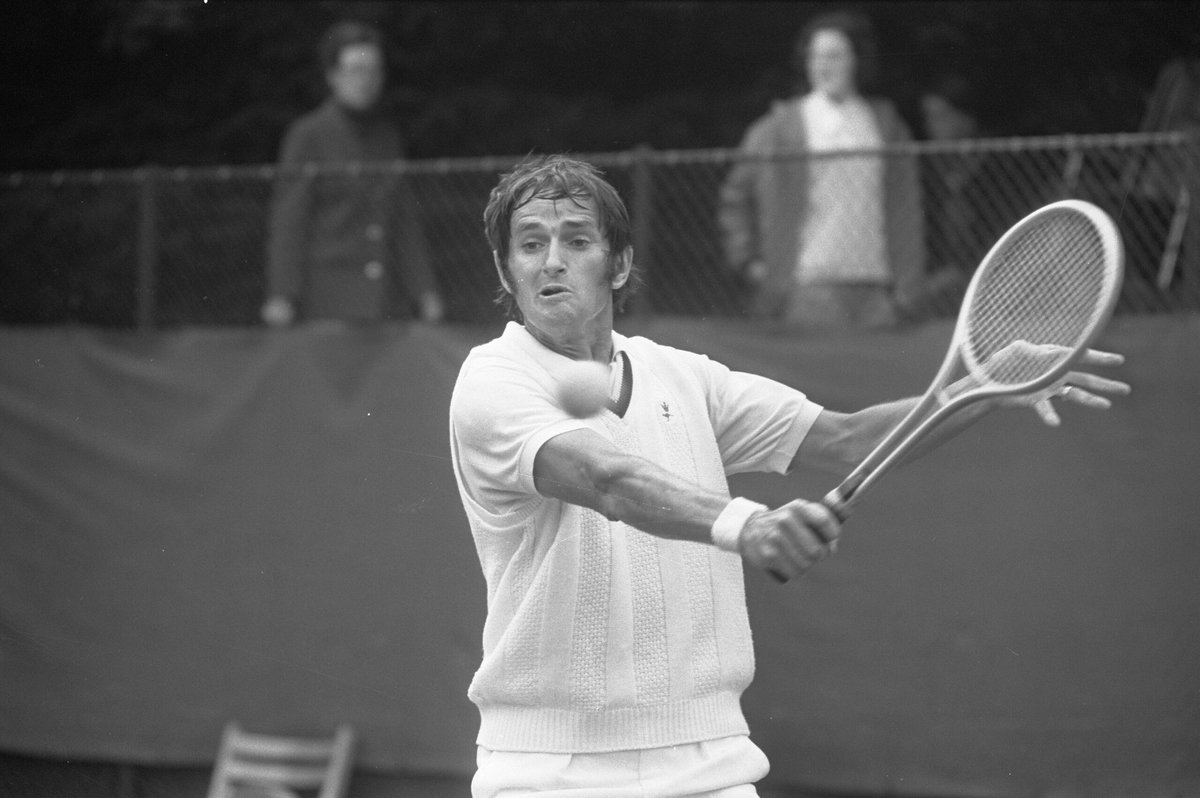
Back when the small town of Theodore in Queensland, Australia, had a population of just 451 people, tennis wasn’t exactly easy to come by. But even there, a young boy named Mal dared to dream big. Wanting to help his son chase that dream, Anderson’s father built a tennis court out of dirt and ant nests at the cattle station where they lived. From those humble beginnings, the young boy went on to become one of Australia’s tennis greats: Malcolm James Anderson.
Watch What’s Trending Now!
Now, at the age of 91, the Australian legend has passed away, leaving behind a legacy that helped shape the early foundations of tennis in the country. Australian tennis is mourning the passing of Mal Anderson, whose remarkable career took him from a dirt court on a Queensland farm to Davis Cup and Grand Slam glory.
Moreover, Anderson played during Australia’s golden post-war era, winning the US singles title in 1957 and three major doubles championships.
Interestingly, Mal Anderson arrived at the 1957 US Open (then known as the United States Championships) as an unseeded player. But once the tournament began, he defied expectations. Anderson defeated three seeded opponents and dropped just two sets throughout the entire event on his way to lifting the title.
What made Mal Anderson’s triumph even more remarkable was how quickly things changed for him. At the 1956 US Open, he had lost in straight sets to American Mike Green. But just 12 months later, Anderson returned to Forest Hills and walked away with the trophy.
The 1957 final turned into an all-Australian showdown between Anderson and top seed Ashley Cooper. Going into the match, most expected Cooper to come out on top, especially after he had beaten Anderson comfortably in the semifinals of the Australian Championships earlier that year. There was even a saying making the rounds: “Ash always cools Mal.”
But this time was different. Anderson held his nerve in a tight three-set battle, winning 10-8, 7-5, 6-4. The performance left such an impression that U.S. Davis Cup captain Bill Talbert called it “the finest exhibition of groundstrokes at Forest Hills since Gonzales in 1949.”

The first unseeded player to win the US Open, two-time Davis Cup champion and one of the greats of Australian tennis. Vale Mal Anderson.

“I just loved tennis from the earliest age. I was addicted to it, and it became my life,” Anderson once reflected, capturing the passion that drove his career. As a boy, he played against the Laver brothers, who had a similar court built on their family property near Rockhampton.
He married 12-time Grand Slam winner Roy Emerson’s sister Daphne, and together they had three children. Reflecting on Anderson’s skill, Emerson said, “On his day, Mal was capable of playing any shot in the book, and he had a fantastic serve.”
After a brief professional career, Anderson ran a successful tennis and squash centre in Brisbane before returning to the court for the twilight of his playing days. In 1972, although semi-retired, he reached the Australian Open final, losing to Ken Rosewall after a grueling quarter-final five-set victory over John Newcombe.
Following his retirement, Anderson became a mentor to many young players, including Pat Rafter, Scott Draper, Wally Masur, and John Fitzgerald.
As news of Mal Anderson’s passing spread, tributes and condolences quickly poured in from across the tennis world. Players, fans, and members of the Australian tennis community have been remembering him not just for his achievements on court, but also for the legacy he leaves behind as a mentor and one of the sport’s great ambassadors in Australia.
Australian tennis legends express condolences for Mal Anderson’s passing
The sudden passing of Mal Anderson has left the tennis world in mourning, with tributes continuing to pour in from across the community. Pat Rafter, who was mentored by Anderson during the early stages of his career, also shared his grief, saying, “I was really sad to hear of Mal’s passing. He was one of those people who helped shape my tennis from very early on.”
Rafter also reflected on Anderson’s broader impact, adding, “Tennis in Australia has lost one of its greats, and a lot of us have lost a mate and mentor. I feel very lucky to have known him.”
Wally Masur also paid tribute, highlighting Anderson’s dedication and professionalism. “If you were out of the tournament, he made you run at 6.30 am, punishing runs that usually brought up the contents of my stomach. He did every one of those runs with us and did them easily. Then it was four or five hours on the practice court, and he hit for every minute of those hours. Never a critical word, just encouragement, and he was with you every step of the way.”
The loss of Anderson has resonated deeply with Australian tennis icons. As the world remembers his life and legacy, we join in honoring him and sharing our condolences.
Rest in peace, Legend!