
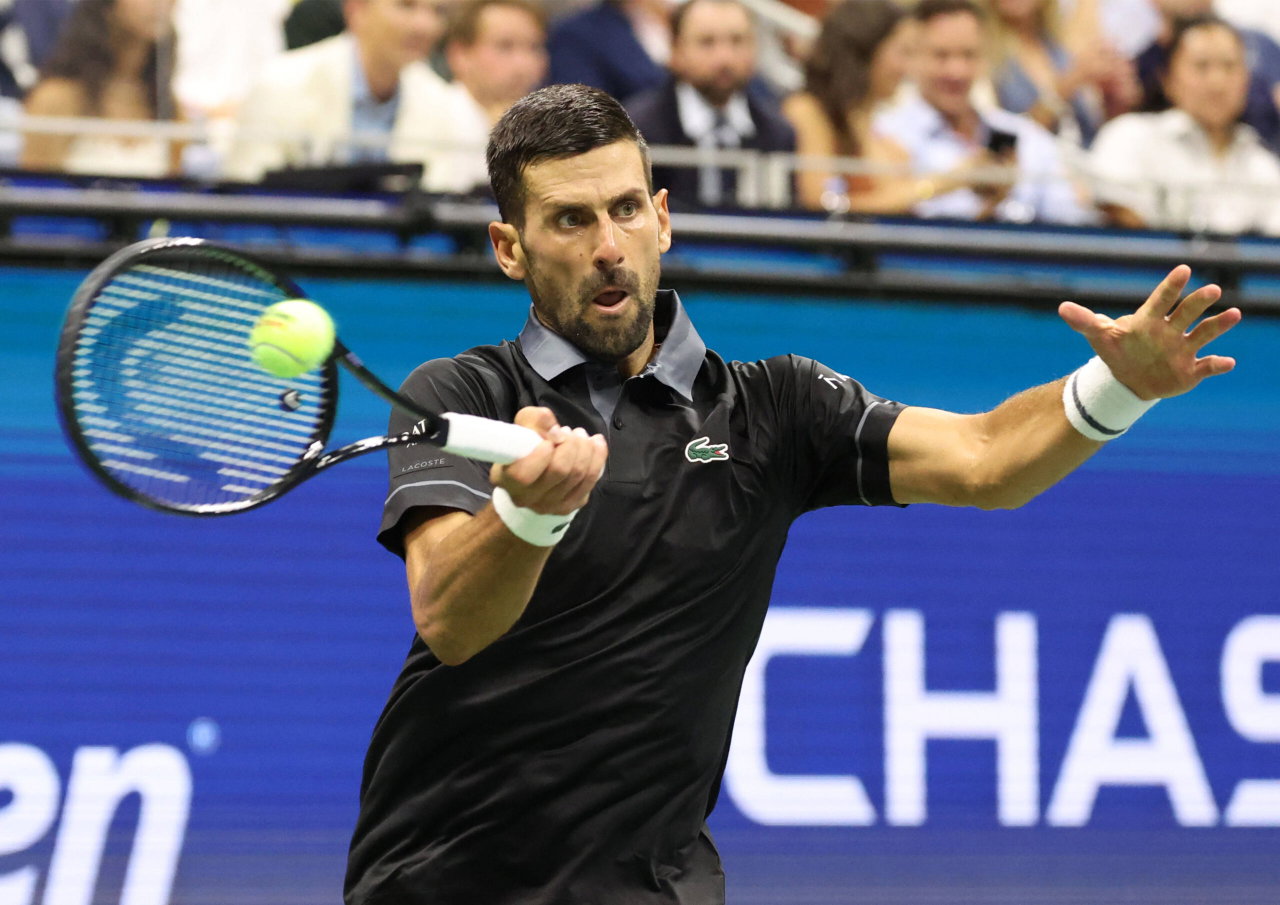
On August 20, the Australian Open, Roland-Garros, Wimbledon and the US Open announced the formation of a Grand Slam Player Advisory Council, describing it as a forum for “direct communication, feedback and collaboration” between the Grand Slams and players. The council was set to launch following the 2026 US Open, and a 12-player group, six from the ATP and six from the WTA, has now been named to serve on it.
Watch What’s Trending Now!
After 18 months of player pressure and public protests, the council could appear to mark a meaningful step toward giving players a greater voice. However, according to tennis journalist Ben Rothenberg, there is reason enough to be skeptical. And if you hark back to February 2026, his argument appears to have some weight.
“The next question is if the player ‘input’ is listened to or heeded whatsoever,” he wrote on X, “because the Slams have operated with autonomy and impunity to this point.” His skepticism cuts to the core tension the Council will now have to navigate.
Novak Djokovic, Alexander Zverev, Ben Shelton, Felix Auger-Aliassime, Lorenzo Musetti and Arthur Rinderknech will be there in the council from the men’s side, while Aryna Sabalenka, Elena Rybakina, Jessica Pegula, Elina Svitolina, Maria Sakkari and Iva Jovic will represent the women’s. Per the announcement, sporting matters will be addressed and there will be a regular forum for player welfare and compensation discussions among other things.
This comes after players had been campaigning for better player welfare, share of tournament revenues (they had made a proposal for them to receive 22% of tournament revenues as prize money), and greater voice in decision making surrounding the Grand Slams. Protesting, they shortened their pre-tournament media duties at the French Open and Wimbledon, as the Slams were forced to increase prize money. Sabalenka, Jannik Sinner, Iga Swiatek, Coco Gauff, Jessica Pegula, Mirra Andreeva, Felix Auger-Aliassime, Ben Shelton, Daniil Medvedev, and Taylor Fritz, all participated in the protest. Sabalenka, in particular, argued that the push was intended to benefit lower-ranked players who struggle to make a living on tour.
But in September, the players ended the public phase of their campaign, saying they would pursue their remaining demands through the new Player Advisory Council rather than continue public protests. They acknowledged that the Grand Slams still haven’t agreed to their goal of receiving 22% of tournament revenues by 2030. At the same time, there has been a noticeable increase in prize money since the campaign began. This year, the Australian Open offered $79.92 million, the French Open $71.56 million, Wimbledon $86.79 million and the US Open a record $108 million.
However, it was reported in February this year, the players had rejected an offer to set up a player council in a letter sent to Wimbledon, the French Open and US Open. The Grand Slams had requested the Top-10 men’s and women’s players’ presence for a meeting with representatives of the three grand slams at the Indian Wells Masters in March. The players, though, were blunt in their statements, saying that their concerns regarding player welfare were being ignored.
Yet, suddenly, a few months later, the tone shifted, with estimates that more than $30 million of the recent prize-money increases across the four majors came on top of their usual growth rates. They also welcomed a French Open proposal that would tie player payouts more closely to the tournament’s profits.
As part of its 2026 player compensation package, the US Open also set aside an initial $2 million, with the amount divided equally between the men’s and women’s sides. The money will remain in escrow while the details of a new player-welfare program are worked out, with insights from the new Council. The program is meant to complement existing pension arrangements by offering support around major mid-career milestones and the transition into retirement. Importantly, eligibility will not be tied to ranking tiers and will extend to players who compete in the US Open main draw in singles or doubles.
That said, while players have emphasized that remaining objectives remain well in sight, formal advisory does not really translate to significant control, and that’s what some are worried about.
The absence of Coco Gauff and Carlos Alcaraz is also notable given their outspokenness in the player campaign. Alcaraz, however, had already distanced himself from the campaign before the council was formed, having withdrawn from the initiative shortly before the US Open. Gauff, meanwhile, has been one of the most influential figures. But interested players can still be invited to apply.
So, veteran journalist Jon Wertheim offered a more optimistic read on the group’s makeup itself, pointing to its wide generational spread.
“And we’re off,” he wrote. “Note the Jovic-to-Djokovic age range. This is encouraging.”