Imago
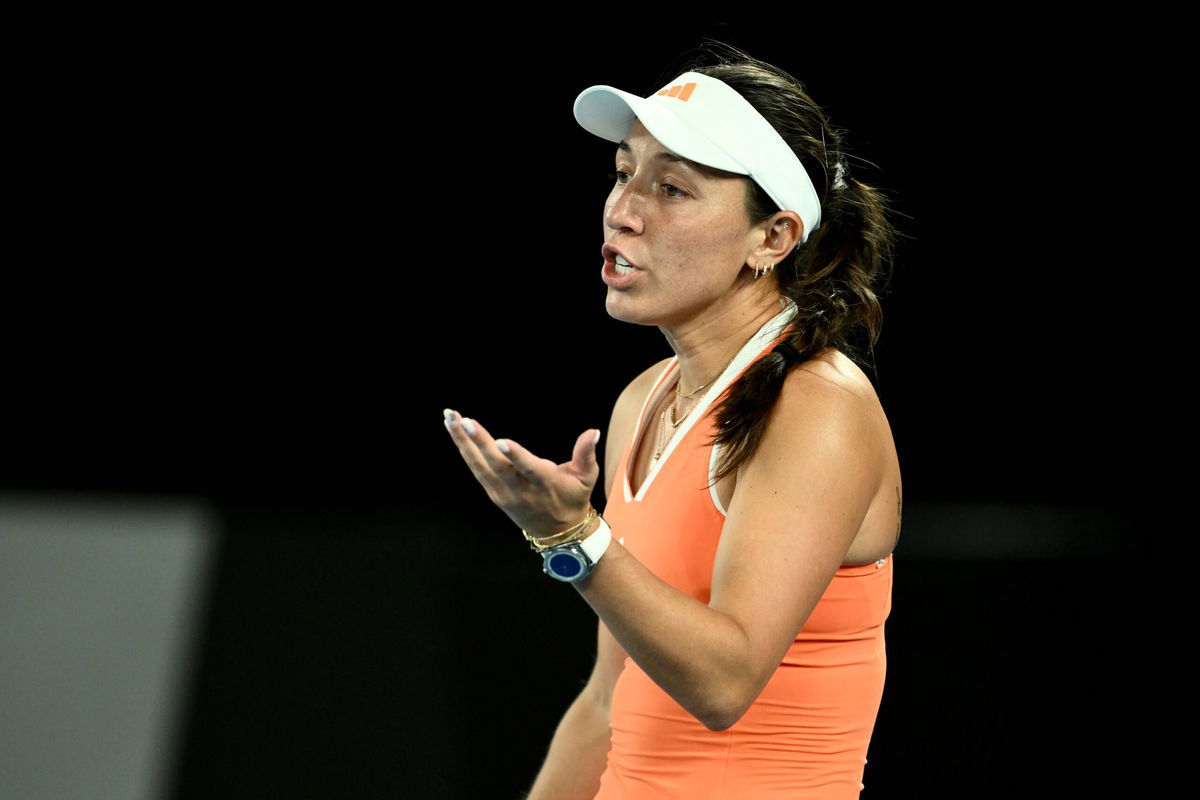
TENNIS AUSTRALIAN OPEN, Jessica Pegula of the USA reacts during the womens semifinal against Elena Rybakina of Kazakhstan on day 12 of the 2026 Australian Open tennis tournament at Melbourne Park in Melbourne, Thursday, January 29, 2026. NO ARCHIVING MELBOURNE VICTORIA AUSTRALIA PUBLICATIONxNOTxINxAUSxNZLxPNGxFIJxVANxSOLxTGA Copyright: xJOELxCARRETTx 20260129198924497451
Imago
TENNIS AUSTRALIAN OPEN, Jessica Pegula of the USA reacts during the womens semifinal against Elena Rybakina of Kazakhstan on day 12 of the 2026 Australian Open tennis tournament at Melbourne Park in Melbourne, Thursday, January 29, 2026. NO ARCHIVING MELBOURNE VICTORIA AUSTRALIA PUBLICATIONxNOTxINxAUSxNZLxPNGxFIJxVANxSOLxTGA Copyright: xJOELxCARRETTx 20260129198924497451
Elena Rybakina tightened her grip over Jessica Pegula with another comeback win at the Miami Open, adding to her dominance this season. The Kazakh rallied from a set down to seal a 2-6, 6-3, 6-4 victory. And Pegula’s frustration spilt into the spotlight, prompting Jonathan Overend of Sky Sports to issue an on-air apology.


During the second set, Jessica Pegula was under pressure. She had to serve to stay in the set. The tension was clearly visible. She turned toward her coaches, Mark Knowles and Mark Merklein. Both tried to calm her down. “It’s okay, it’s okay. Put it behind you, you’re playing better. You’re going to do this. You’re going to do it. Come on,” Knowles said.
Watch What’s Trending Now!
His message was simple. He wanted her to reset. But Pegula remained frustrated. She struggled to deal with Elena Rybakina’s tactics. “She does the same thing every f****** time,” Pegula said. She pointed to her head. She made it clear that it was affecting her mentally.
Merklein then stepped in with advice. He focused on tactics. He tried to offer a solution. “On the return on the ad, don’t go to her backhand on the second. She ropes it line everytime. Go middle,” he said.
Imago
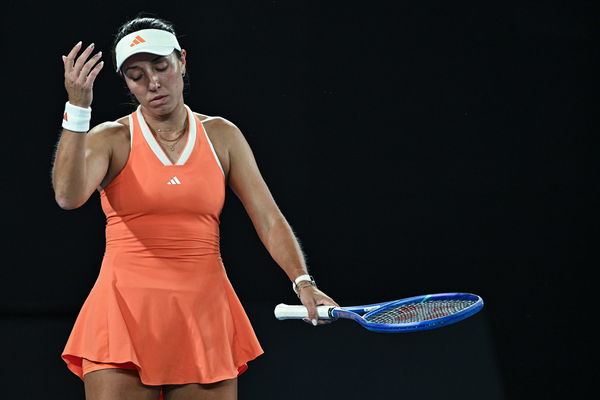
2026 Australian Open Jessica Pegula USA *** 2026 Australian Open Jessica Pegula USA
The idea was to change direction. He wanted her to break the pattern. Pegula was still not convinced. She continued to gesture in frustration. Her body language showed confusion.
The moment was picked up on broadcast. Jonathan Overend addressed it immediately. He acknowledged the language used.
“Well, Pegula seriously rattled. Apologies for the language. But, I mean, very interesting for her to very explicitly say that Rybakina has completely got into her head in this set.” The apology was direct.
Pegula’s frustration was understandable. She had dominated the first set. Rybakina had looked unsettled early on. But the match quickly turned. Rybakina flipped the momentum in the second set. Pegula found herself trailing 2-5.
She tried to regroup. She attempted to apply the advice. However, Rybakina stayed composed. The set slipped away. Rybakina closed it out. The match moved into a decider.
In the third set, Rybakina started strong. She broke early. She began to dictate the pace. Pegula responded with resilience. She held serve and fought back. She even pushed Rybakina to deuce in one game.
Rybakina also had tense moments. She exchanged words with her coach Stefano Vukov. The pressure was visible on both sides. Still, she maintained control. She extended her lead to 3-1. Her consistency made the difference.
There were more challenges ahead. Rybakina faced break points. She even had to save a set point. She held her nerve. She moved to 4-2. The match remained tight.
Both players raised their level. The rallies became sharper. The intensity increased. But the early break proved decisive. Rybakina protected her serve. She did not let the lead slip.
She closed out the match. The comeback was complete. She booked her place in the semifinals. Next, she will face Aryna Sabalenka. It promises to be another high-level clash. The stakes are high.
And moments like this are not rare in tennis. Players often use strong language. Emotions can take over. Broadcasters are then forced to react. Apologies follow quickly.
Aryna Sabalenka’s X-rated remark forces commentator’s apology during a live broadcast
Aryna Sabalenka faced her close friend Paula Badosa at the World Tennis League in Abu Dhabi in 2024. Despite their friendship, Sabalenka dominated the match. She won comfortably 6-2. However, the real moment came after the match. Both players stood together for the interview. The mood was light and playful.
Sabalenka spoke about her on-court frustrations. She joked about her use of Spanish words. Then came an unexpected moment. “I was just showing off my Spanish skills,” Sabalenka said. “It’s your (Bedosa) fault. You have to teach me better stuff than p***.”
She quickly realised what she had said. Sabalenka laughed immediately. She stepped away from the microphone. Badosa also reacted. She struggled to hold back her laughter. The moment quickly turned into a lighthearted exchange.
However, the language was picked up live. Broadcasters had to react instantly. The situation needed control. Robbie Koenig stepped in on air. He addressed viewers directly. “Apologies for the colourful language,” he said.
A similar case happened in 2023. Daniil Medvedev played Marcos Giron at the Australian Open. He won the match in straight sets. But the attention shifted to his behaviour. During the match, he lashed out verbally. The moment was caught on live TV.
While serving at 5-2, Medvedev reacted to a fan. He was heard saying “f**k off.” The courtside microphones captured it clearly. The umpire also heard the comment. Medvedev received a warning. He still went on to finish the match.
Simon Reed responded during the broadcast. He addressed the viewers quickly. “Oh, sorry about the language. He didn’t say it loud, but it was picked up.”
Such incidents are becoming frequent. Players lose control in intense moments. Live microphones capture everything.
