
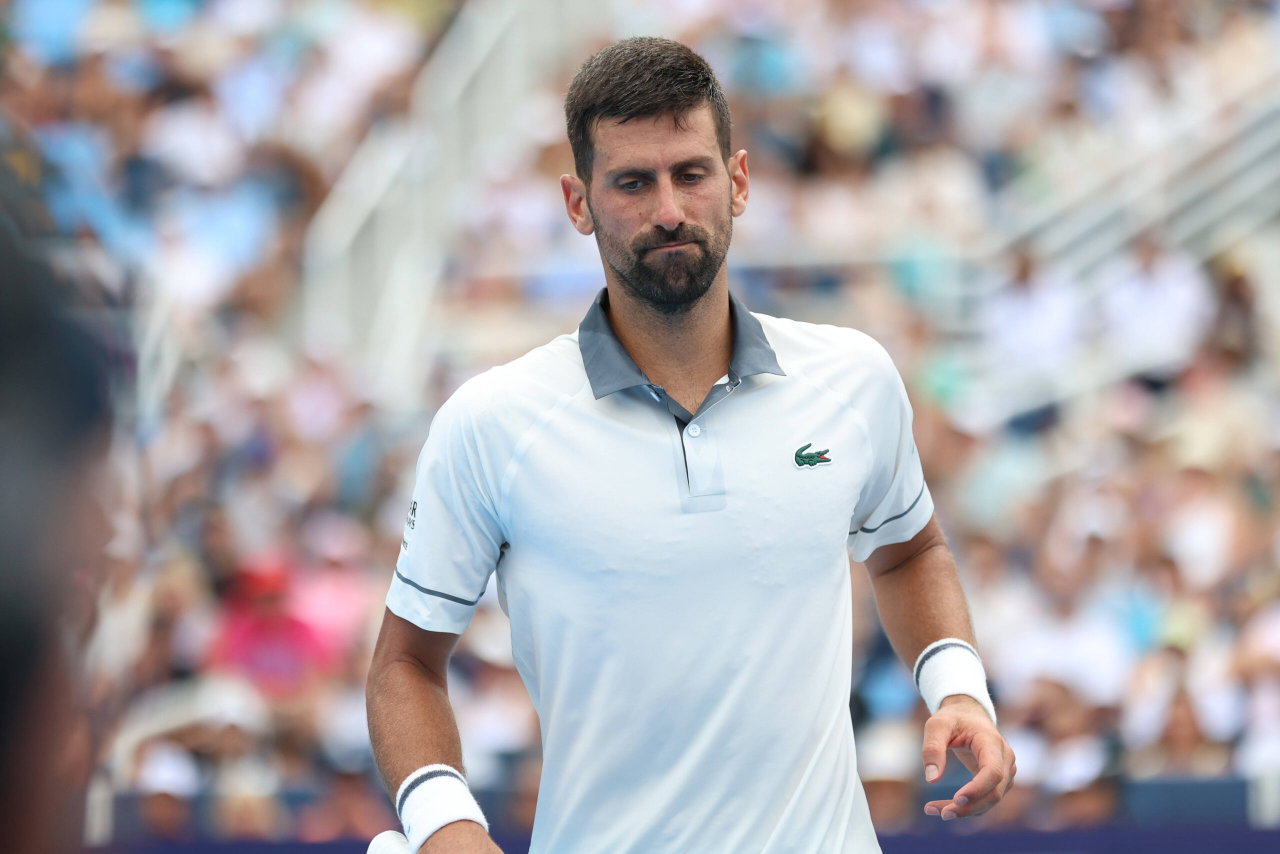
“It’s the fear of the unknown,” Novak Djokovic said when he talked about growing up in Serbia at age 12, while he and his family had to seek shelter to protect themselves from the internal conflict going on in the country. The future is still unknown, but the 24-time Major champion had some cause for optimism given how the 2026 election results panned out in his home country.
Watch What’s Trending Now!
“I’m very happy about this,” said Djokovic during his pre-match press conference at the Swiss Indoors. “My deepest respect to the students who fought and shown dignity and resilience. I have lots of admiration for what they’ve done. They managed to create a sense of pride in Serbia and in the world. The victory is secure, and we all now have hopes that our country will be prosperous and enjoy the future that is coming.”
The recent parliamentary elections in Serbia saw a major shift of power as the Student List won 140 of the 250 seats, bringing an end to the incumbent government headed by Aleksandar Vučić, which had been in power since 2012. As the name suggests, the winning party was formed by students, and their victory was the culmination of a series of protests and movements in the country.
Back in 2024, the collapse of a concrete canopy at the Novi Grad railway station led to a mass mobilization of students to make their voices heard against the grievances with the sitting government. That movement snowballed into the Student List, which triumphed in the elections with one of the largest voter turnouts in the country’s history, after the election was moved up by one year from its original date in 2027.
As for Djokovic, the former World No. 1 has always maintained a stance of support for the students. Back when the movement was in its early stages in 2024, the Serb penned a strong message of support for the students and shared it on a public platform such as X.
“As someone who deeply believes in the power of young people and their desire for a better future, I believe it is important that their voice be heard,” said Djokovic on X on December 19, 2024. “Serbia has enormous potential, and educated youth is its greatest strength. What we all need is understanding and respect. With you, Novak.”
Letting his stance be known on a controversial issue is nothing new for Djokovic, and the Serb has a habit of making his points on public platforms. The former World No. 1 was vocal about his stance against getting the COVID-19 vaccine, which led to his being denied entry to Melbourne to play the 2022 Australian Open and forced him to skip the 2022 US Open due to the quarantine protocols in place at the time.
Djokovic’s strong opinions were felt on the court as well, as the Serb often spoke in defense of lower-ranked players, even going so far as to form a new organization for it.
Novak Djokovic Has Had Strong Opinions in Tennis as Well
While being supportive of the youth in his country off the court, Djokovic has always been vocal about protecting the lower-ranked players on the Tour. The Serb has always pointed out the discrepancies in the financial rewards on offer for top and lower-ranked players, and how that inequality often prevents the latter from accessing better coaching or from having the financial security to pursue a sport that is quite expensive.
Djokovic backed his words with action as well, leaving the ATP Player Council and forming the PTPA in 2020 with former ATP pro Vasek Pospisil. While the Serb left the organization early this year, his work with the PTPA brought to light many of the issues faced by the lower-ranked players on the Tour.
The PTPA exit is not the end of Djokovic’s role in tennis governance, as the Serb was named to the 12-player Grand Slam council, an individual body of players who put their issues before the Grand Slams, independent of the Tour player councils. Having already made his grievances about the long matches at the Grand Slams this year, one can be assured that Djokovic will be a strong voice in changing the existing scheduling at Grand Slams and ensuring player welfare at the biggest events on the calendar.