
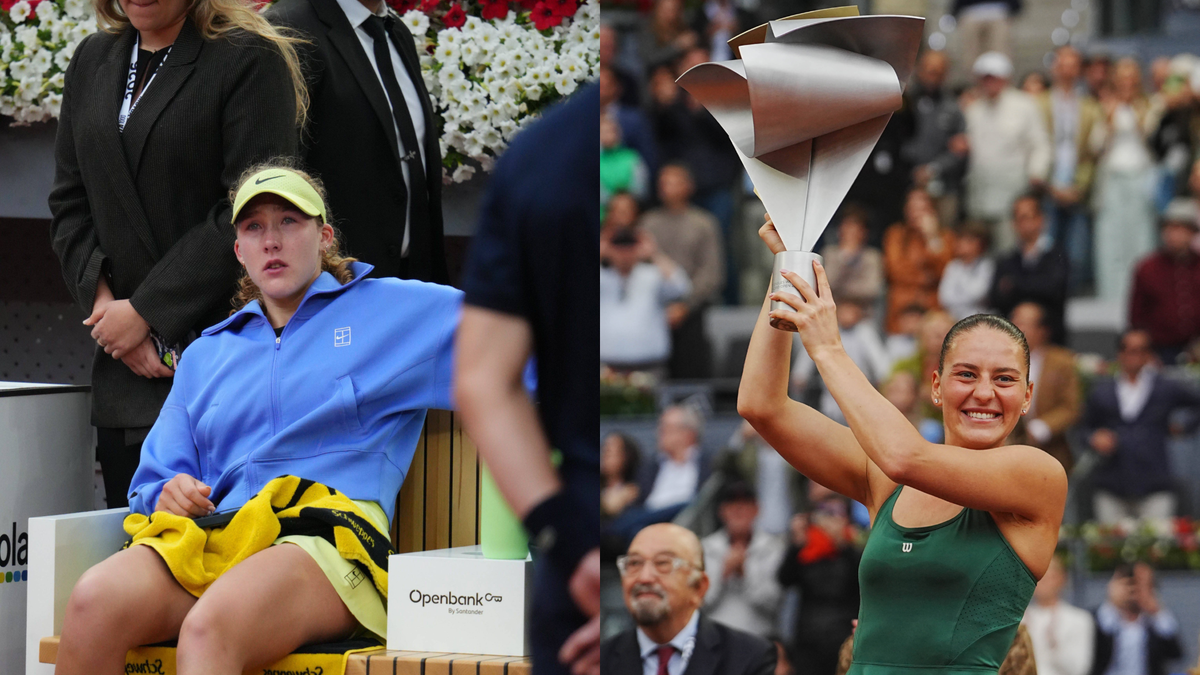
At the 2026 Charleston Open, controversy erupted when Polina Kudermetova and Oleksandra Oliynykova completed over two-and-a-half hours of intense battle only to decline a post-match handshake. A clear on-screen message confirmed the intent beforehand, stating, “The players will not shake hands at the conclusion of this match,” underscoring the growing norm tied to the Russia-Ukraine conflict since Vladimir Putin’s invasion. That same charged reality resurfaced at the Madrid Open, where Marta Kostyuk, fresh off her maiden WTA 1000 triumph, stood firm again in her emotional clash with Russia’s Mirra Andreeva.
Watch What’s Trending Now!
Marta Kostyuk continued her remarkable clay-court surge by capturing the biggest title of her career at the Madrid Open. The Ukrainian world No. 23 defeated Mirra Andreeva in the final, but the match carried significance beyond the scoreline.
Following her victory, Kostyuk once again refused to shake hands with her Russian opponent, staying consistent with her stance since the tension in Ukraine began in 2022. She has not exchanged handshakes with Russian and Belarusian players since the conflict started, and she maintained that position after Saturday’s final at the Caja Magica.
Playing in her first WTA 1000 final, Kostyuk showed composure well beyond the occasion and handled the pressure with authority from the outset. She moved through the opening set with confidence before holding her nerve in a tighter second set to secure a 6-3, 7-5 win over 9th seed Andreeva.
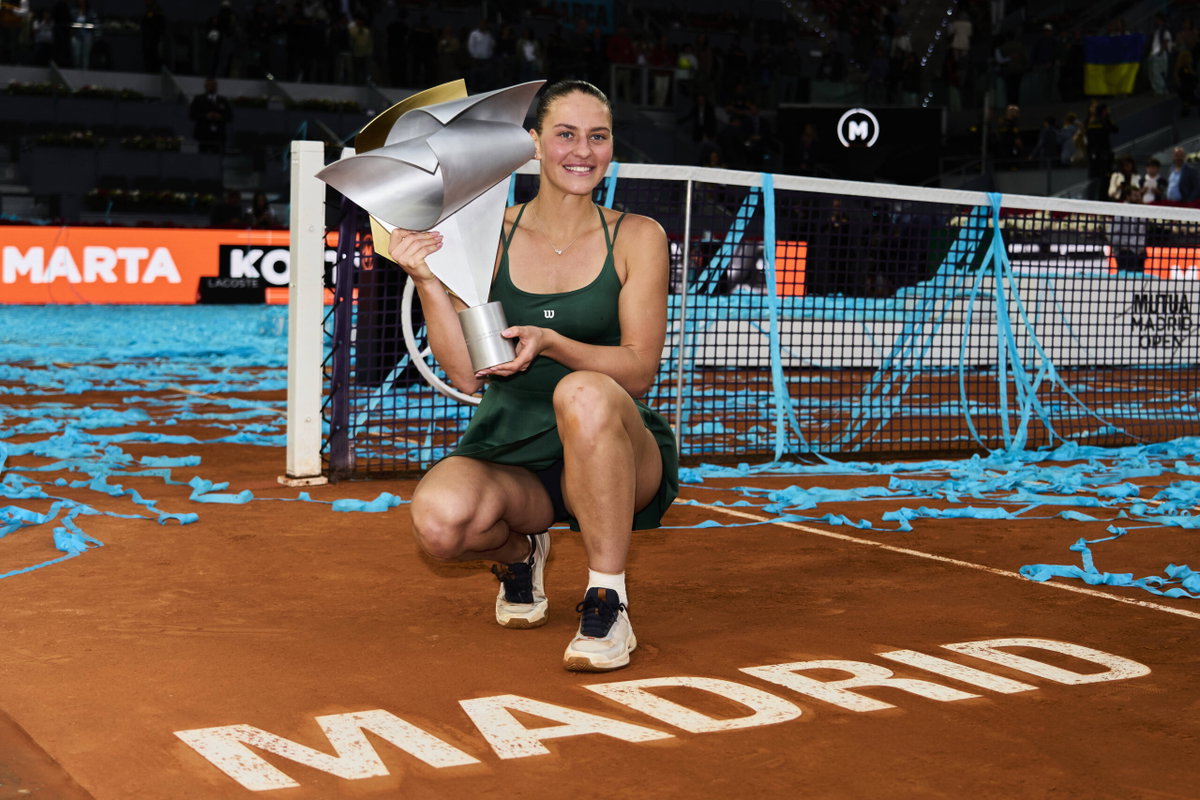
Imago
Mutua Madrid Open – Day Thirteen Marta Kostyuk of Ukraine celebrates the victory after winning against Mirra Andreeva during Women s Singles final match on Day thirteen of the Mutua Madrid Open 2026, ATP, Tennis Herren Masters 1000 and WTA, Tennis Damen 1000 tournament celebrates at La Caja Magica on May 1, 2026 in Madrid, Spain. Madrid Spain PUBLICATIONxNOTxINxFRA Copyright: xJosexBretonx originalFilename:bretonhernandez-mutuamad260502_npUgh.jpg
As the final point ended, Kostyuk dropped to the ground in disbelief, overwhelmed by the magnitude of her achievement, and broke down in tears. Instead of approaching her opponent at the net, she walked directly to the umpire and offered a handshake there, making her position unmistakably clear.
Andreeva appeared fully aware of the situation, as she also avoided the net exchange and shook hands only with the umpire before heading back to her bench.
The teenager, playing in her first WTA 1000 final loss after previously winning Dubai and Indian Wells back-to-back last year, covered her face with a towel and cried.
As the No. 26 seed, Andreeva had dropped just one set all tournament, against Anastasia Potapova in the semi-finals, and arrived in the final on an 11-match winning streak after titles in Rouen and Madrid.
Kostyuk, meanwhile, celebrated her breakthrough moment with a rare backflip on court, then embraced her team before returning to her bench, where emotions again took over.
Although she did not shake hands with Andreeva, Kostyuk acknowledged her opponent with applause during the trophy ceremony, but did not personally congratulate her in her speech.
“I want to thank all my opponents that I played this week. I mean, the girls pushed me to the limit, one of the most unbelievable matches for me these weeks. Very special two weeks here,” she said.
The newly crowned champion also thanked her team, the tournament staff, and the fans as she reflected on her journey to a maiden WTA 1000 title.
For Kostyuk, this moment was not just about victory, but about conviction, as she once again stood firm in her refusal to engage in traditional post-match gestures with Russian and Belarusian players.
Marta Kostyuk clarifies refusal to shake Aryna Sabalenka’s hand after Brisbane International final
Back in January at the Brisbane International final, Marta Kostyuk came unstuck, losing in straight sets to world No. 1 Aryna Sabalenka. However, the match carried deeper tension beyond the scoreboard, reflecting the ongoing geopolitical strain linked to the conflict in Ukraine.
Belarus has actively supported Russia’s aggression, and this has shaped Kostyuk’s firm stance of refusing to shake hands with Russian or Belarusian opponents. Ahead of the final, tournament organisers confirmed there would be no joint photograph of the two players before or after the match to avoid controversy.
After her defeat, Kostyuk pointedly refused to acknowledge Sabalenka on court and instead used her post-match interview to highlight the struggles faced by Ukrainians during a harsh winter.
Her position has remained unchanged across tournaments, including at the Madrid Open, where she also refused to shake hands with her semifinal opponent, Anastasia Potapova.
Before that semifinal, Kostyuk was directly asked whether she would shake hands with Potapova, especially after the latter switched her sporting nationality from Russia to Austria in December 2025.
Kostyuk made her answer clear, stating that she would not engage in any greeting despite the change in nationality.
“The only person I shake hands with is Daria Kasatkina because she not only changed her passport (to Australia), but she also openly stated that she doesn’t support the war and all that. This is why some other girls and I decided to shake her hand, purely out of respect,” Kostyuk said.
“In this case, there were other players who changed their nationality, but none of them have publicly spoken out against the war; they haven’t said anything to support the Ukrainian people. So for me, this doesn’t change anything,” she added.
As Kostyuk remains firm in her stance, her on-court performances continue to rise, and she now carries strong momentum into the Italian Open following her success in Madrid.