
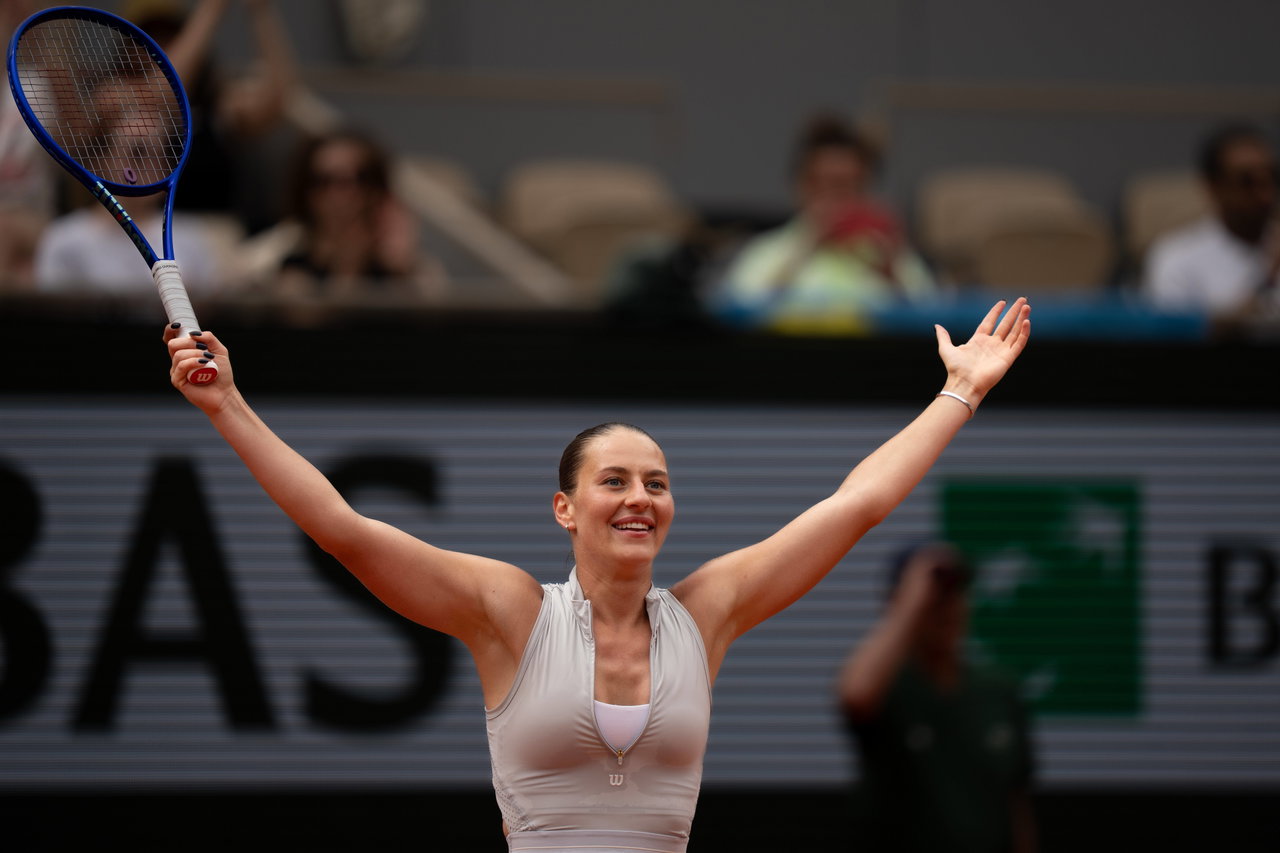
Since 2023, the French Open has faced growing criticism for shutting WTA singles matches out of its coveted night-session spotlight. The last one took place three years ago, while all 32 primetime slots since then have been filled with ATP matches, fueling debate across the tennis world. However, Marta Kostyuk sees things a little differently.
Watch What’s Trending Now!
“Never,” Kostyuk bluntly replied when asked if she wants to play in night-session matches while speaking to TNT Sports after her victory over Iga Swiatek.
The world No. 15 made it clear that she has no interest in competing under those conditions. Later, Kostyuk also explained her reasoning by saying, “I think it’s the worst thing for an athlete’s body. I always request early… keep it for the boys.”
Her remarks appeared to stem largely from concerns about physical recovery. For many players, recovery between back-to-back matches becomes one of the most important factors during a demanding Grand Slam tournament.
The WTA matches are played as best-of-three sets, while ATP matches can extend to five sets. Because of that difference, discussions about scheduling often take on a different perspective.

Imago
May 31, 2026; Paris, France; Marta Kostyuk of Ukraine celebrates winning her match against Iga Swiatek of Poland on day eight at Stade Roland Garros. Mandatory Credit: Susan Mullane-Imagn Images
Playing earlier in the day can also help players recover more effectively. It gives the body additional time to rest, heal sore muscles, and prepare for the next match quickly.
For many women on the tour, those recovery hours can be especially valuable. The ability to return to peak condition before the following day often plays a major role in any tournament’s success, let alone Grand Slam events.
Kostyuk’s comments arrived amid renewed debate surrounding Roland Garros’ scheduling decisions. The conversation intensified after the former top seed, Naomi Osaka, and the current top seed, Aryna Sabalenka, were selected for Monday night’s schedule, following mounting criticism directed at the tournament organizers.
Even Naomi Osaka addressed the topic. The Japanese ace admitted on Saturday that she did not “even associate” night matches with the French Open.
The numbers help explain why the issue continues to spark discussion in recent times. Since the one-match night-session format was introduced five years ago, only five of the 64 available primetime slots on Court Philippe-Chatrier have gone to WTA matches.
Meanwhile, the debate has drawn strong reactions from several leading players in recent times. Ons Jabeur, the two-time Wimbledon finalist, questioned the authorities of the French Open.
“I hope whoever is making the decision, I don’t think they have daughters, because I don’t think they want to treat their daughters like this,” wrote Jabeur on X.
With Kostyuk now offering a very different view from her peers on the tour, the debate has once again heated up across the WTA section, adding another chapter to one of the sport’s most discussed controversies in 2025.
Jelena Ostapenko shares her thought over Roland Garros night sessions
Last year, former Roland Garros champion Jelena Ostapenko also argued that change is necessary in the scheduling. The Latvian was one of the few WTA players to experience the night session when her second-round match against Alize Cornet was scheduled there in 2022.
Speaking with BBC Sport, Ostapenko said, “I wish women’s tennis could be shown more in those spots. The men always have the priority with the scheduling, they take the most popular slots, and on bigger courts. I like to play at night – especially when the stadiums are full. I’m the kind of player that really enjoys it when there are a lot of fans watching and I think that’s what we all play for.”
The ongoing debate has now reached the highest levels of WTA tennis. The continued lack of women’s matches in the night session recently prompted action from newly appointed WTA chief executive Valerie Camillo.
During her visit to Roland Garros this week, Camillo sought answers directly from tournament director and former world No. 1 Amelie Mauresmo.
According to the WTA, the pair held an open and productive discussion regarding the issue. Camillo emphasized that the WTA tennis has consistently delivered some of the most exciting and dynamic competition in global sport over recent decades.
Despite the criticism, Mauresmo has remained firm in her position. She has repeatedly argued that the possibility of WTA matches ending very quickly is one of the main reasons behind the scheduling decisions.
Mauresmo has also made it clear that she does not want Roland Garros to adopt a two-match night-session format similar to the AO or the US Open. Her concern is that adding another match could lead to excessively late finishes for fans and players.
Now, with Sabalenka and Osaka scheduled to meet under the lights in Paris, many are watching closely to see how fans respond. If the stadium fills up and the atmosphere delivers tomorrow, the long-standing tradition of men’s dominance in the French Open night session could finally begin to change.