Imago
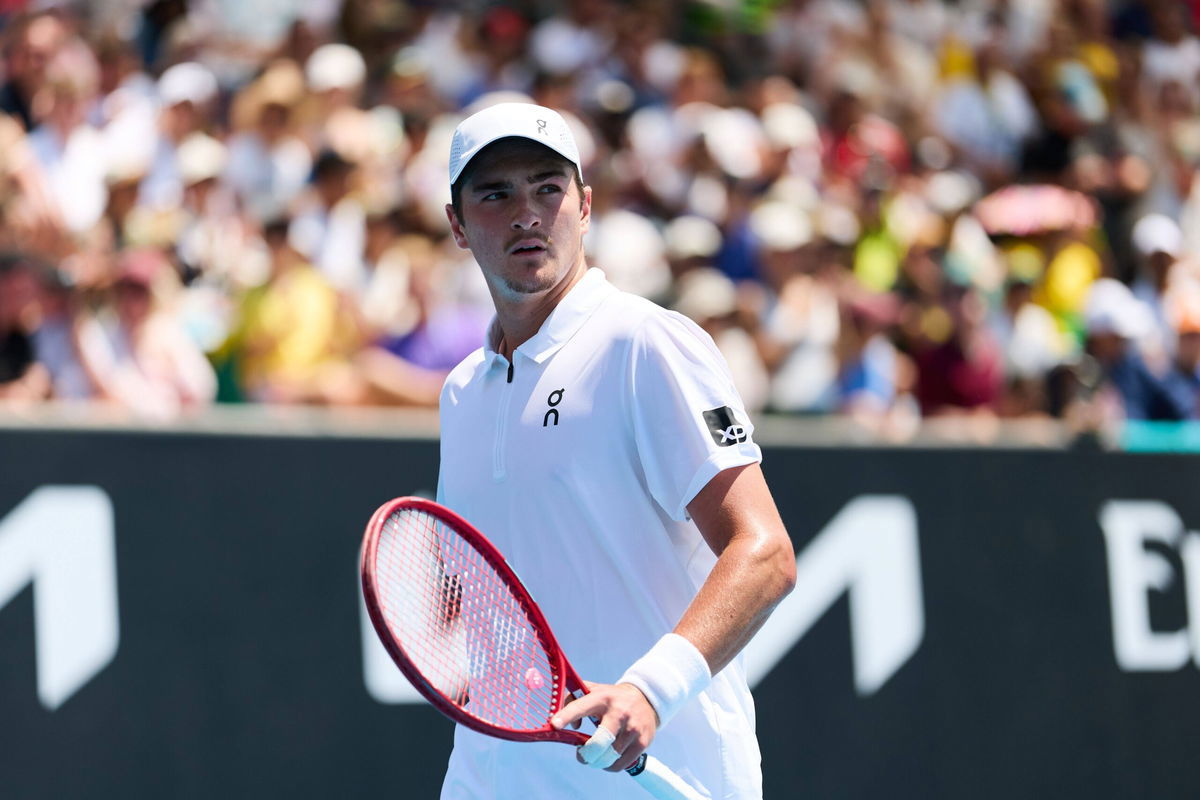
Joao Fonseca of Brazil Australian Open tennis tournament, Day Three, Melbourne Park, Australia – 20 Jan 2026Melbourne Melbourne Park Victoria VIC Australia PUBLICATIONxINxGERxSUIxAUTxHUNxGRExMLTxCYPxROUxBULxUAExKSAxCHNxDENxINDxITAxPORxESPxSWExTURxMEXxCOLxVENxPERxECUxBRAxARGxCHIxURUxPARxPANxONLY Copyright: xRachelxBach/Shutterstockx 16303004ag
Imago
Joao Fonseca of Brazil Australian Open tennis tournament, Day Three, Melbourne Park, Australia – 20 Jan 2026Melbourne Melbourne Park Victoria VIC Australia PUBLICATIONxINxGERxSUIxAUTxHUNxGRExMLTxCYPxROUxBULxUAExKSAxCHNxDENxINDxITAxPORxESPxSWExTURxMEXxCOLxVENxPERxECUxBRAxARGxCHIxURUxPARxPANxONLY Copyright: xRachelxBach/Shutterstockx 16303004ag
If you thought Alexandra Eala had strong crowd support, then Joao Fonseca gave her a run for her money amid roaring Brazilian support on Tuesday. Yet, lacking match rhythm, the No.28 seed’s rustiness surfaced against fast-rising Eliot Spizzirri, falling in four sets. And the upset deepened when Fonseca flagged a certain issue on court, drawing puzzled glances.


During the first set, with Eliot Spizzirri leading 3-2, Fonseca noticed something unusual on court. He found a clear “dead spot” near the outside of the surface. When he dropped the ball before serving, it failed to bounce, forcing him to restart the motion.
Watch What’s Trending Now!
The issue appeared to be caused by a construction flaw or moisture beneath the court. The moment caught attention, but play continued without interruption as the match moved forward.
As the contest progressed, Spizzirri took control. The American, a former standout on the US college circuit and ranked No.85, defeated the 19-year-old Brazilian 6-4, 2-6, 6-1, 6-2 at 1573 Arena to secure an ideal start to his Australian Open campaign.
João Curry or Stephen Fonseca? kkkkkk
João achou um ‘dead spot’ na quadra, mas do lado de fora. Algum erro na construção ou umidade por baixo do piso.
Mas é fora da quadrapic.twitter.com/COLPxQmi21
— Fonsecaism (Guto) (@fonsequism) January 20, 2026
Fonseca entered the tournament short on match play. He had withdrawn from Brisbane and Adelaide earlier in the month due to a lingering lower back injury, which limited his preparation coming into Melbourne.
Although Fonseca insisted his back was fully recovered, he admitted he lacked match rhythm. “I got slowly back on court here in Melbourne, so I felt I needed more rhythm,” he said after the match.
However, court-related issues are not new at the Australian Open. In 2023, Canadian star Felix Auger-Aliassime confronted the chair umpire during his match against Alex Molcan over a similar condition back in 2023.
Midway through the third set against Alex Molcan, Auger-Aliassime voiced his frustration. “I don’t want to complain about it but the balls are not bouncing,” he said while demonstrating the issue. “It’s crazy. I mean, we’re hitting normal but I don’t know.”
Similar incidents have also occurred in the past by iconic WTA players at Melbourne Park.
Australian Open dead spot causes 20-minute delay in Maria Sharapova’s match
Back in 2011, Maria Sharapova encountered a strange issue at the Australian Open. While warming up for her third-round match, she noticed an unusual spot on the court that immediately caught her attention.
Sharapova sensed something was not right under her feet. “It was a little bit strange,” she said. “I thought Nike had put some extra cushioning in my shoes!” The feeling was unlike anything she had experienced before.
The chair umpire stepped in to investigate the area. He attempted to bounce a tennis ball on the spot. What followed surprised everyone watching, including players and officials.
The ball failed to bounce at all. It was completely absorbed by the surface, showing no upward movement. Even a tennis ball dropped on a pillow would rebound more than this one.
The issue was later explained by the extreme heat in Melbourne. High temperatures caused a bubble of air to form beneath the court surface. The effect was compared to bubbles forming on the crust of a pizza.
To fix the problem, staff drilled holes into the affected area. The trapped air escaped, and the court returned to normal. Balance and gravity were restored, and play resumed.
Sharapova recovered well after the disruption. She won the match 4-6, 6-4, 6-4 to reach the fourth round. Still, the dead spot remained a memorable Australian Open moment.
As for Joao Fonseca, his focus now shifts to South American clay next month. After a shortened hard-court run, the questions linger. Can he rebuild confidence and momentum in the coming weeks?
Written by

Edited by

Janainah Fazlin Anam