
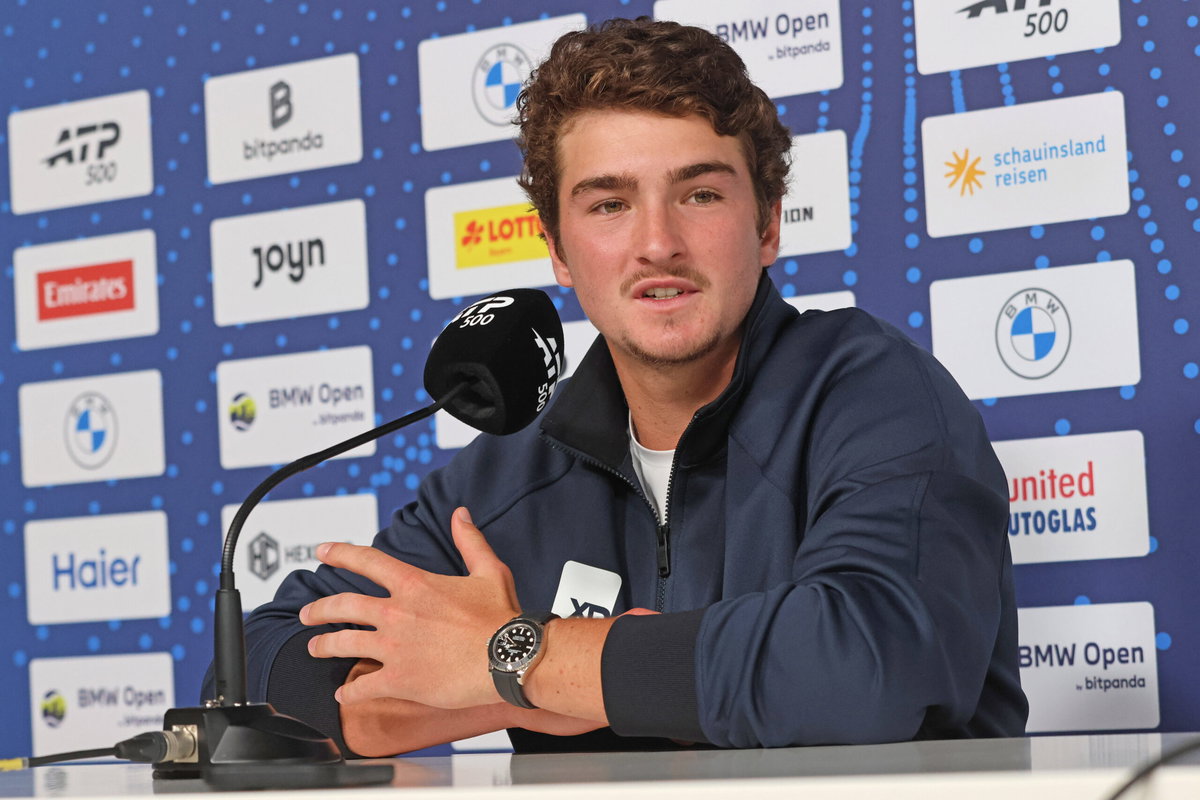
Going through the hectic ATP calendar every season is a grueling task, and Joao Fonseca rightly pointed it out. Having made a winning start to the Canadian Open, the young Brazilian opened up about the mental and physical toll that the current schedule takes on players.
Watch What’s Trending Now!
“Obviously the tour is very tiring, mentally, and physically as well, but more mentally. So, I try to be as healthy as possible mentally during the year, so I think this was a bit of our choice,” said Fonseca in an interview with ESPN Brazil. “A lot of people criticize, but only we know what we go through, so we try to be as well-armed as possible, as well-prepared as possible, more mentally, because technically we can adapt, because this thing is long.” [Trans. from Portuguese]
Fonseca is not the only player to have voiced concerns about the scheduling, with the likes of Carlos Alcaraz and Jannik Sinner also complaining about the excessive amount of tennis players have to put their bodies through each year. Playing four Grand Slams and eight mandatory Masters events, and having a commitment to play at least four ATP 500 events, a player has roughly 16-17 events in his yearly schedule, if not more.
Fonseca was not wrong to say that players are subjected to quite harsh criticism when they choose to skip events to give themselves time to rest and preserve their bodies. When Sinner, Alcaraz, and Djokovic decided to skip the Canadian Open, there was a huge outcry among the tennis community. The tournament director and Tennis Canada entered a discussion with ATP to set restrictions on withdrawals, even suggesting imposing penalties to make the top-ranked players appear at the biggest events.
While Alcaraz was out of action due to an injury, Sinner came heaily under fire from the Italian media when the World No.1 decided to manage his schedule more effectively by skipping the Canadian Open.
Even Fonseca was playing a Tour-level match after a month, as the Brazilian had a hard-fought win over Stefanos Tsitsipas, and will now face a familiar opponent in the next round.
Fonseca Makes a Winning Start in Montreal to Set up with Familiar Opponent
Fonseca was slightly rusty in his match against Tsitsipas to begin with, which is understandable as the Brazilian came back on the Tour after a month. After the pair exchanged early breaks of serve, they held on for the rest of the first set to take it to a tiebreak. Fonseca was able to race to a 4-1 lead in the breaker, which was enough for the Brazilian to win 7-3.
In the second set, Fonseca got an early break and at 5-4, had the opportunity to close out the match, only to be broken by Tsitsipas. However, he was not discouraged, as the Brazilian broke back in the very next game to lead 6-5 and did not miss a second time, closing out the set on his serve to win it 7-5.
The win will now pit Fonseca against Casper Ruud in the third round. The duo met recently at the French Open, where the Brazilian won a tight four-set contest. However, there was a small controversy as the lack of Electronic Line Calling saw Fonseca winning a crucial point in the second-set tiebreak, whereas replays were clear in showing that it was the Norwegian who had won the point. Both will hope that there is no more line controversy in Montreal in what potentially could be a three-set classic.