Imago
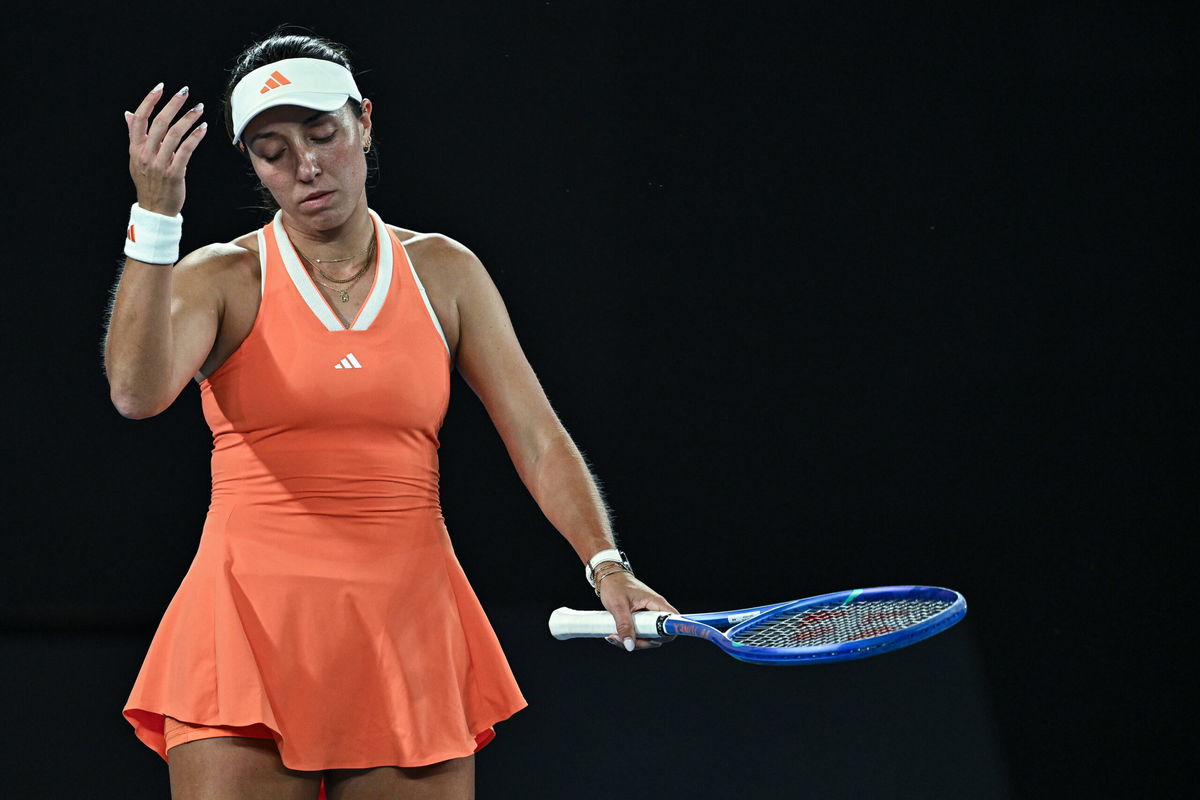
2026 Australian Open Jessica Pegula USA *** 2026 Australian Open Jessica Pegula USA
Imago
2026 Australian Open Jessica Pegula USA *** 2026 Australian Open Jessica Pegula USA
In a tense Indian Wells Open quarterfinal, Jack Draper found himself at the center of controversy. A moment of instinctive disbelief at Daniil Medvedev’s baseline shot saw him penalized for hindrance, despite winning the rally. The call stunned onlookers, with Jessica Pegula now openly questioning the rule’s logic.
Watch What’s Trending Now!
During a recent episode of The Player’s Box Podcast, Jessica Pegula spoke about the controversial rule. “It’s a new rule that has changed this year,” she said.
“I think it’s kind of stupid to be able to go back and challenge something. I like it for double bounces. I think that is okay because obviously if it was a double bounce and you won the point, that’s fair. But for hindrance, it is a little weird that you can literally lose the point five or six shots later and go back.”
ADVERTISEMENT
In fact, the Video Review Technology that debuted last year at Indian Wells has now come into effect in most matches. It helps chair umpires to review a range of decisions, including not-up calls, foul shots, touches, hindrances, scoring errors, and potential default situations.
However, while acknowledging the value of video review in certain scenarios, Pegula argued that hindrance calls should not be revisited once a point has continued.
She made it clear that her issue was with the rule, not the player. Pegula defended Daniil Medvedev in the situation.
ADVERTISEMENT
“I don’t blame Daniil [Medvedev], I just think it’s a bad rule. I don’t think he meant to cheat the system, really. If you go back, the conversation was really weird. She was like, ‘Do you want to challenge?’ And he was like I guess. Then she made the decision. I just don’t think it was a great call.”
Imago
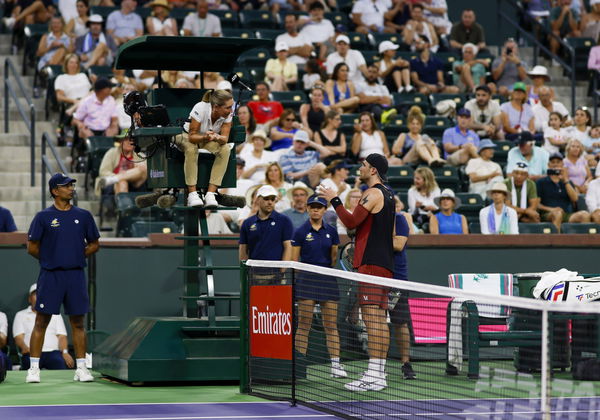
March 12, 2026 Jack Draper GBR discusses a hindrance call made against him during his quarterfinal match against Daniil Medvedev at the BNP Paribas Open held at the Indian Wells Tennis Garden in Indian Wells, California. California. Mandatory Photo Credit : /CSM Indian Wells United States of America – ZUMAc04_ 20260312_zma_c04_360 Copyright: xCharlesxBausx
On the court, Jack Draper handled the situation calmly. Despite the frustration, he stayed composed and spoke respectfully with the umpire. He tried to explain his understanding of the rule. Draper believed the point should not have been overturned after several shots were played.
ADVERTISEMENT
“In the rulebook, if he misses the next ball, then I understand, but we played two more shots,” said Draper. Umpire Aurelie Tourte responded by explaining the use of video review. She said the player was allowed to request it after the point ended.
“This is correct, but now that we have video review, he is allowed to request it when the point is over,” Tourte replied. “Yeah, I get it if he misses the next ball, but he didn’t miss the next ball. You lost the point because he asked for the video review, and on the video review, we see that you made something different than usual,” said Tourte.
ADVERTISEMENT
Draper still disagreed with the decision. However, he did not lose his temper or argue aggressively. “I think you’ve got that wrong,” Draper said. He stayed calm and accepted the final decision.
This incident has sparked wider debate among players. Pegula is not the only one questioning the rule, as more American players have also shared their views on the situation.
ADVERTISEMENT
Madison Keys reacts to Draper’s controversial hindrance call decision
In the same podcast, Madison Keys also shared her view on the incident. She spoke clearly about the rule and the decision. “I don’t have an issue with the rule because now it’s electronic line calling, to get yourself to stop a point, nobody does it anymore,” said Keys.
“So I do like that you can do the video review after, I think that the chair made a bad call personally. I thought Jack [Draper] made a really good point that if it was a hindrance, then I think he would have understood if he had missed the ball after Jack made the gesture, but he hit three more balls, so clearly it didn’t hinder him.”
Top Stories




Former ATP player Steve Johnson also reacted strongly. He believes the rule needs to be changed.
ADVERTISEMENT
“Any other sport, football, hockey, baseball, you can’t challenge a play prior,” he said. “You’ve got to stop it at the moment. I think it will change that way, you don’t stop in the first ball, you can’t replay something.”
Tennis legend Martina Navratilova agreed with this view. She also did not support the delayed review. “I don’t agree with reviewing it, like, three points later. You need to, if it bothers you, you need to stop playing right there, and now you have an argument,” said Navratilova.
The incident created a strong reaction across the tennis world. Many players and experts questioned the fairness of the rule. It also pushed the ATP Tour to act. The governing body appears to have listened to the criticism.
ADVERTISEMENT
Respected journalist Jon Wertheim shared updates on X. He explained the key rule changes.
“Two ATP Tour rule changes to watch,” he wrote. “a) Video review of hindrance after the point (a la Medvedev/Draper)… (in effect no longer trialled). b) Video review challenges are unlimited but chair ‘will retain control over the process’ and has discretion to deny any unreasonable requests.”
These changes are seen as a positive step. They aim to avoid similar controversies in the future.
ADVERTISEMENT
With the Miami Open already underway, such issues may no longer affect matches. The latest decision could bring more clarity and fairness to the game.
ADVERTISEMENT
ADVERTISEMENT
ADVERTISEMENT
Related Newsletters