
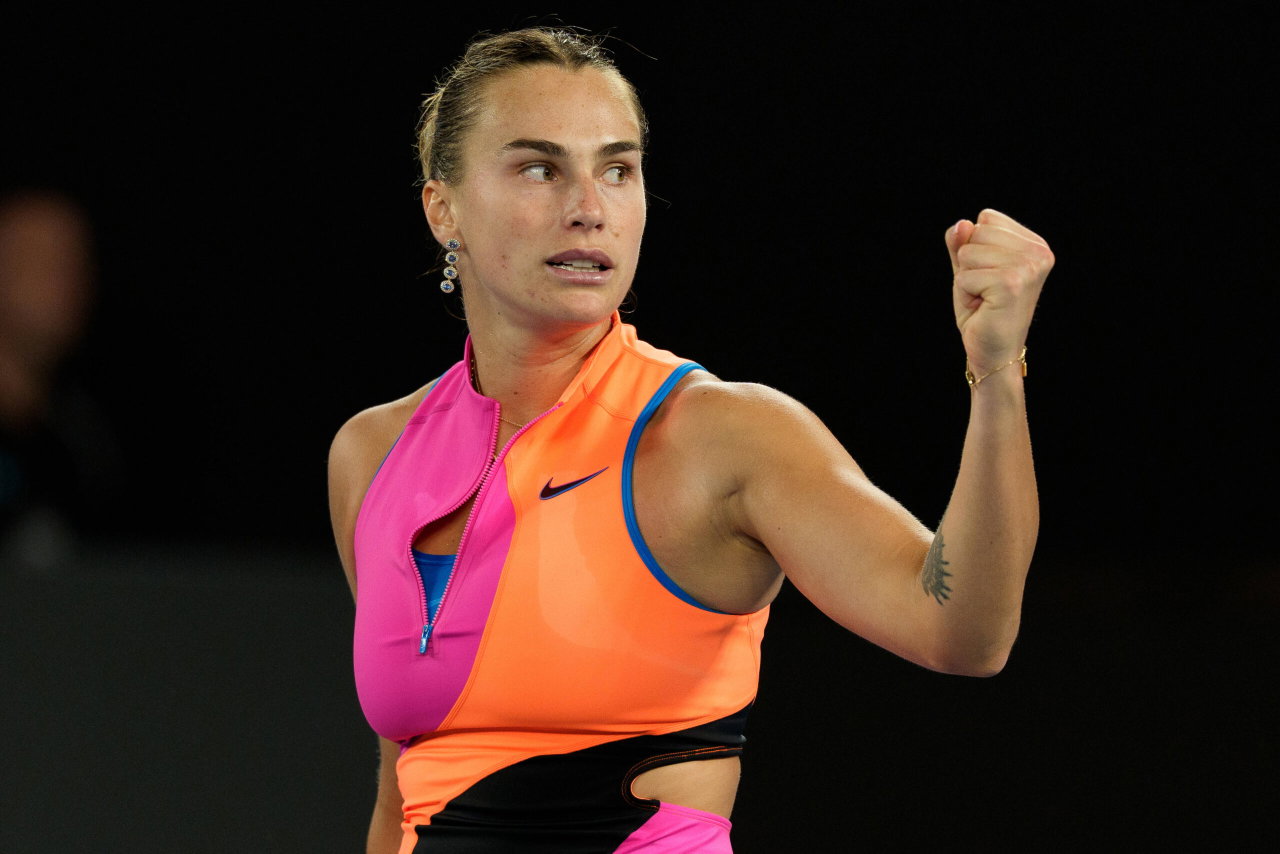
The tipping point among players came three months ago, when Roland Garros announced its prize money and top stars, including Aryna Sabalenka and Jessica Pegula, questioned how the tournament’s growing revenues were being distributed. What followed was a wave of player-led protests that almost got carried over to Wimbledon. But with the US Open now around the corner, the long-running standoff appears to have reached a turning point, with a major decision finally addressing some of the players’ biggest demands.
Watch What’s Trending Now!
The organizers at Flushing Meadows announced a record-breaking prize money pool and the addition of a new player advisory council. The decision aimed to address both sides of the players’ demands: a larger share of revenue for those ranked outside the top 100 and a stronger voice in the decision-making process.
“There will be no player protest at the US Open,” journalist Jon Wertheim confirmed via X, describing the resolution in measured terms. “Like most truces it’s tenuous but good for both sides here. Neither got everything they wanted, and neither got nothing. This is what successful labor relations looks like.”
The US Open will now offer $108 million in total prize money, a 20% increase on last year and the largest fund in Grand Slam history. Singles champions will earn $5.5 million each, up 10% from 2025, while first-round losers take home $140,000, a 27% jump. Interestingly, the highest percentage gains this year have been concentrated in the initial rounds and not in the second week.
It’s a direct response to criticism voiced by world No. 3 Jessica Pegula and co., who had pointed out in March that the previous year’s increase disproportionately rewarded players who least needed it. The fund also includes $2 million for a player welfare fund that has been one of the most pressing demands from players in the last eighteen months.
Alongside the money, the four Grand Slams jointly announced the formation of a Grand Slam Player Council. This was another key ask after some players had limited their press conferences to 15 minutes at both the French Open and Wimbledon to protest against a lack of dialogue. In a joint statement, player representatives welcomed the news while making clear the fight isn’t over.
“This is a substantial increase in prize money. While this is not yet tied to an agreed revenue-sharing formula, players remain committed to that principle and will continue to work with each of the Grand Slams toward that goal,” the statement read, adding that players “look forward to building on today’s positive announcements,” as the council’s structure is finalized.
The revenue-sharing issue still hangs in the balance. Players have demanded each Grand Slam contribute 16% of their earnings to the prize money pool and expect that to increase to 22% by 2030. However, the authorities are yet to share the financial statement for 2025 to confirm whether it reaches the mark or not.
Notably, USTA chief executive Craig Tiley called the package “a significant first step in a multi-year investment in athletes.” Mixed doubles also saw a boost, with first-round prize money doubled but the winners’ share stayed at $1 million.
The US Open kicks off on Sunday, August 30. While the truce has been extended for now, the issue of revenue sharing remains very much alive. And much like Wimbledon, the US Open has managed to steer clear of the player protests that could have disrupted the media landscape around the final Grand Slam of the year.
Wimbledon’s response to player-led protests
Back in June, Wimbledon did try to turn down the heat by giving its prize money a 20% bump this year, taking the singles champions’ payday to £3.6 million ($4.75 million) each. But the bigger argument was never just about the size of the cheque.
The players weren’t ready to call it a day. An advisory firm representing them confirmed that the “direct action protest” would continue into the first week at the All England Club, with players limiting their contractual media commitments to 15 minutes.
“Players will limit their contractual media commitments at the tournament to 15 minutes — reflecting that Wimbledon currently pays slightly below 15% of revenues to players as prize money — for the duration of the first week of the Championships,” the statement said. “Following detailed consultation with players across both tours, player representatives have written to Wimbledon’s leadership to inform them of the planned action, while acknowledging the welcome recent 20% increase in prize money compared to last year’s Championships.”
And here’s where the numbers made the players’ case a little clearer. Despite the prize-money hike, players were projected to receive just 14.4% of Wimbledon’s total revenue this year. Ten years ago, that figure was actually higher at 14.9%.
That’s still below the 16% revenue share players proposed last year, meaning the bigger prize pool didn’t quite close the gap between what Wimbledon offered and what the players were asking for.
Following this, All England Club chair Deborah Jevans pointed to the fact that the rise covered every stage of the tournament, including qualifying.
“We’ve demonstrated that we’ve looked at every round, including qualifying,” Jevans said at the time. “My hope is that the players do recognize what a significant increase that this is.”
And now, with the US Open putting its own numbers on the table, it looks like players and the Grand Slams may finally be moving toward common ground on how the revenue pie should be shared.