
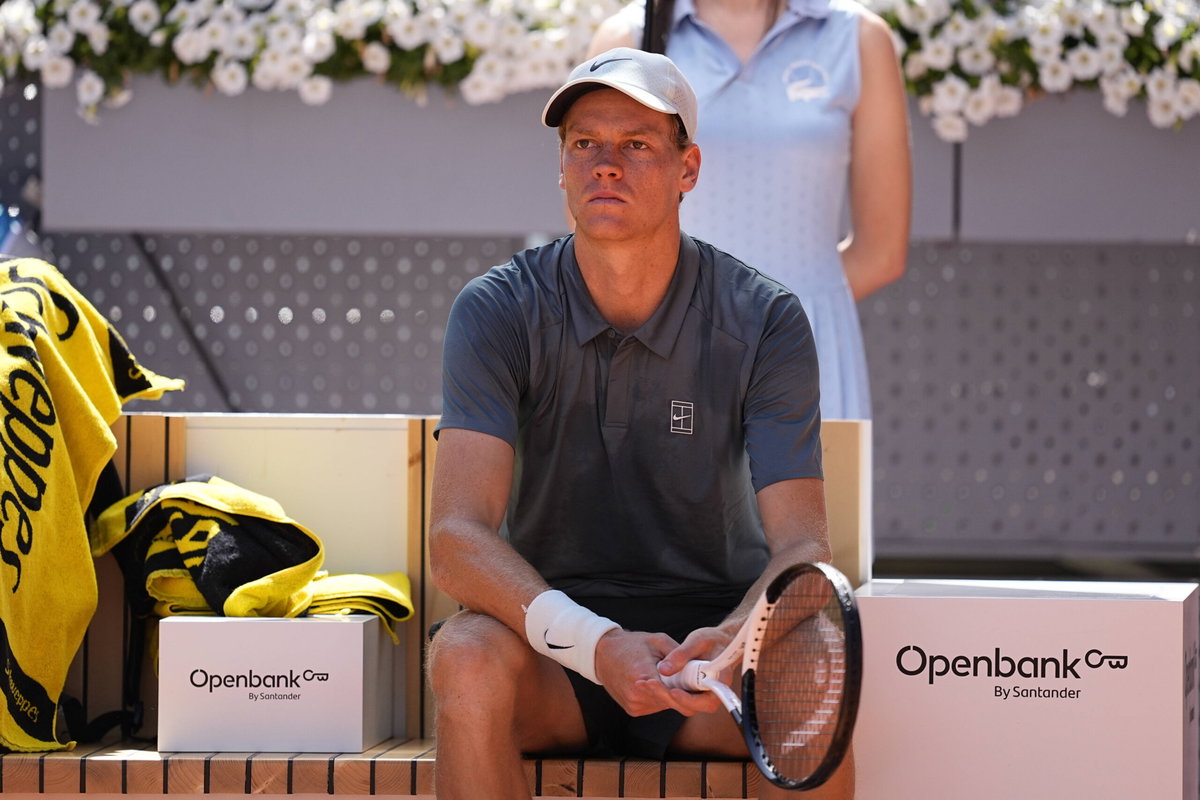
Forty-seven matches. Forty-four wins. Six titles from six finals, and after completing his career Golden Masters at Rome this year, there isn’t a single Masters 1000 trophy left for Jannik Sinner to win for the first time. He is having one of the most dominant seasons in tennis history by any measure. It is also, according to one of the sport’s most respected medical minds, precisely the kind of season that eventually catches up with a body, no matter whose name is on the trophy.
Watch What’s Trending Now!
Dr. Giovanni Di Giacomo, the reference doctor of the Internazionali d’Italia and of the ATP Finals for decades, gave a detailed explaination after Sinner withdrew from Cincinnati with a right knee injury. This was the same issue that had already forced him out of Montreal the week before. In an interview with journalist Marco Beltrami, the doctor opened up on the technicality of when the athlete breaks down.
“They are incredibly human guys, who have ligaments, have tendons, have cartilage, have functional overload pains, have their own genetic characteristics. Despite being champions, each one can be penalized for a whole series of reasons,” he said.
Sinner’s workload this year has been extremely even by his own standards. He came into Cincinnati after being 44-3 for the season, having swept Indian Wells, Miami, Monte Carlo, Madrid, Rome and Wimbledon, becoming the first man to win the Sunshine Double without dropping a set along the way. He’s second on tour in matches played this season, behind only Alexander Zverev’s 55. The Montreal withdrawal cost him a shot at becoming the first man ever to win every Masters 1000 title in the same calendar year, a feat that’s now off the table for 2026.
Imago
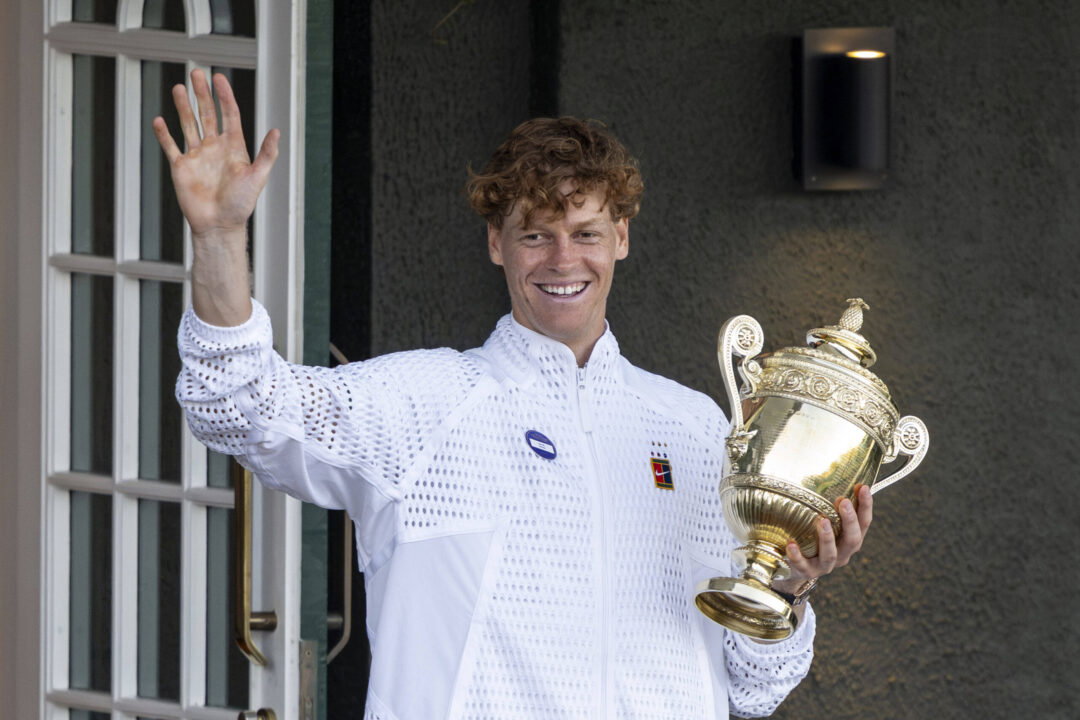
260713 — LONDON, July 13, 2026 — Jannik Sinner of Italy celebrates with his trophy after winning the men s singles final against Alexander Zverev of Germany at the Wimbledon Tennis Championships in London, Britain, July 12, 2026. Photo by /Xinhua SPBRITAIN-LONDON-TENNIS-WIMBLEDON-MEN S SINGLES StephenxChung PUBLICATIONxNOTxINxCHN
The only real setback he had all year came at Roland Garros, where he led Juan Manuel Cerundolo by two sets and 5-1 in the third before the heat caught up with him, and he dropped 18 of the last 20 games for a stunning collapse. Everywhere else, deep run has followed deep run.
It is exactly that pattern, dominant week after dominant week with barely a gap to recover, that Di Giacomo pointed to when explaining the knee issue itself.
“If his colleagues deemed it appropriate to slow down the overload on the knee, it means he has an overload syndrome, just like so many other athletes have had in the past. Rest always represents the best treatment,” he said, framing the decision to skip Cincinnati as a deliberate trade-off rather than a setback.
“I assume they preferred not to risk Cincinnati in order to show up in the best possible condition for the US Open. You always have to do the math and figure out where it’s worth not taking risks.”
Di Giacomo has seen that math get worked out before, and not every case ends with a player back on court a few weeks later. Some end careers outright, and the reason, he explained, often comes down to something a player has no control over at all.
When overload turns career-threatening
Di Giacomo was careful to note that none of this is new.
“When I started with the ATP, 33 years ago now, these overload issues were already there. They played every week, there were tons of tournaments. It’s always the same old story repeating itself,” he said, arguing training methods, monitoring and prevention have actually improved dramatically since.
Imago
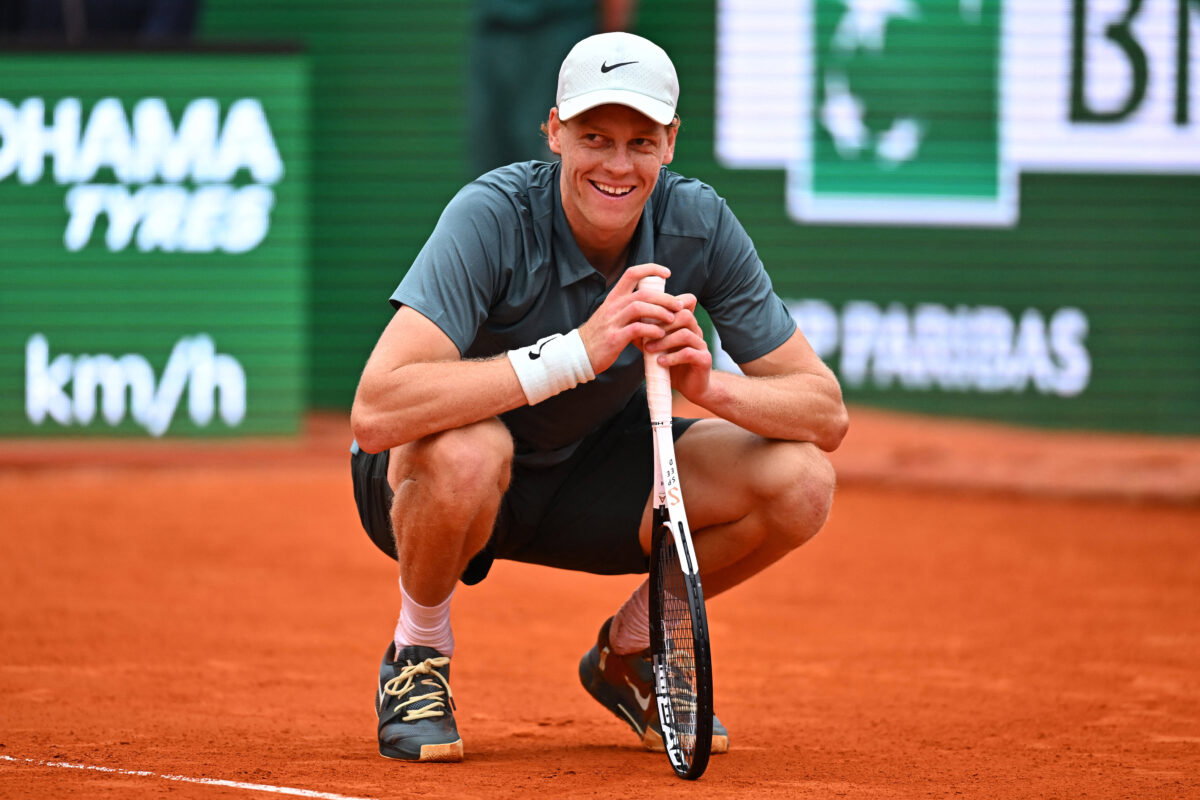
Carlos Alcaraz v Jannik Sinner At Rolex Monte-Carlo Masters 2026 Finale – Monaco Jannik Sinner ITA during the final at the 2026 Rolex Monte-Carlo Masters in Monte-Carlo, MONACO, on April 12, 2026. Photo by Corinne Dubreuil/ABACAPRESS.COM MONTE-CARLO Monaco PUBLICATIONxNOTxINxFRAxUK Copyright: xDubreuilxCorinne/ABACAx
But tennis’s history is still littered with cases where knee overload won in the end. Roger Federer’s career ended with three different surgeries on his right knee in a span of a year and a half, with surgeons unable to repair what years of high-level movement had taken its toll. In 2014, two-time Grand Slam champion Li Na retired from the sport due to persistent knee issues that she could no longer deal with.
It’s this history that makes the doctors’ genetic explanation relevant to Sinner’s case. He compared elastin, the protein that determines cartilage’s capability, to melanin, which is the pigment behind the skin, suggesting that every athlete has a different threshold even for identical training loads.
“Your elastin, like melanin, isn’t the same as mine. Each of us has a different resistance to cartilage overload. A player also has to be lucky enough to have good elastin, which allows him to have cartilage that wears down slowly and is ready for the excessive loads these champions face,” he said.
He also pointed to the sheer physical demand tennis places specifically on the knee, a joint he argued is just as critical to a player’s mechanics as the shoulder or wrist.
“Knee flexion is as important as that of the shoulder, elbow, and wrist. If a tennis player arrives five milliseconds late on the ball, it completely changes the sequence of the kinetic chain.”
Ultimately, Di Giacomo circled back to the structural problem underpinning all of it, the calendar itself.
“The blanket is that size: if you pull it more on one side, it uncovers the other. The guys can’t play four hours a day for 365 days.”
Sinner hasn’t played a competitive match since beating Zverev to defend his Wimbledon title in July. He won’t have another shot before the US Open begins on August 30. By Di Giacomo’s read, that gap isn’t lost time. It’s the trade-off Sinner’s team chose on purpose.