
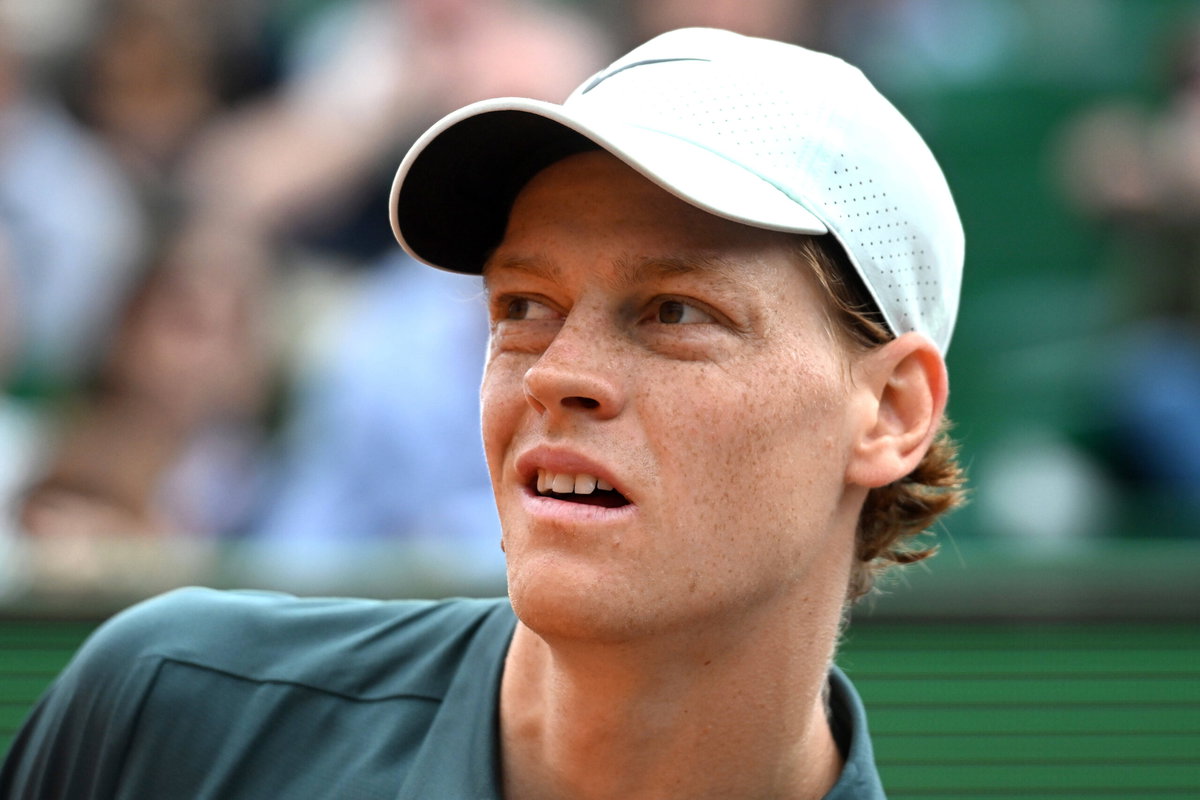
Jannik Sinner was expected to return at the China Open, but his recovery was not far enough along. More than six weeks after announcing the end of his 2026 season on October 6, the Italian is facing fresh uncertainty over his return, raising further questions about his availability for the Australian Open 2027.
Watch What’s Trending Now!
Sinner’s latest medical decision comes after several months of uncertainty surrounding his right knee. According to reports from Italian media, the five-time Grand Slam champion continues to experience pain from inflammation of the lateral band of the knee that may have been caused by an overload of training and matches. Per Vanity Fair, he still cannot train on a regular basis because of it.
The Italian, who is following his recovery program in Monte Carlo, is expected to travel to the United States for further consultation. The trip follows tests in Italy and a meeting with Professor Alberto Zangrillo and a team from San Raffaele Hospital in Milan. Sinner wants a second specialist to weigh in so he can map out a return that does not risk a relapse.
However, the outlet reported that the doctors Sinner saw in Italy have not recommended an operation at all, and that their advice so far leans toward a cautious route of rest and anti-inflammatory treatment. That matches what a spokesperson told The Athletic when Sinner ended his season: he had not undergone any operation on the knee, and none was planned for the time being.
Still, the American trip is intended to help clarify his treatment options, making the upcoming consultation particularly important. If surgery eventually becomes necessary, it could significantly alter his comeback timeline.
Depending on the nature of the procedure and the extent of the injury, recovery could take several months, potentially putting the Australian Open at risk. Continuing rehabilitation without surgery could allow him to return sooner, but the persistent pain raises questions about whether that approach would fully resolve the problem. So patience is key, and Sinner’s camp is not the only one urging for it.
Ivan Ljubicic, now the coach of Felix Auger-Aliassime, ran into him in Monte Carlo, where both live and where Sinner follows his recovery program, and found him smiling and sticking to the protocols. “He will return when he is ready; don’t rush him,” Ljubicic said, adding that recovery has to come before any comeback and that the team’s long-term goals sit above a rushed return.
Angelo Binaghi, president of the Italian Tennis and Padel Federation, struck a more emotional tone in comments to Tuttosport. He first saw the break as a chance to rest, but worry grew as the weeks became months, and he now mostly feels sadness for the 25-year-old, saying “he didn’t deserve this” and that a problem like this is harder to bear for a world No. 1. Binaghi also pointed back to the Clostebol case that became public in 2024, saying Sinner had already carried the weight of a doping accusation he considers unjust.
Sinner, though, has made his target clear. At a press conference in Milan on November 10, he said, “The goal is to go to Australia,” and that he hopes to play a few tournaments beforehand. He added that he has to respect the timelines and the medical protocols rather than try to speed up his recovery, and that he has complete faith in the team treating him. He also revealed that the first plan for his return had been an unrealistic target, so the team changed course. If all goes well, he would be chasing a third Australian Open crown.
That said, Sinner did show up during ATP Finals week. On Sunday, November 15, he walked onto the Inalpi Arena court in Turin as an honoree rather than a player, his first appearance in front of a home crowd since Wimbledon. Before Zverev opened the tournament against Rafael Jodar, he joined 10 other former world No. 1s at a ceremony for the ATP No. 1 Club, the group of men who have reached the top of the rankings. He was the last of them to step out, joining the likes of Boris Becker and Marat Safin as Italian fans showed their appreciation.
He had also attended a club gala on Friday and spent time at the venue on sponsor duty for Head, which marked 15 years with him by launching the new Speed Sinner.
“I’m so sorry I can’t play,” he told the arena, adding that he would work hard to be back next year. Asked how he plans to climb back to No. 1, he said staying healthy comes first, then competing in front of a crowd, and that he is already looking ahead to next year. “I miss this event,” he admitted.
His absence has been felt in the stands too. Sinner won the title in Turin in 2024 and 2025 without losing a match and would have gone in as the heavy favorite again. When his withdrawal became official in early October, Italian fans put tickets for every session back on the resale market, including the November 22 final, where one pair was listed at €932. Other sessions ranged from around €50 to more than €400. More than 100,000 tickets had been sold before the news, and the 2025 edition set a record with 229,879 spectators over the week.
Former World No. 4 Explains How Sinner’s Weight Loss Could Have Prolonged Recovery
The extent of Sinner’s discomfort became clearer in a recent video released on his YouTube channel. The Italian described how unpredictable the injury had become.
“I had days where I felt nothing and I could play without any problems, and then I had days where I couldn’t move at all,” Sinner said. He also admitted that the injury had affected his life outside tennis, as he has been forced to limit activities to protect his knee.
“The worst part for me about this injury is that I cannot compete, I cannot play tennis.”
The same vlog, made in partnership with Allianz, held another revelation. Sinner said he had undergone surgery to remove his tonsils and had “lost a lot of weight” afterward.
Former world No. 4 Greg Rusedski thinks that could explain why the layoff has run so long. On his Off Court With Greg Rusedski podcast, he said nobody realized how much weight Sinner had dropped, and that a player who keeps shrinking cannot build muscle, however much protein or creatine he takes.
In his view, the quads and the two muscles that help stabilize the knee have to get bigger before the joint is protected, which is why recovery plans kept stopping and starting while the team waited for the weight and muscle to return. Rusedski is still relaxed about Australia. He expects Sinner to be fine, pointing to his professionalism and a great team alongside, saying that the weeks left before Melbourne leave plenty of time for things to speed up.