
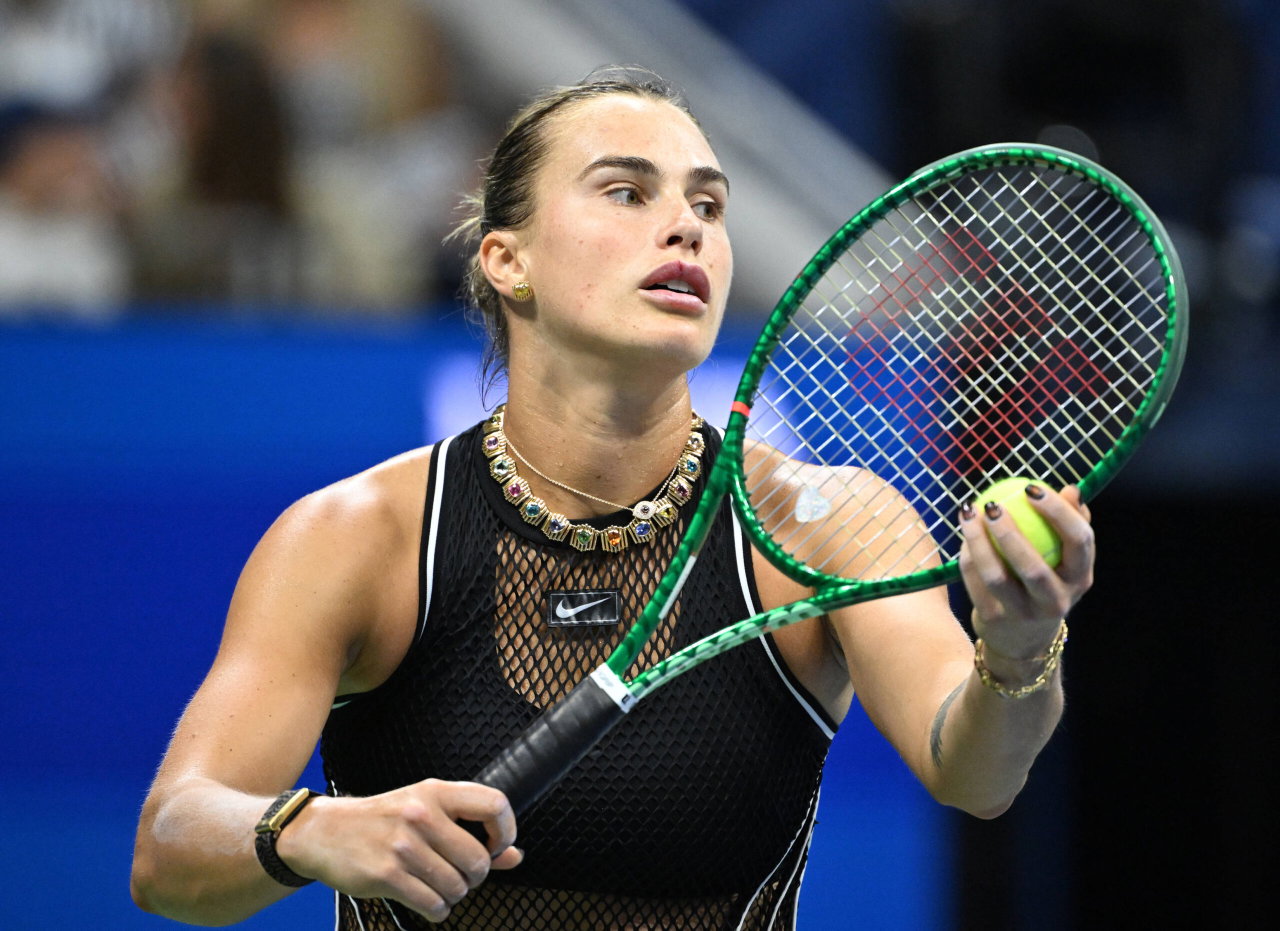
Aryna Sabalenka’s season looked very different when she left Miami in March firmly in control of the World No. 1 ranking. But the certainty of that start began to fade during the clay season, with a slip against Hailey Baptiste in Madrid followed by an upset against Sorana Cirstea in Rome.
Watch What’s Trending Now!
Six months later, a third-round loss in Beijing added another difficult chapter to a season that has steadily slipped away from her. That realization is slowly setting in.
“She is very talented, and moves well on court,” said Sabalenka in her post-match interview. “She also serves well so you have to convert your chances against her. She can serve really well, and to return from shade or sun is tricky. I wasn’t good at this today.”
Break point conversion was a key element in Sabalenka’s 6-4, 6-3 loss to Bartunkova. The Czech player was on it from the start, breaking the second-seed’s serve in the opening game of the match. The only time Sabalenka got a chance against Bartunkova’s serve was in the sixth game. Still, the Belarusian squandered all five break point opportunities, which saw her opponent go 4-2 up.
That lead was enough for Bartunkova to close the set out at 6-4. The Czech had all the momentum as she broke early in the second set as well, having an early 3-1 lead. Sabalenka could not generate a single break point in the second set, as Bartunkova mixed her serves while expertly navigating the external conditions, which were tricky as the court was partially in the sun. The other half was in the shade.
One more service break in the ninth game in the second set saw the match end in Bartunkova’s favor, who earned the most high-profile victory of her career. For Sabalenka, this match featured recurring themes from her earlier losses this season.
The Belarusian faced a similar problem, struggling to break serve in her match against Naomi Osaka at Wimbledon, where Sabalenka could muster only two break-point opportunities, none of which she converted.
The first warning signs appeared during the clay season. At the Madrid Open in April, Sabalenka had six match points against Hailey Baptiste but could not close out the quarterfinal, eventually losing 2-6, 6-2, 7-6(6).
Five of those chances came with Baptiste serving at 4-5 in the deciding set, before Sabalenka held another at 6-5 in the tiebreak. Baptiste saved all six and won the final three points to hand Sabalenka her first defeat from a winning position since Madrid in 2024.
Her struggles continued in Rome less than two weeks later. Sabalenka took the opening set 6-2 and moved 2-0 ahead in the second against Sorana Cirstea, only to lose control of the third-round contest. Cirstea fought back to win 2-6, 6-3, 7-5, with Sabalenka taking a medical timeout for lower-back treatment while trailing 4-3 in the decider. The consecutive defeats did not define her season on their own, but they foreshadowed the more damaging collapse against Diana Shnaider at the French Open.
While the external conditions in Beijing were not extreme, it was tricky due to the partial shade. This season has already seen Sabalenka fall prey to conditions, as the Belarusian completely lost her rhythm and accuracy in her French Open loss to Diana Shnaider, despite being one game away from victory.
For Sabalenka, this loss reduces her chances of taking back the No.1 ranking from Elena Rybakina by the end of this year.
The Beijing Loss Reduces Aryna Sabalenka’s Chances of Getting Back to No.1
Having lost the No. 1 ranking after 99 weeks to Elena Rybakina, Sabalenka is determined to regain it as soon as possible. With the Kazakh already out of Beijing with a loss to Alina Charaeva, Sabalenka had a chance of narrowing the gap to the top if she went deep in Beijing.
The loss to Bartunkova has dealt a significant blow to Sabalenka’s bid to reclaim the World No. 1 ranking. With only the Wuhan Open and the WTA Finals remaining, she has limited opportunities to cut into the gap.
Wuhan could offer Sabalenka a timely opening. The former World No. 1 is a three-time champion at the tournament, although her form in recent months remains a concern. Rybakina’s withdrawal from Wuhan due to a foot injury has also removed her main rival from the draw, giving Sabalenka a chance to gain ground before the season-ending WTA Finals.
Sabalenka herself reached the semifinal in Wuhan last year, which means the Belarusian will have a lot of points to defend first. The case would be similar at the WTA Finals as well, where the four-time Major champion was the runner-up last year. However, Rybakina’s injury has added a new twist to this race, as if the Kazakh is not fully fit, she risks dropping over 1,000 points at the WTA Finals.
Sabalenka also has to deal with the outside noise, which will only increase after the loss in Beijing. The Belarusian wears her emotions on her sleeve, and constant scrutiny of her off-court life has made her frustrated. Even at the China Open, the former World No.1 had to defend her decision to be active and visible on social media, which has been a main point of criticism against her this year.