
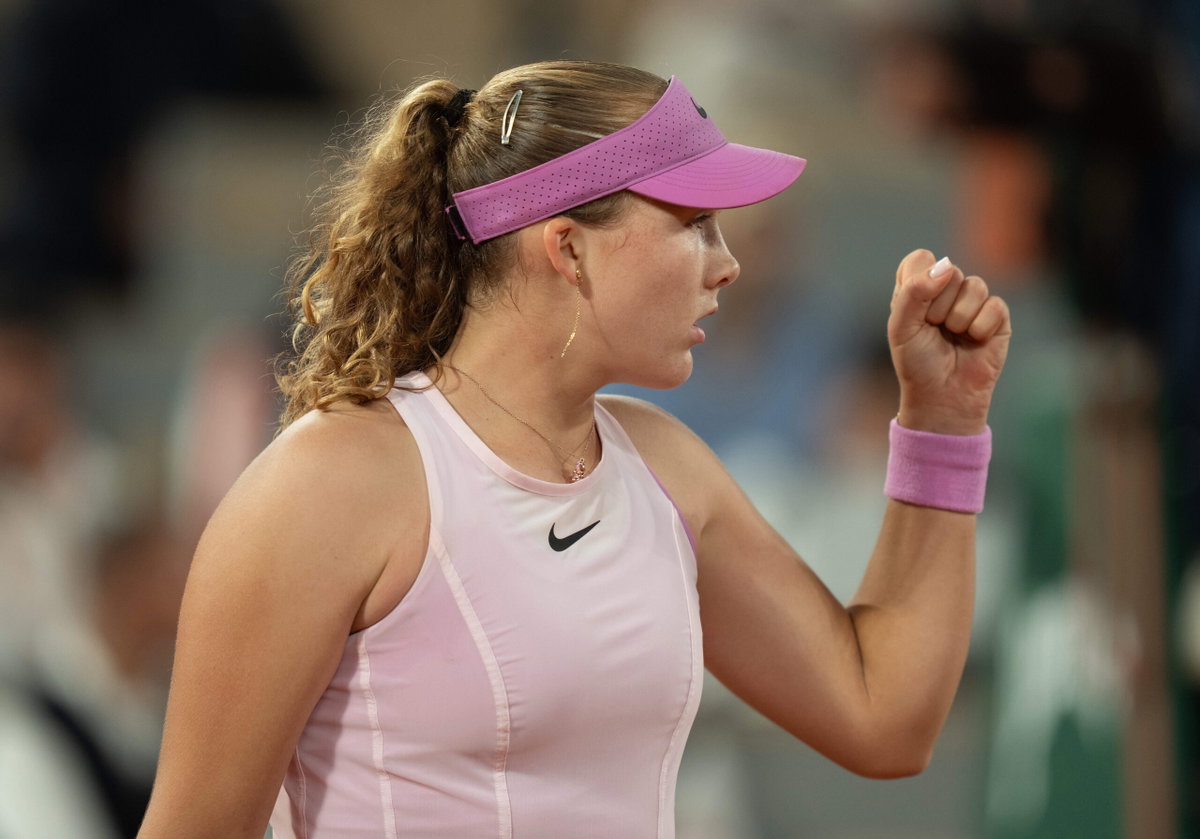
The 19-year-old Mirra Andreeva has made history as the 2026 French Open women’s singles champion for all the right reasons. That title brings one of the biggest prize purses in women’s tennis. The number on the official cheque from Roland Garros is large. But what Andreeva actually retains after France has its cut is a far different number, and it takes some analysis of the tournament’s prize structure, French tax laws, and Andreeva’s unique status as a player who resides in France to understand the difference.
Watch What’s Trending Now!
What Is the Total Prize Money for the Women’s French Open 2026?
The €61,723,000 (around $71.5 million) prize money offered at the 2026 French Open is a record amount. That represents a 9.53% increase on the 2025 purse, continuing a run of year-on-year growth at Roland Garros that has established the clay-court Grand Slam as one of the most lucrative events in the sport. The prize money is for the sum of all events, both by individual for men and women, doubles, mixed doubles, qualifying round and wheelchair events during the two weeks. This is the rule followed by the four Grand Slams for decades, where men and women have the same prize money in the singles draw.
But it has not calmed a larger rift between players and the French Tennis Federation. A group of the elite, including Carlos Alcaraz, Jannik Sinner, Aryna Sabalenka and Coco Gauff, have spoken out in public, claiming the prize money amounts to about 15% of the overall revenue generated at Roland Garros, which is short of the 22% they are advocating for. Tournament director Amelie Mauresmo confirmed ahead of the 2026 edition that no structural change to that percentage would be made this year. The prize money is at an all-time high, but the debate of whether they are getting their due cut of the money the tournament brings in is far from dead.
How Much Prize Money Does the Women’s French Open 2026 Winner Get?
Andreeva collects €2,800,000 for winning the 2026 French Open women’s singles title. That comes to about $3.26 million at today’s exchange rate. This is a 9.8% rise from the €2.550.000 received by Coco Gauff and Carlos Alcaraz for their respective wins at Roland Garros in 2025, and by far one of the biggest individual winnings of Andreeva’s career up to now.
To appreciate the scale of the figure, reaching the final without lifting the trophy earns the runner-up €1,400,000. A semifinal exit is worth €870,000, and even a player eliminated in the quarterfinals collects €545,200. The prize structure at Roland Garros rewards deep runs substantially, but the gap between champion and finalist is a full €1.4 million, which reflects just how much rides on the last match of the fortnight. The full round-by-round breakdown for the women’s singles is as follows: champion €2,800,000, finalist €1,400,000, semifinalists €870,000, quarterfinalists €545,200, last 16 €330,600, last 32 €216,920, last 64 €150,800, and first round €100,920.
For Andreeva, who arrived at Roland Garros with approximately $9.3 million in career prize money, this single cheque adds more than $3 million to that total in one afternoon, a figure that underlines how transformative a Grand Slam title is financially for any player at any stage of their career, let alone a 19-year-old in their maiden final.
What Taxes Apply to Women’s French Open Prize Money?
The prize money from Roland Garros will be taxed according to French tax law, regardless of the players’ nationality. The income was generated on French territory, and thus, France has first claim to that income. A flat rate of 15% is taken at the source for non-resident players. However, if the player resides in France, the progressive income tax regime will be normal, and the implications at the higher levels are much more substantial.
The highest income tax rate in France is 45% for income over €180,648. Considering that Mirra Andreeva’s prize money of €2,800,000 is much higher than that, the vast majority of her Roland Garros revenue belongs in this category. After Coco Gauff took home some $2.9 million for winning the French Open in 2025, tax professionals quoted by Forbes calculated that the French tax bill alone cut her pay by about $1.32 million, cutting her on-court prize to just over $1.6 million.
Andreeva’s situation carries an important distinction from that of most other finalists at Roland Garros. She is a Russian citizen but a resident of Cannes, France, her country of tax residence. That means that she will be taxed by French income tax, instead of the lower flat rate enjoyed by non-residents passing through. Unlike an American player, who would have an additional potential liability in the United States but could claim a foreign tax credit to avoid double taxation, Andreeva’s primary obligation is French, and France is where she lives. She is a citizen of Russia and has a flat 13% income tax rate in Russia. However, as a French resident, the French laws apply first to her earnings. In practice, liability is more likely to be French than Russian, although there may be a Russian issue depending on specific tax planning.
How Much Will Mirra Andreeva Take Home After Tax?
With the French income tax rate of 45%, the estimated French tax liability is some €1260,000. After settling her tax bill in France, Andreeva would have about €1,540,000, or about $1.79 million, in hand before any other deductions are taken into account.

Imago
Jun 4, 2026; Paris, France; Mirra Andreeva celebrates winning her match against Marta Kostyuk of Ukraine on day 12 at Stade Roland Garros. Mandatory Credit: Susan Mullane-Imagn Images
The actual take-home amount will depend on whether there are any costs that can be offset, how her affairs are arranged, and the exact manner in which the withholding will be applied throughout the tournament and at the time of her annual tax return in France. It’s not denied that there is a gap of seven figures between the headline prize and what she actually ends up with in her account. The most recent and directly comparable comparison is Gauff’s 2025 win, in which almost 50% of her $2.9 million winnings went toward the French tax. The prize will be larger for the 2026 champ, but it will have a similar proportion of that amount withheld for taxes.
It is also worth acknowledging what the prize money does not cover. Coaching fees, travel, physio and medical costs, accommodation across a two-week Grand Slam, racket stringing, and agent commission all come out of the player’s earnings before the tax conversation even begins. The €2,800,000 is the starting point. That said, what Andreeva walks away from Roland Garros with is still a sum that would take most people a lifetime to accumulate. She also walks away with a title that will reshape her commercial value entirely, with endorsement opportunities and appearance fees set to rise substantially in the months that follow. The prize money, taxed as it is, is only one part of what winning the French Open is worth to Mirra Andreeva at 19 years old.