

Novak Djokovic has spent almost his entire career being cast as the villain. Booed at every Grand Slam and faced the hostility of the crowd, unlike the uncomplicated adoration that followed Roger Federer or Rafael Nadal around the tour. But somehow, the hostility never appeared to break him. If anything, it built him. According to one of the few men who ever coached him at close range, that wasn’t a coincidence at all, it was the entire engine.
Watch What’s Trending Now!
In his new documentary, Novak Djokovic: The Wolf in Winter, his former coach and eight-time Grand Slam champion, Andre Agassi, offered an unusual take on Djokovic’s motivation, which he discovered during their brief partnership.
“I was surprised how dark he needed to feel to get the most out of himself,” he said. “For Novak to do his job, he needed fear or anger because with love or appreciation, he lost his fangs.”
Djokovic doesn’t push back on the assessment in the film. He agrees with it outright. “That’s definitely a factor that motivates me, yeah. If the crowd starts going against me, I do use that to awaken that warrior inside me. It’s called inat.”
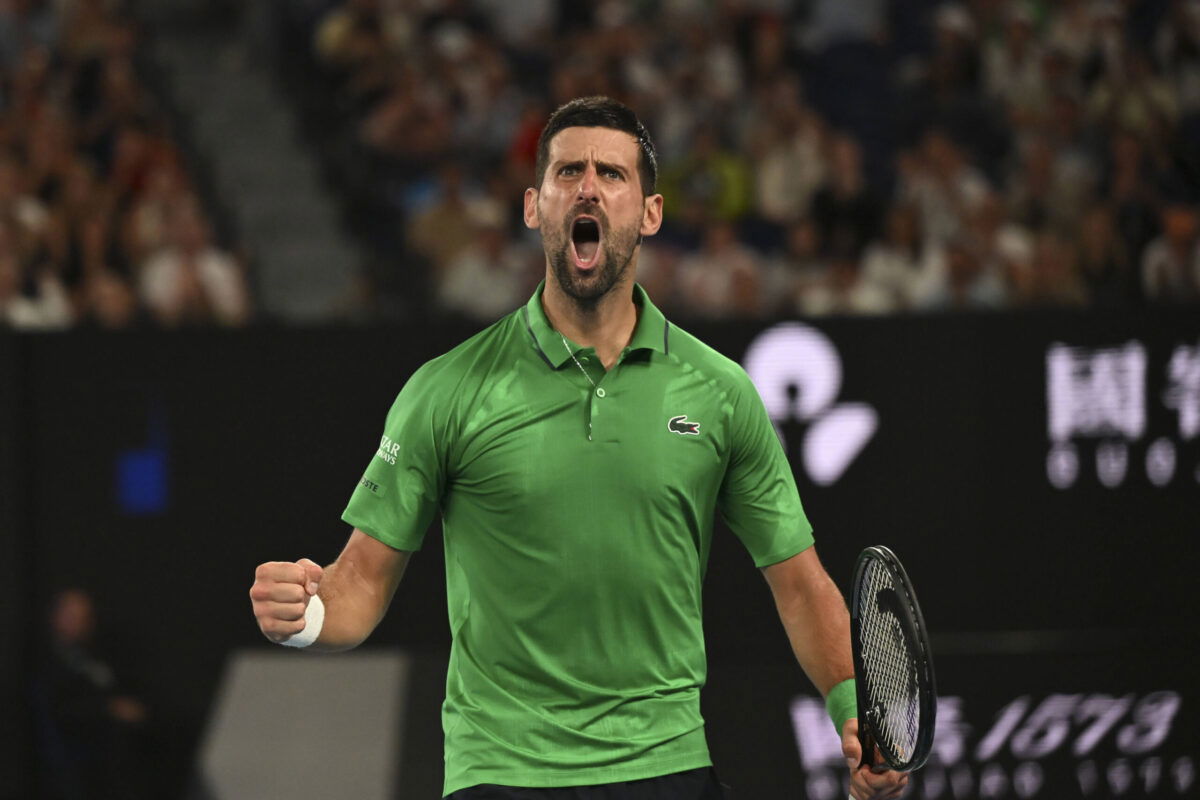
Agassi joined the Serbian’s camp during one of the strange stretches of Djokovic’s career. The two linked up in May 2017 after Djokovic split from long-time coach Marian Vajda, initially on a trial basis for the French Open with no long-term commitment. It did not go smoothly. Djokovic was dealing with a chronic elbow problem and limped his way through the rest of the season, retiring mid-match at Wimbledon against Tomas Berdych, which shut his year down entirely before the US Open.
In February 2018, he underwent elbow surgery and then exited at the first round of Indian Wells and Miami, the two tournaments he had dominated for years. Across their entire time working together, Agassi and Djokovic won exactly one title, at the 2017 Eastbourne International. The partnership ended by April 2018, and Agassi later admitted that they “agreed to disagree far too often.” What happened next only reinforces the point Agassi makes in the documentary.
Djokovic reunited with Vajda, and within months won Wimbledon, the US Open, the Cincinnati Masters and the Shanghai Masters, closing out 2018 with 53 wins from 66 matches and a return to world No. 1. The kind of Djokovic that flourished was not the one that was being coached to calm down. It was the one who had gone back to running on something rawer.
What “Inat” actually means, and why it explains his career
One of those rare terms that defies English translation is the word Djokovic reaches for to describe that fuel, inat. It is derived from Turkish and Arabic sources, ingrained in Serbian folklore, and is most often translated as defiant or spiteful, neither of which is fully accurate.
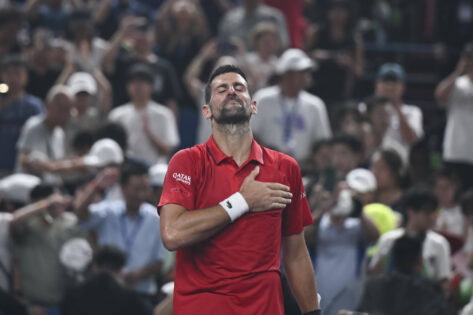
In the same documentary, physiotherapist Miljan Amanovic, who has worked with Djokovic for years, said more bluntly and explained the meaning of the word through the example of the Serbian people’s grit and attitude during the NATO bombing in 1999. People gathered in public and proudly wore symbols of the targets, portraying, “You can kill me, but screw you and your bombs”.
Djokovic himself has described it as “a kind of emotion that refers to the tenacity to motivate oneself and prove everyone wrong… to prove to yourself and everyone else that you can become who you want to be.”
Importantly, Serbian culture does not strictly consider inat to be a positive virtue. It has an edge of stubbornness, even of self-destruction, in addition to resilience, a double-edged sword that can turn bitter if not forged in the right direction.
Novak Djokovic’s has the most prolific portfolio in the sport’s history, but still, among the most booed. Federer’s fans jeered him during his US Open 2015 final victory in New York. At the 2019 Wimbledon final, he was swamped by the pro-Federer chanting, and later admitted that he used to practice hearing “Novak” when the crowd shouted “Roger, Roger”.
At Wimbledon in 2024, he grew visibly irritated by fans using cheers for opponent Holger Rune as cover to boo him, telling reporters bluntly, “I know they were cheering for Rune but that’s an excuse to also boo. I have been on the tour for more than 20 years. I know all the tricks,” he said.
It’s hard to imagine another athlete who has won nearly everything possible in his sport and still gets booed more often than he’s cheered. But for Djokovic, that was never just a burden to bear. According to him and his former coach’s report, this was the exact situation where he performed at his best, a career established by his repeated refusal to let the absence of affection be a barrier.