
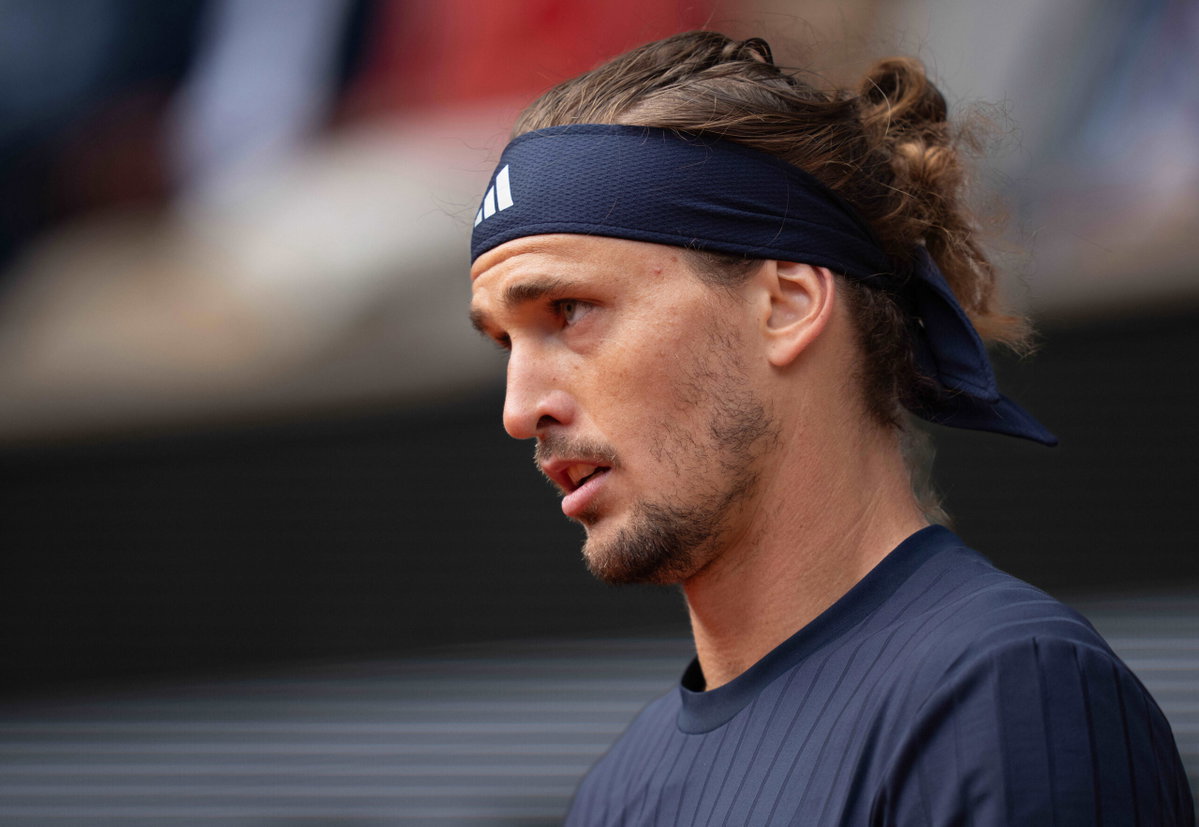
Alexander Zverev passed the semifinal hurdle of the French Open in emphatic fashion on Friday, dismantling Jakub Mensik to book his first Paris final in two years. But by the time he stepped into the press room, another twist had already unfolded, as Matteo Arnaldi’s withdrawal handed Flavio Cobolli a free pass into the championship match. Still, the second seed stayed unfazed, insisting that extra rest and one less battle for his opponent won’t decide what happens when the spotlight hits the final.
Watch What’s Trending Now!
“I feel good, I haven’t had brutally long matches. Honestly, I feel like I could play again right now, so there won’t be a difference on Sunday,” Zverev explained at the post-match press conference yesterday.
His comments reflected the confidence the German has built throughout the fortnight. However, Zverev also acknowledged the unfortunate circumstances that led to the SF being canceled.
“Obviously, this is not the way you want a Grand Slam semifinal to happen, but I also saw Matteo in the locker room and he looked very bad. I understand, there’s not much you can do, these things happen,” Sascha quoted.
“We are all human, we don’t want them to happen, but they do. Again, I don’t think it will make a big difference on Sunday.”
The unfortunate incident unfolded shortly before the Italian Matteo Arnaldi was scheduled to face his close friend Flavio Cobolli in the French Open semis. However, Arnaldi was forced to withdraw because of a virus.
The official announcement came roughly 25 minutes before the two Italians were due to walk onto the iconic Court Philippe-Chatrier. It was a heartbreaking moment for Arnaldi after the best Grand Slam run of his career.
Explaining his condition, the 25-year-old Italian revealed just how difficult things had become physically. “I tried to see if I could get on court but every time I get up I feel dizzy. It was the right decision to take,” Arnaldi said, who had never previously gone past the fourth round of a Grand Slam.
He further described the severity of the illness and why competing was simply impossible. “I just know I can’t move, I can’t eat and I can’t drink – there was no way I was able to play.”
Despite the disappointment at the end of the evening, Cobolli stepped onto the court shortly afterward for a practice session. Meanwhile, both the Italian players appeared together at a news conference only minutes after the withdrawal became official.
Wanting to avoid any risk of illness spreading, the two close friends sat carefully at opposite ends of the interview table. It was an unusual scene, but one that highlighted the difficult circumstances surrounding the SF at Paris.
From a historical perspective, Arnaldi’s withdrawal was a remarkably rare occurrence. It marked only the third withdrawal before a men’s Grand Slam SF in the Open Era.
It was also the first time such an incident had happened at the French Open. The previous example came at Wimbledon in 2022 when Rafael Nadal withdrew because of an abdominal injury before facing Nick Kyrgios.
While Cobolli enters the final under emotional circumstances and Arnaldi is left heartbroken by the way his dream run ended, the German continues to focus on the opportunity ahead.
Flavio Cobolli faces bittersweet path into first Grand Slam championship match
Despite the unusual route into a Grand Slam final, Cobolli still has plenty of reasons to celebrate. When the new ATP rankings are released next Monday, the Italian will become a top 10 player for the first time in his career.
Yet the moment was far from straightforward emotionally. The Italian admitted that the circumstances surrounding Matteo Arnaldi’s withdrawal left him struggling to process everything. “I mean, it’s also tough for me to speak now. You know, when he came to me almost one hour ago, I almost cried,” Cobolli admitted.
With a place in the final secured, Cobolli now finds himself in a unique situation. Instead of battling through a demanding SF which could go to three or four hours, he has received several extra days to recover and prepare.
Still, he was honest about the fact that extra rest does not automatically guarantee an advantage. “Sometimes it help. Sometimes it’s not,” Cobolli explained. The Roma native pointed out that spending too much time away from competitive action can sometimes affect a player’s rhythm.
“Maybe have almost four days off is a lot, so you lose the rhythm, but I think also during warming up, I played really well. Now I got practice again. I think I will be ready, for sure, for the final, but I also know that I will be fresh, for sure. Maybe it helped; maybe not. I tell you after the final.”
Now, with the championship match only a day away, both finalists appear ready for the biggest battle of the tournament. Cobolli carries momentum, fresh legs, and a historic ranking breakthrough, while his opponent arrives battle-tested after fighting through the draw.
The stage is set for a fascinating final, and it remains to be seen which ATP player will handle the pressure better when the moment finally arrives.