Imago
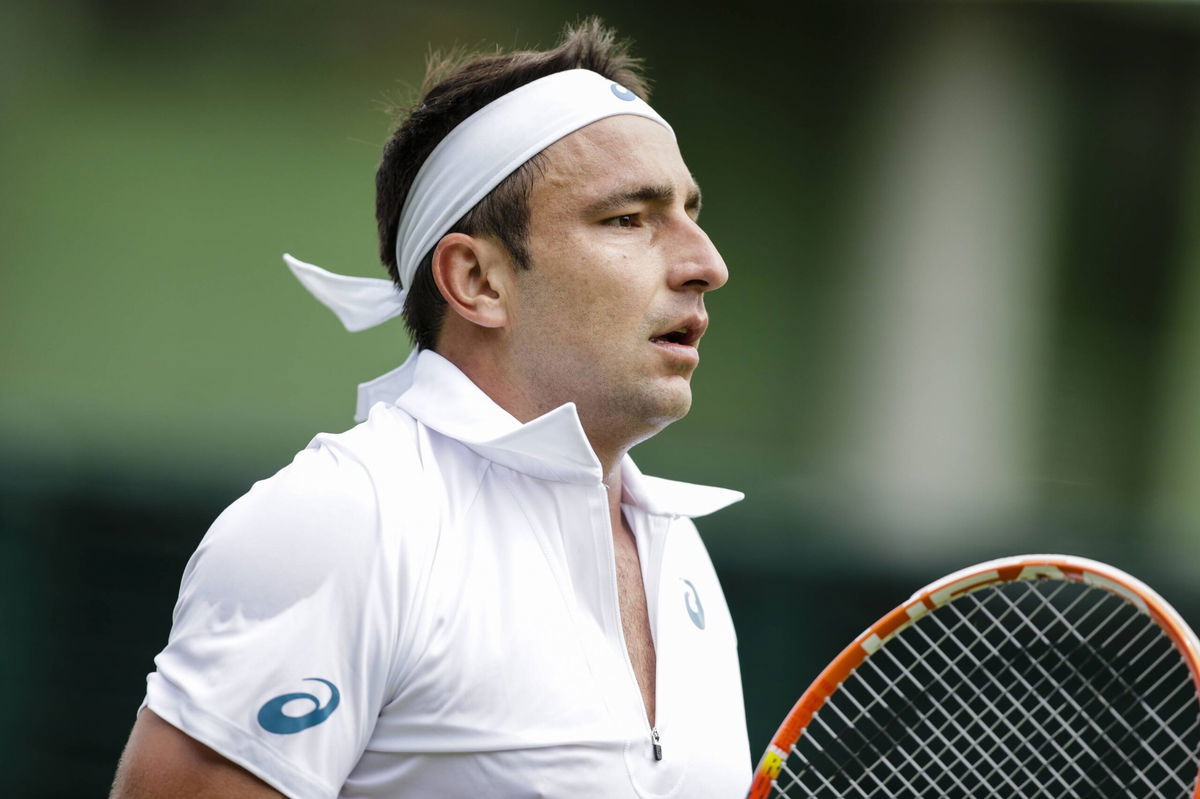
29.06.2015. Wimbledon, England. The Wimbledon Tennis Championships. Gentlemen& x2019;s Singles first round match between Liam Broady (GBR) & Marinko Matosevic (AUS). Marinko Matosevic xCraigxMercerx PUBLICATIONxINxGERxSUIxAUTxHUNxSWExNORxDENxFINxONLY ActionPlus11636176 29 06 2015 Wimbledon England The Wimbledon Tennis Championships Gentlemen& x2019 s Singles First Round Match between Liam Broadly GBR & Marinko Matosevic out Marinko Matosevic xCraigxMercerx PUBLICATIONxINxGERxSUIxAUTxHUNxSWExNORxDENxFINxONLY
Imago
29.06.2015. Wimbledon, England. The Wimbledon Tennis Championships. Gentlemen& x2019;s Singles first round match between Liam Broady (GBR) & Marinko Matosevic (AUS). Marinko Matosevic xCraigxMercerx PUBLICATIONxINxGERxSUIxAUTxHUNxSWExNORxDENxFINxONLY ActionPlus11636176 29 06 2015 Wimbledon England The Wimbledon Tennis Championships Gentlemen& x2019 s Singles First Round Match between Liam Broadly GBR & Marinko Matosevic out Marinko Matosevic xCraigxMercerx PUBLICATIONxINxGERxSUIxAUTxHUNxSWExNORxDENxFINxONLY
Just six weeks ago, the former Australian No. 1 Marinko Matosevic lashed out, branding the International Tennis Integrity Agency (ITIA) “corrupt” and insisting tennis governance needs structural reform. Now, the narrative has taken a dramatic turn, as the 40-year-old finds himself on the wrong side of the system he criticized.
Watch What’s Trending Now!
The ITIA has confirmed that Marinko Matosevic has been suspended for four years. The ban falls under the Tennis Anti-Doping Programme (TADP), and an independent tribunal reviewed the case. It was found that Matosevic committed five anti-doping rule violations. These violations happened between 2018 and 2020.
One major charge involved a prohibited method of blood doping. The tribunal confirmed he used it while he was still an active player. He was also found guilty of helping another player to blood dope. This made the case more serious, as it showed active involvement beyond personal use.
ADVERTISEMENT
Matosevic also advised other players of using the methods to avoid testing positive. This violation was treated as a serious breach of the rules. Another charge involved usage of a banned substance, clenbuterol.
An independent tribunal has suspended Australian tennis coach and former player Marinko Matosevic for four years under the Tennis Anti-Doping Programme.
An independent tribunal determined that Matosevic committed five anti-doping violations, including blood doping, possession… pic.twitter.com/wGjRDhyGPu
— International Tennis Integrity Agency (@itia_tennis) March 16, 2026
Matosevic denied all charges for most of the process. He maintained his innocence during the investigation. This continued until close to the hearing. Shortly before the hearing, he changed his stance and admitted to blood doping in media comments.
ADVERTISEMENT
On the issue of advising players, tribunal chair Michael Heron KC made a strong statement. He said Matosevic’s actions “went far beyond passive association and constitute intentional participation ”.
He added that the “conduct strikes at the integrity of the anti-doping framework”. The tribunal also addressed Matosevic’s criticism of the investigation. It rejected his claims completely. It stated that the ITIA “acted within the authority conferred by the TADP”.
ADVERTISEMENT
The case began in 2024. ITIA investigations found strong evidence against Matosevic. Formal charges were issued on May 15, 2025. Matosevic denied those charges. The case was then sent to an independent tribunal. A hearing was scheduled for February 9, 2026.
In the weeks before the hearing, he stopped engaging with the process. He did not attend the hearing despite multiple notices. The tribunal went ahead without him. On March 16, 2026, the tribunal confirmed the charges. One clenbuterol charge was dismissed. It lacked enough evidence. However, the tribunal noted it was likely.
Matosevic’s results and prize money from February 2018 were disqualified. This includes events in Morelos and Indian Wells. These were linked to the blood doping period. The suspension will run until March 15, 2030. This depends on the repayment of prize money. Until then, he is fully banned from the sport.
ADVERTISEMENT
He cannot play, coach, or attend events. This applies to all tournaments under ITIA members. These include ATP, ITF, WTA, and national bodies. He is also banned from working with players. This action falls under Prohibited Association rules. The restriction applies in any context.
More so, Matosevic is not the only Australian who was banned with doping charges.
ADVERTISEMENT
Max Purcell accepts 18-month ban for anti-doping violation
Max Purcell accepted an 18-month ban last year for breaching anti-doping rules. The Australian said the case affected his mental health. The former Grand Slam champion revealed he developed anxiety and a nervous tic during the process.
The 27-year-old entered a voluntary provisional suspension in December 2024. He admitted breaching Article 2.2 of the Tennis Anti-Doping Program. This was “relating to the use of a prohibited method.”
Top Stories




The violation involved IV infusions. Purcell received more than 500ml twice in December 2023. This happened after he fell ill in Bali. However, the rules are strict. The limit under the World Anti-Doping Code and TADP is 100 mL in 12 hours. His treatment clearly exceeded that limit.
ADVERTISEMENT
After an investigation by the ITIA, his punishment was reduced. The reduction was 25%. This was due to his “full cooperation and information sharing.”
With time already served, his suspension will end on 11 June 2026. Until then, he cannot play, coach, or attend tennis events. The Sydneysider remains fully restricted from the sport.
The women’s game has also faced similar cases. Tara Moore has been handed a four-year ban. This came after the Court of Arbitration for Sport upheld an appeal by the ITIA. She was first provisionally suspended in June 2022 due to banned substances in her sample. She maintained she had “never knowingly taken a banned substance,” and an earlier tribunal linked it to contaminated meat. Still, the final ruling went against her.
ADVERTISEMENT
And as top tennis players face serious bans, the sport continues while scrutiny over suspicious actions intensifies.
ADVERTISEMENT
ADVERTISEMENT
ADVERTISEMENT
Related Newsletters