
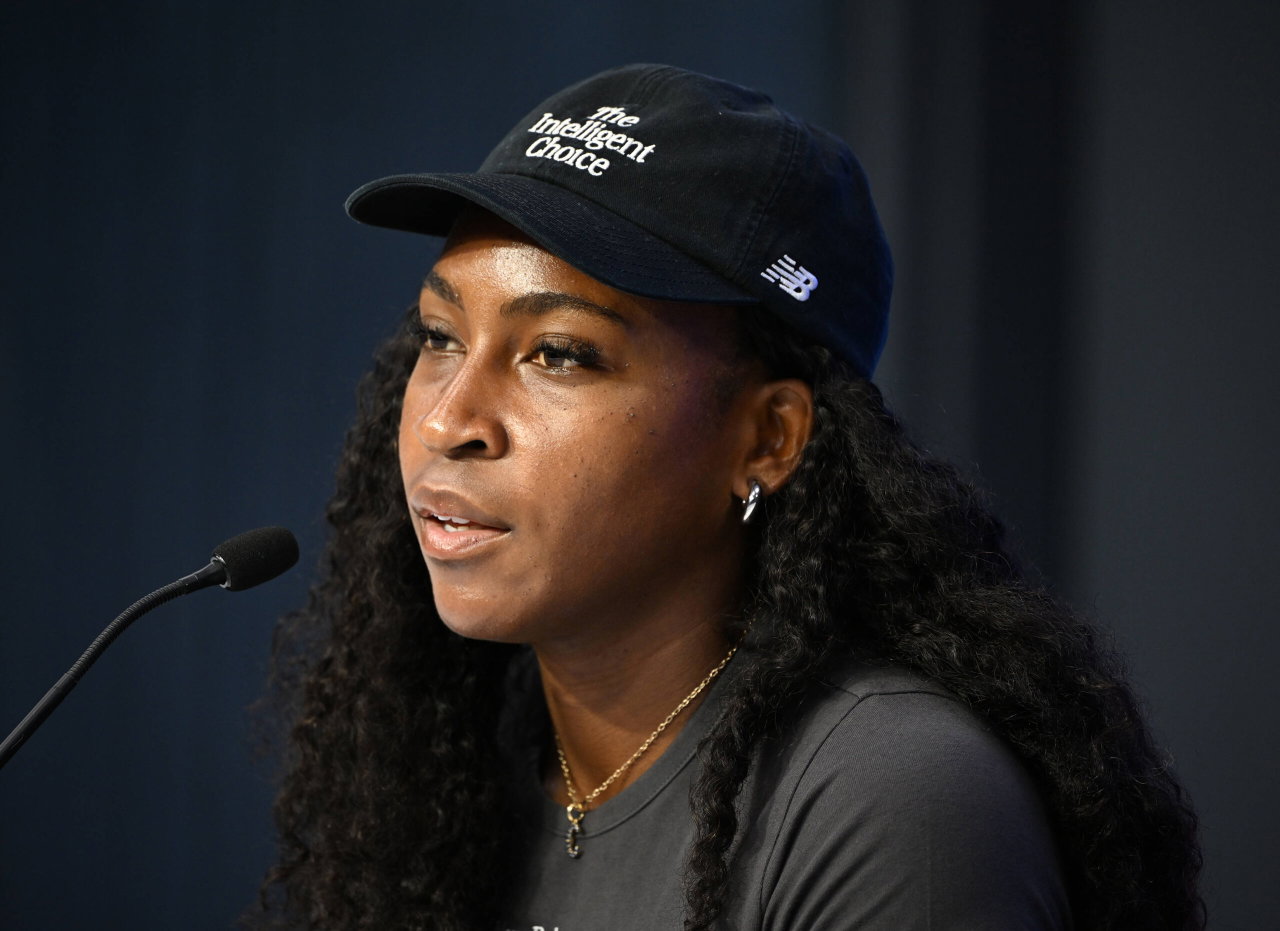
Jessica Pegula found herself at the center of controversy after her comments about Mirra Andreeva were broadcast during a practice livestream. The two have since exchanged playful remarks on social media, seemingly easing the tension, but Coco Gauff was drawn into the discussion as well. And she addressed the situation after Pegula personally approached her to apologize.
Watch What’s Trending Now!
“Before I even saw the video, she came and apologized immediately,” Gauff said, speaking in the mixed zone after beating Pegula on Sunday. Pegula’s coach, Mark Knowles, apologized to her as well.
Gauff ensured that she had not taken the remarks to heart and felt that Andreeva had faced far more of the backlash. She added that she is a competitor first and will compete with whatever is happening off the court, before saying of Pegula: “I know her heart and it was all good.”
The incident took place during a practice session at Indian Wells ahead of the WTA Finals. The WTA had been livestreaming players’ training sessions on its official YouTube channel, but the microphones picked up a private conversation between Pegula and Knowles. Pegula, a member of the WTA’s player council, had just practiced with Andreeva, who reportedly grew frustrated despite winning four games in a row. Pegula only began speaking with Knowles about it once Andreeva had left.
She criticized the 19-year-old’s attitude toward her coach, Conchita Martinez, and suggested that the Russian needed someone to keep her in check. While she called Andreeva a nice girl and a very talented player, even praising “the perfect serve,” she felt a young player should show her coach more respect, especially when things are going well.
“She’s a diva. She needs to be humbled,” Pegula said, as she also admitted that she had lost some respect for Martinez because she believed the coach was encouraging Andreeva’s behavior, saying Martinez “eggs on her behavior.” Pegula further compared Andreeva with Gauff. “It’s so funny how you see her, and then you see Coco’s mentality,” she said.
The comments quickly spread across social media. Pegula’s representative later told The Athletic that she had no idea the conversation was being livestreamed and never expected a private discussion during practice to become public. The representative also confirmed that Pegula had contacted those involved to apologize.
Pegula then addressed the episode in an interview with ESPN, calling it an “unfortunate situation.” She reiterated she had not been told audio was being recorded but added, “it is what it is,” and that she had dealt with the matter privately in the way she felt was right. She was not asked about it at her media availability and, per The Athletic, neither she nor Andreeva addressed it in their news conferences — though Pegula joked on entering the press room that she wanted to check the microphone was on.
Andreeva, too, answered with humor. Just ahead of the tournament, the French Open champion posted a series of photos from the WTA Finals media activities on Instagram, including one of her laughing next to Pegula, writing: “DIVAS.” Pegula joined in with a comment of her own: “Divas in Chanel.” Speaking to WTA media before her first match, Andreeva also came to Martinez’s defense. She called her “a great person and a great coach,” crediting her work ethic and her help in developing new shots for her progress.
That said, speaking as a player council member, Pegula added that surveillance, audio, and access to players at tournaments have grown in recent years. Broadcasting is good for fans, she acknowledged, but several recent incidents looked highly unnecessary, and she hopes this one can be used to keep pushing for more player privacy. There had already been another incident on the same day. Footage from a separate session captured an apparently tense exchange between Elena Rybakina and her coach, Stefano Vukov. It raised further questions about how much privacy players could expect during training sessions.
This was not the first time tennis players had raised concerns about cameras recording moments they believed were private. At the 2026 Australian Open, Gauff was filmed smashing her racket after her quarterfinal defeat to Elina Svitolina. She later explained that she thought she was away from the cameras. Aryna Sabalenka had also smashed a racket in the players’ gym after losing the 2023 US Open final to Gauff, unaware she was being filmed for public viewing.
Gauff called for more consideration of players’ privacy, and Iga Swiatek also questioned the extent of tournament filming. The six-time major champion asked whether players were “animals in the zoo,” a line she conceded was an exaggeration, though she insisted some privacy would be welcome. Tennis Australia, followed by the other Grand Slam organizers, then promised to balance fans’ appetite for unfiltered access with player privacy.
In February, a WTA tournament in Texas unveiled a “rage room” where players could vent away from the cameras. Gauff welcomed the idea but said in April that clearer signage was among the main fixes. Pegula had previously expressed similar concerns about players being recorded. Swiatek, meanwhile, argued this year that players should not become a meme over forgetting their accreditation.
The WTA, hence, faced criticism again over its failure to inform players and their teams that microphones were active during practice sessions. The governing body subsequently accepted responsibility and issued an apology, explaining that the microphones were intended to capture ambient sounds from practice rather than private conversations between players and coaches. The organization said its failure to monitor the technical setup properly had caused the problem. The organization also removed recordings of the practice sessions from its YouTube channel. However, clips of Pegula’s conversation had already circulated widely online.
WTA chair Valerie Camillo issued another apology before the tournament began. She described the incident as the result of several failures in the livestream’s execution and admitted that players had not received adequate advance notice or clear signage about the recording equipment.
Camillo also confirmed that audio recording had been disabled on the practice courts for the rest of the tournament. She specifically apologized to Pegula and Knowles, calling what happened regrettable and unacceptable. She described Pegula as one of the WTA’s best advocates and biggest stars who “does not deserve this distraction.” She assured that protecting players is one of the WTA’s primary responsibilities as a member organization, and promised to keep working to raise the bar.
Coco Gauff Overcomes Jessica Pegula in WTA Finals Thriller
Despite the controversy surrounding their relationship, Gauff and Pegula put everything aside when they met in their opening round-robin match at the WTA Finals. Gauff eventually came out on top, defeating her compatriot 6-4, 6-7 (5), 6-2 in a contest that lasted two hours and 39 minutes. The victory gave the fourth seed her sixth career win against Pegula.
The match was far from straightforward for Gauff. She took the opening set but found herself trailing 5-1 in the second. The 22-year-old fought back and saved three set points to move ahead 6-5. Pegula then saved a match point before taking the tiebreak and forcing a deciding set.
Gauff responded with a dominant start to the third, winning the first three games. She maintained that advantage and eventually sealed the victory when Pegula sent a backhand beyond the baseline.
“Honestly, I was having a lot of fun today. I took a little break, it was my first match in a month,” Gauff said after the victory.
She also admitted that competing at such a major tournament without preparation was a new experience for her.
“To play a tournament like this with no preparation is something I’ve never done in my career. I’m just really happy to get through today. It was a tough match,” she added.
The result gave Gauff an important start to her WTA Finals campaign. More importantly, the competitive encounter showed that the off-court controversy had not prevented the two Americans from facing each other professionally on the court.