
Watch What’s Trending Now!
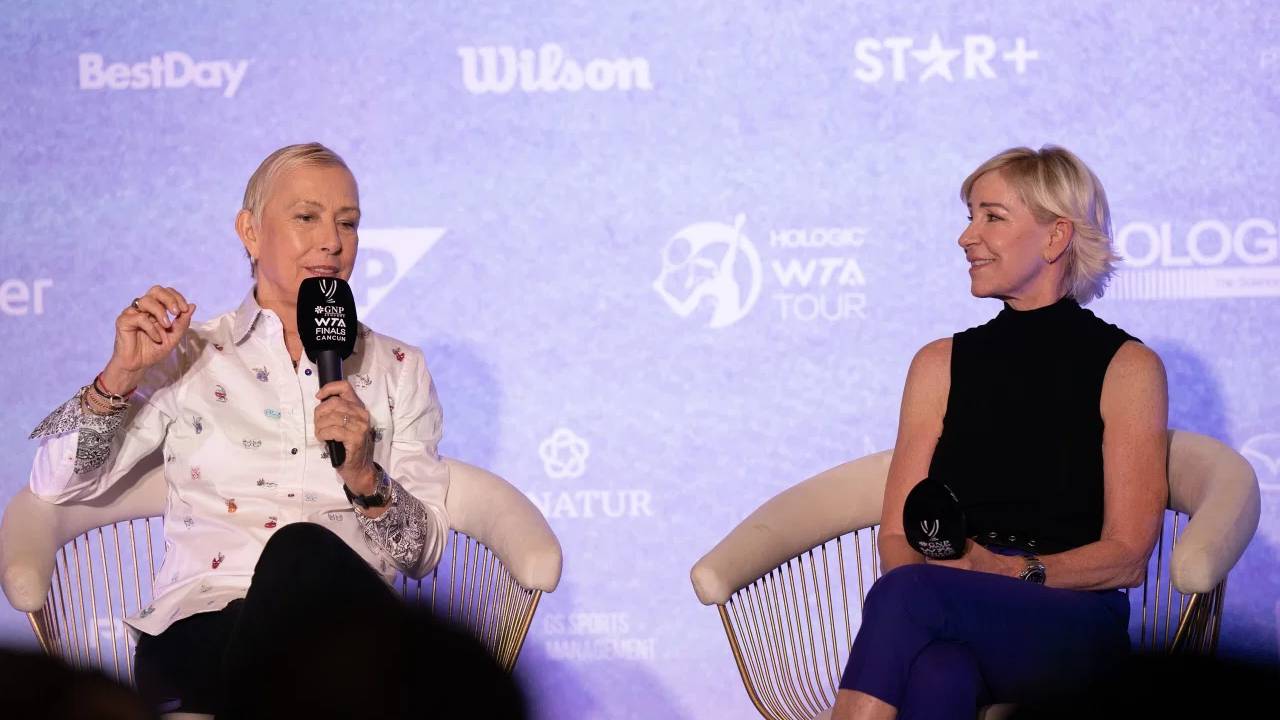
Unlike the WTA, the WNBA lacks clarity on whether a transgender athlete would be able to play in the league or not. Indiana Fever’s Sophie Cunningham had recently sparked attention on the same by speaking out against transgender athletes in women’s sports. But the issue wasn’t just limited to WNBA players and pundits. Martina Navratilova openly opposed the inclusion of transgender women in female competitive sports. So, it was only natural that her close friend, Chris Evert, would join the debate soon.
“The two people’s opinion I respect regarding this issue are Caitlyn Jenner and Renee Richards, who both have firsthand experience,” she said in a post on X. “They both have some strong opinions and have gone on the record.”
For context, Caitlyn had competed as Bruce Jenner at the 1976 Montreal Olympics and had won gold in the men’s decathlon event. It was in 2015 that she publicly came out as a transgender woman. On the other hand, Renee Richards was a trans tennis player and competed on the circuit in the 1970s. She even coached Navratilova for a brief period.
Caitlyn herself has been pretty vocal about the transgender athlete debate that has recently been ignited in the WNBA. She feels that it is a shame that the league still can’t come to a definitive conclusion on the matter and even criticized the commissioner, Cathy Engelbert.
“The WNBA had their meetings on this issue and Cathy (Engelbert), the head, says, ‘We talked about the trans issue but we just haven’t come up with a conclusion at this point,” she said to Fox News. “We will continue the conversation.’ Cathy, XX, you’re in. XY you’re out. It’s that simple.”
The WNBA hasn’t made gene testing compulsory. The same isn’t the case with the WTA, as they have made it a mandated process for all players despite coming under a lot of criticism.
For context, the Sport & Rights Alliance, a coalition of advocacy organizations, described the policy as discriminatory. Additionally, Lily Dong Li Rosengard, advocacy senior specialist at ILGA World, an international organization that represents LGBTQ rights, criticized the timeline of the policy and believes that it undermines the dignity of every player on the WTA circuit.
It is safe to say that the reactions to the mandatory gene testing have been mixed, and it is expected to remain that way.