
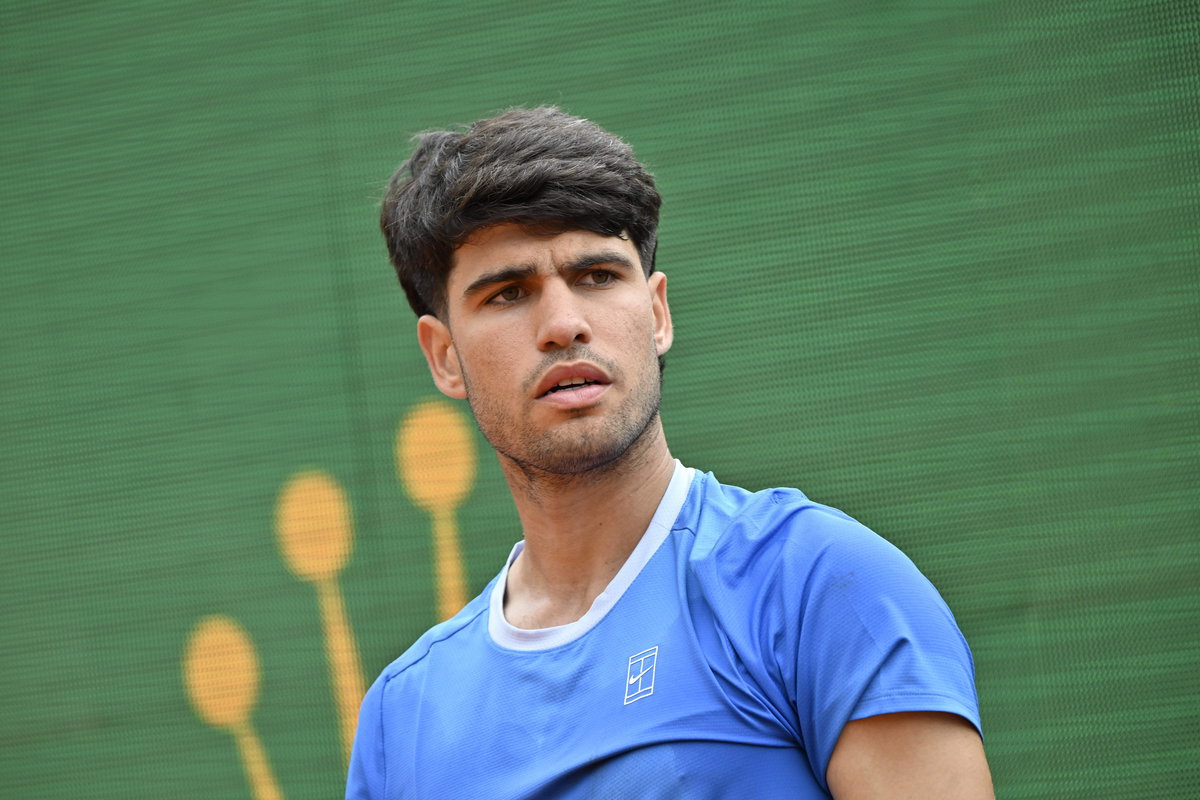
The shockwave of the Miami Open hit hard when world No. 1 Carlos Alcaraz fell to a relentless Sebastian Korda. Early in the second set, a tense exchange with his team exposed doubt, as he questioned whether to fight on or walk away. Now, that fragile moment lingers, haunting the Spaniard as he looks back with regret.
Watch What’s Trending Now!
Speaking to Spanish media ahead of the Monte Carlo Masters, Carlos Alcaraz opened up about his behavior during the Miami Open. “Obviously, there are things I regret saying during the match, and that’s one of them,” said Alcaraz. His reflection showed a willingness to take responsibility.
“In the end, when things aren’t going well, when you try, and it doesn’t work out, there comes a point where you’re not thinking clearly, and you blurt out something that you really shouldn’t have. But that’s how things go, you have to learn from them.” His words captured the frustration he felt in that moment.
The incident unfolded as Sebastian Korda raised his level late in the first set at Miami. Alcaraz struggled to respond as the match began to slip away.
Imago
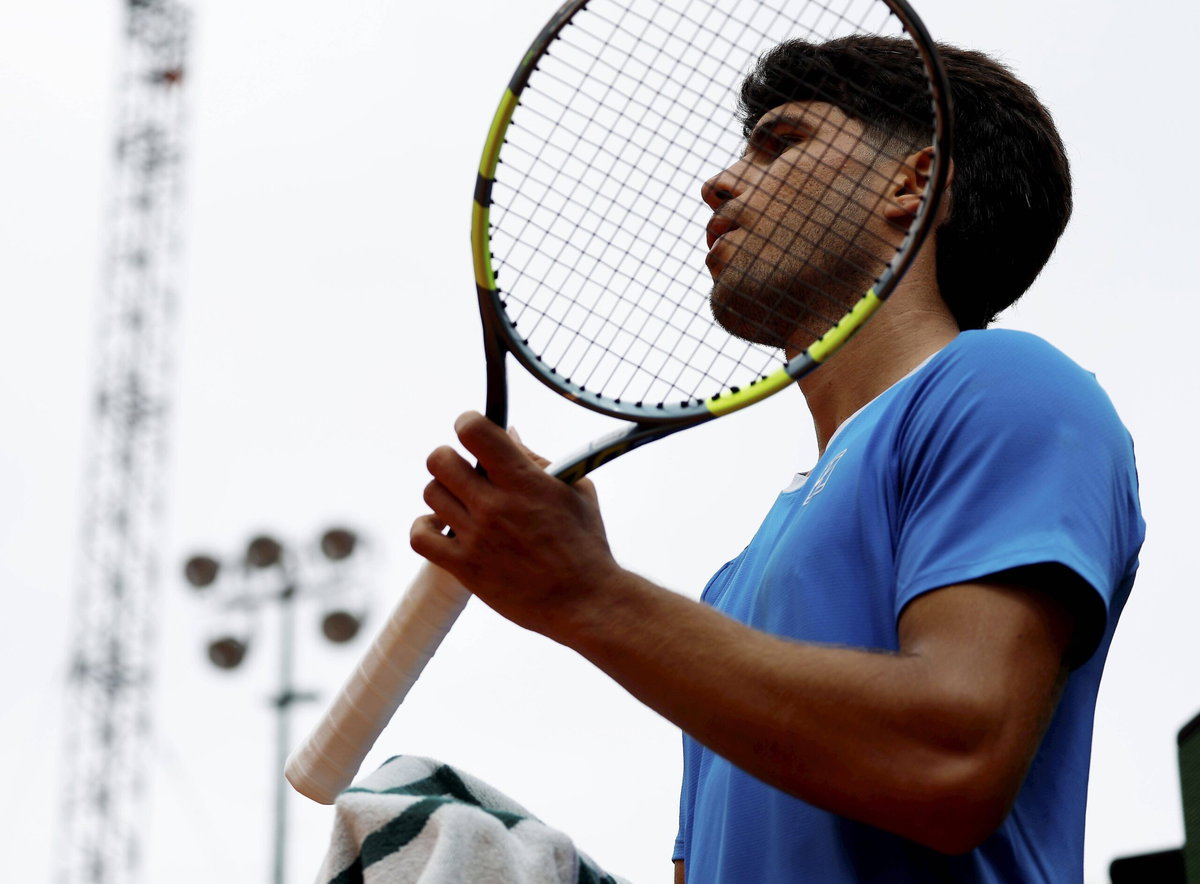
Monte-Carlo Rolex Master Tennis PHOTOPQR/NICE MATIN/Dylan Meiffret Roquebrune Cap-Martin 07/04/2026 119e edition du Rolex Monte-Carlo Masters de Tennis. Matchs du 4e jour. ICI : match entre l espagnol Carlos Alcaraz et l argentin Sebastian Baez. L espagnol remporte le match. ICI : Carlos Alcaraz Rolex Monte-Carlo Masters at Monte-Carlo Country Club on April 7, 2026 in Monte-Carlo. *** Local Caption *** Roquebrune-cap-martin France PUBLICATIONxNOTxINxFRAxBELxSUIxUK Copyright: xPHOTOPQR/NICExMATIN/MAXPPPxDylanxMeiffretx 20260407NIM7427 20260407NIM7427
From 3-3, Korda held his serve consistently and then secured a crucial break. That moment allowed him to serve for the set with confidence and control. He executed it cleanly, putting himself firmly in command of the match. Just like that, he was halfway to defeating the seven-time Grand Slam champion.
Alcaraz, meanwhile, looked far from his dominant self. The sharp, aggressive form he had shown earlier in the season seemed to be missing. His frustration became increasingly visible. It was evident to everyone watching that he was battling more than just his opponent.
Despite being a favorite to mount a comeback, Alcaraz struggled to convince himself. “It’s just to make it look better, a 6-3, 6-4 or 6-3, 7-5, something like that. I can’t do any more, I can’t do any more,” he told his coach, Samuel Lopez, during the match.
His team refused to give up on him and tried to lift his spirits. “Come on, go all the way.” Their encouragement echoed from his camp.
However, Alcaraz remained overwhelmed. “I can’t take it anymore. I want to go home now, man. I can’t take it anymore, I can’t take it anymore, I can’t take it anymore.” His words revealed the depth of his struggle.
Even so, he did not walk away. He fought back in the second set to level the match, but fell short in the decisive moments, while Korda celebrated one of the biggest wins of his career.
And later, Alcaraz’s coach, Samuel Lopez, clarified the situation after the tournament ended.
Samuel Lopez reacts after Carlos Alcaraz’s frustration surfaces publicly
Simply put, this is not something Carlos Alcaraz needs to regret. In the larger context of elite sport, his comments were mild and far from controversial.
He did not use profanity or direct any disrespect toward his opponent. Instead, he voiced frustration about his own situation while struggling against Sebastian Korda.
At the highest level, athletes operate under immense pressure. Allowing them space to release frustration is not just reasonable, it is necessary. Even his coach, Samuel Lopez, addressed the situation in an interview with Eurosport Spain last month. He offered a balanced perspective on the incident.
“Let’s see, I don’t think it should be normalised in the sense of just leaving it as it is,” said Lopez. “But I also don’t see it as anything surprising. He’s 22, and you have to make him understand that these kinds of comments have a lot of impact, especially outside the team. Internally, we knew how we arrived in Miami and what the situation was.”
Lopez further explained the importance of emotional control. “He has to try to control those impulses that he has: he has always had them, and less and less each time. He has to control them, especially for the opponent, both the player and the opposing team, not to show those weaknesses in certain moments.”
At the same time, he acknowledged the human side of the reaction. “But beyond that, it’s a way of expressing himself and releasing some of the tension and fatigue that builds up. There’s no need to give it more importance.”
Looking ahead, Alcaraz is focused on a demanding clay-court schedule. His plan includes the Monte Carlo Masters, Barcelona Open, Madrid Open, Italian Open, and finally the French Open. Each event will test his consistency and resilience as he navigates the clay swing. The schedule leaves little room for errors or emotional lapses.
Now in the Principality, and backed by Olympic legend Usain Bolt, Alcaraz is preparing for his Round of 16 match. His focus remains clear as he aims to defend his ranking points and reassert his dominance on clay.