
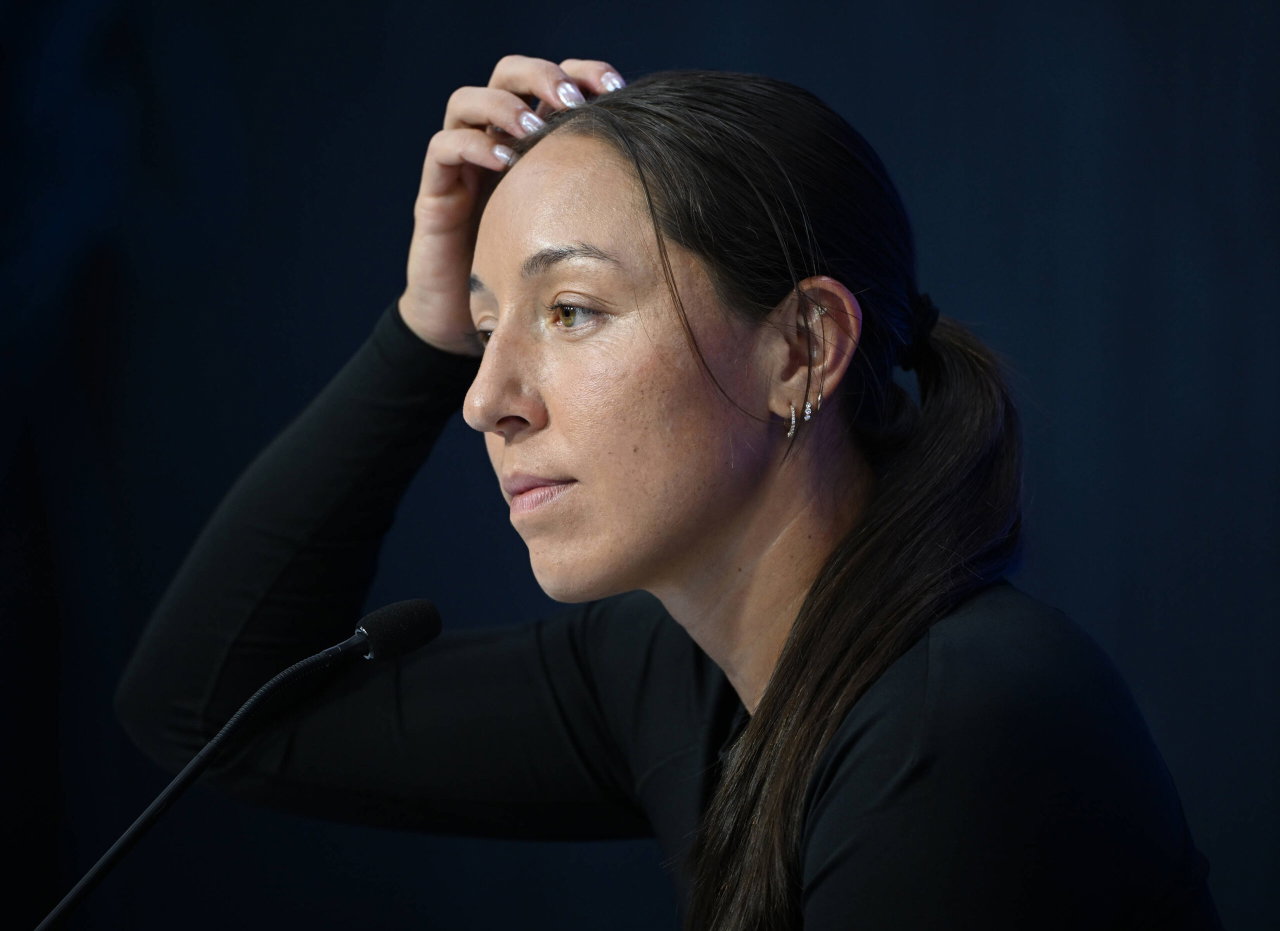
Two quarterfinals, one Tuesday night, and by the end of it, the US Open’s top half had set up a rematch we’ve now seen three years running. While Jessica Pegula was still grinding through her own three-set escape against Emma Navarro, Aryna Sabalenka was fighting back from a 4-2 deficit in the third set against Linda Noskova, closing it out in a tiebreak to book her sixth straight US Open semifinal. By the time both matches were done, the only question left was how Pegula planned to solve a problem that has now followed her across three surfaces and two years.
Watch What’s Trending Now!
She’s already given part of the answer. Asked about facing Sabalenka again on the sport’s biggest stage, Pegula said, “I think it’s fun to look at it like a rivalry. I think that it’s that’s what kind of motivates me… I’m going to try… but then also be aware that she’s a top number one player.”
Elsewhere in that same press conference, she reached for a blunter word for the gap between them, calling it “kind of a hurdle for me to get over”. It’s a phrase that says as much about the last two US Opens as it does about Thursday’s.
Jessica Pegula is heading into another battle with Aryna Sabalenka, knowing exactly how difficult it can become. Sabalenka leads the rivalry 9-4 overall, and 6-3 specifically on hard courts, where Thursday’s semifinal will be played. But that top-line number flattens a pattern that’s shifted over the past year.
Their last three meetings have all gone the distance. Pegula won the Wuhan Open semifinal in October 2025 (2-6, 6-4, 7-6), Sabalenka won their WTA Finals round-robin match in Riyadh a few weeks later (6-4, 2-6, 6-3), and Pegula won again at Berlin this June (6-4, 6-7, 6-0).
That’s a departure from the three meetings before those, all straight-set Sabalenka wins in finals: Cincinnati 2024, the 2024 US Open, and Miami 2025. Their two most recent meetings at this exact tournament, though, both still went to Sabalenka: the 2024 final in straight sets, and last year’s semifinal 4-6, 6-3, 6-4, a match Pegula led by a set before it slipped away.
“She challenges me. You know, pushes me to figure out how to become better. I think at the end of the day that’s kind of what I try to take away from some of the tough matches,” Pegula added.
For now, Pegula’s plan centers on movement and unpredictability, pulling Sabalenka away from the center of the court so she can’t set her feet and drive through the ball. That’s what carried her through Berlin, where she lost a tight second-set tiebreak but responded by winning the decider 6-0. It showed up again in Wuhan, where she dropped the first set before grinding out the next two. And she also knows she isn’t just playing Sabalenka.
“She and her team do a really good job analyzing what they need to improve and what other players are doing against her. I think that’s one of the reasons why she is number 1.”
That preparation becomes even more important because Sabalenka owns this stage of the tournament. She has now reached 6 straight US Open semifinals while chasing her 3-peat. Her hard-court results this season have not matched that level, but New York has been different.
Sabalenka, for her part, doesn’t dodge the challenge Pegula presents: “Jessica is a really tough player to face. I can say she has improved a lot in recent years; she has improved her game and really puts a lot of pressure on me. But I love playing against her because it’s a battle, a struggle, and I enjoy being under pressure and overcoming difficult challenges.”
That said, no one can deny how dominant Sabalenka has been at this specific tournament, regardless of opponent. She’s won 18 straight matches at the US Open since the start of her 2024 title run, hasn’t lost a tiebreak in New York since her 2021 semifinal defeat to Leylah Fernandez, and just stretched that streak to ten straight breakers against Noskova. She’s chasing a third consecutive US Open title, a feat only Serena Williams has managed this century, across 2012-14.